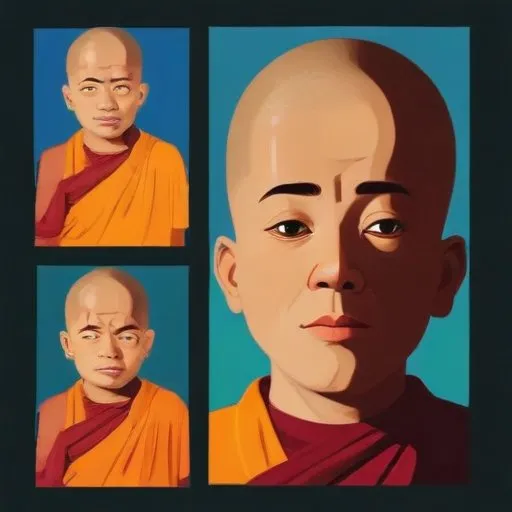
Ledi Sayadaw

Ledi Sayadaw

Ledi Sayadaw was born on December 1st, 1846

Nationality: Burmese
Occupation: Buddhist monk, philosopher
Known For: Teachings on vipassanā meditation
Influenced By: Buddha, Mahāsi Sayādaw
Students: U Pandita, S.N. Goenka
Literary Works: Manual of Vipassanā Meditation
Birth Year: 1846
Death Year: 1923

A renowned Burmese monk and philosopher who wrote numerous books on Theravada Buddhism, promoting a more rational and scientific approach to spiritual growth. His works remain highly influential in Myanmar and beyond.

Written by: Rajesh Kumar Rajesh Kumar

Ledi Sayadaw: The Pioneer of Theravada Buddhism and Champion of Compassion

Ledi Sayadaw, a revered Burmese Buddhist monk, is celebrated for his profound contributions to Theravada Buddhism, and his tireless efforts to promote compassion, conservation, and social reform. Through his literary works and teachings, he made the ancient wisdom of Buddhism accessible to the masses, inspiring a new generation of seekers to embark on the path of Vipassan meditation and Dhamma.

The Early Years: Foundations of Scholarship and Spirituality

Born on December 1, 1846, Ledi Sayadaw began his monastic education at the tender age of 20 in Mandalay, where he quickly gained recognition for his exceptional scholarship in Abhidhamma and his remarkable aptitude for practice.

A Homecoming and a Turning Point

Following a devastating fire that destroyed his home and written works in 1883, Ledi Sayadaw returned to his village of origin. This pivotal moment marked the beginning of his spiritual journey, as he went on to establish a forest monastery in the Ledi forest, where he would dedicate himself to intensive meditation and teaching.

The Birth of a New Era in Theravada Buddhism

At the Ledi forest monastery, Ledi Sayadaw's teachings and writings sparked a resurgence of interest in Vipassan meditation, making it more accessible to both renunciates and laypeople. His literary works, written in Burmese, enabled a broader audience to engage with the Dhamma, fostering a deeper understanding of Buddhism at all levels of society.

A Champion of Compassion and Conservation

In 1885, Ledi Sayadaw penned the influential Nwamyittasa, a poetic prose letter that passionately argued against the consumption of beef, citing the ecological unsoundness of the practice and its impact on the livelihoods of Burmese farmers. His stance sparked successful beef boycotts during the colonial era, earning him recognition as a pioneering advocate for animal welfare and environmental conservation.

A Legacy of Wisdom and Influence

Ledi Sayadaw's teachings have left an indelible mark on Theravada Buddhism, inspiring a new wave of Burmese nationalists to adopt his stance on compassion and conservation. His literary works continue to be studied and revered, offering a testament to his enduring legacy as a champion of Dhamma and a beacon of wisdom.

A Lasting Impact on Modern Society

Ledi Sayadaw's remarkable life and teachings serve as a powerful reminder of the transformative power of compassion, wisdom, and determination, inspiring us to continue his legacy of promoting harmony and balance in our world.

Timeline
1846
Birth in Burma
Ledi Sayadaw was born in Burma (now Myanmar). He would go on to become a renowned Burmese monk and philosopher.
1870
Ordination as Monk
Ledi Sayadaw is ordained as a Buddhist monk, beginning his spiritual journey.
1885
Becomes Abbot of Monastery
Ledi Sayadaw becomes the abbot of a monastery in Mandalay, where he begins to teach and write on Buddhist philosophy.
1900
Publishes The Manual of Light
Ledi Sayadaw publishes The Manual of Light, a influential Buddhist text.
1923
Death in Mandalay
Ledi Sayadaw passes away in Mandalay, leaving behind a legacy as a prominent Buddhist scholar.
Ledi Sayadaw

Ledi Sayadaw Quiz

Ledi Sayadaw's approach to spiritual growth emphasized a more

Score: 0/5
FAQ
What is the significance of Ledi Sayadaw in Burmese Buddhism?
Ledi Sayadaw is a prominent figure in Burmese Buddhism, known for his philosophical and meditative approach to Theravada Buddhism. He played a crucial role in the revival of Buddhism in Burma during the colonial era.
What is Ledi Sayadaws contribution to Buddhist literature?
Ledi Sayadaw was a prolific writer and translator of Buddhist texts. He wrote several books on Buddhism, including The Manuals of Buddhism and The Requisites of Enlightenment, which are still widely read today.
How did Ledi Sayadaw influence modern Theravada Buddhism?
Ledi Sayadaws teachings emphasized the importance of meditation and mindfulness in daily life. His approach has influenced modern Theravada Buddhism, inspiring a new generation of Buddhist practitioners to focus on meditation and spiritual development.
What is the Ledi Sayadaws approach to meditation?
Ledi Sayadaws approach to meditation emphasizes the importance of mindfulness, concentration, and wisdom. He encouraged his students to practice meditation in daily life, using techniques such as mindfulness of breathing and loving-kindness meditation.
Sub-question: What is the role of mindfulness in Ledi Sayadaws meditation approach?
In Ledi Sayadaws approach, mindfulness is the foundation of meditation. He emphasized the importance of being mindful of ones thoughts, feelings, and actions in daily life, as a means of developing wisdom and achieving enlightenment.

Related People:

Mahasi Sayadaw

Born in 1904

A renowned Burmese Buddhist master who developed the Mahasi method of mindfulness meditation, leading to a global mindfulness movement. He wrote influential books on Buddhist philosophy and meditation.

Ajahn Chah

Born in 1918

A renowned Thai Buddhist monk and educator who taught mindfulness and meditation, founding numerous monasteries and inspiring Westerners like Jack Kornfield and Sharon Salzberg.