


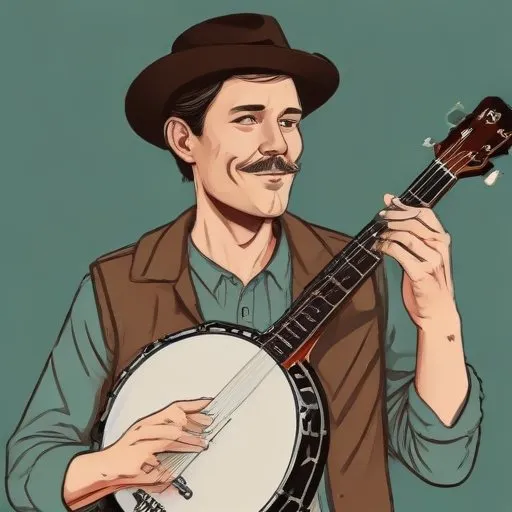
A legendary Appalachian banjo player and singer, known for preserving and promoting traditional American folk music through his authentic, soulful performances.
Lee Sexton, a master banjo player from Letcher County, Kentucky, is renowned for his unparalleled twofinger picking and dropthumb clawhammer traditional styles of east Kentucky. With a career spanning over seven decades, Sexton's music has mesmerized audiences, earning him recognition and accolades in the folk music community.
Born on March 23, 1928, Sexton's fascination with the banjo began at the tender age of eight. He would work as a field hand to earn the $1 needed to buy his first banjo, and soon received lessons from his father and uncles, including the revered banjo player Morgan Sexton. This early exposure laid the foundation for his unique playing style, which would later become his signature.
Tragedy struck when Sexton was just 23 years old. A mining accident crushed his right hand, forcing him to adapt and develop a new style of drop thumbing. This setback only fueled his determination, and by the 1940s, he had transitioned his career to the radio. His music became a staple in the local community, with regular appearances at house parties and corn shuckings.
In 1999, Kentucky Governor Paul Patton presented Sexton with the Governor's Award in the Arts, a testament to his contributions to the state's rich musical heritage. His album, Whoa Mule, released in 1988, featured recordings from a 1952 home recording with fiddler Fernando Lusk to tracks made in 2001. Four solo songs also appeared on the Smithsonian Folkways album Mountain Music of Kentucky.
Sexton was married to Opal Sexton, and together they had no children. However, he had two sons from a previous marriage, Johnny, an ordained minister, and Phillip, who shared his father's passion for music until his untimely passing in September 2000. A documentary film, Linefork, was made with Sexton and Opal in their home and community, offering a poignant glimpse into their lives and musical traditions.
Lee Sexton's music has left an indelible mark on the folk music landscape. His unique playing style, passed down through generations, has inspired countless musicians. Through his music and stories, he has preserved the rich cultural heritage of eastern Kentucky, ensuring its relevance for generations to come. As a testament to his enduring legacy, Sexton's music continues to captivate audiences, cementing his place as a true legend in the world of folk music.
Sexton's passing on February 10, 2021, marked the end of an era, but his music lives on, a testament to his unwavering dedication and passion for the craft. As we remember this remarkable individual, we are reminded of the power of perseverance, adaptability, and the importance of preserving our cultural heritage.
Born in 1919
A legendary folk musician and social activist, known for his iconic banjo-playing and protest songs that inspired generations to take action for civil rights and environmental causes.
Born in 1924
A legendary bluegrass musician who revolutionized the banjo with his unique three-finger picking style, influencing generations of country and folk artists.
Born in 1911
The "Father of Bluegrass Music" was a pioneering singer-songwriter and mandolin virtuoso who created a unique sound that blended country, folk, and Appalachian roots music. He's most known for his iconic band, the Blue Grass Boys, and hits like "Blue Moon of Kentucky" and "Uncle Pen".
Born in 1923
A legendary bluegrass singer-songwriter and musician who revolutionized folk music with his flatpicking guitar style and soulful vocals, earning seven Grammy Awards.
99 Years Old
A legendary bluegrass musician and pioneer of traditional American folk music, known for his distinctive banjo playing and haunting vocals.
Born in 1922
Folk music icon and Appalachian cultural ambassador, known for preserving and promoting traditional American folk songs and stories through her music and writings.
