


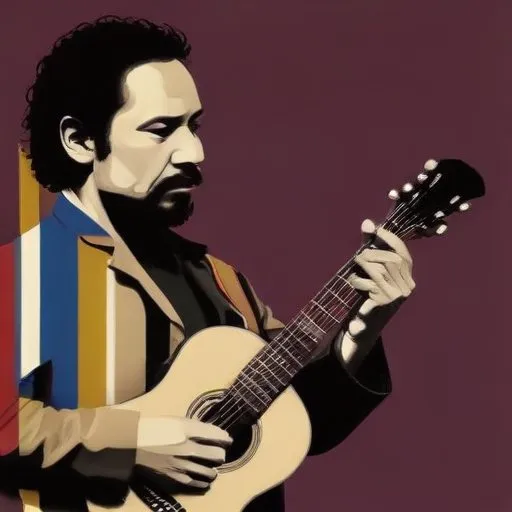
A renowned Cuban guitarist, composer, and conductor, known for blending traditional Cuban music with modern classical styles, creating a unique and captivating sound.
Renowned for his prolific contributions to the world of classical music, Leo Brouwer is a Cuban composer, conductor, and classical guitarist extraordinaire. With a career spanning over six decades, Brouwer has left an indelible mark on the music world, earning him a Member of Honour of the International Music Council.
Born on March 1, 1939, in Havana, Cuba, Brouwer comes from a family rich in musical heritage. His grandmother, Ernestina Lecuona y Casado, was a composer, and his great-uncle, Ernesto Lecuona, penned the iconic piece "La Malagueña." It was only natural that Brouwer would follow in their footsteps.
At the tender age of 13, Brouwer began his classical guitar journey under the guidance of Isaac Nicola, a student of Emilio Pujol, who was himself a student of Francisco Tárrega. This lineage of guitar mastery laid the foundation for Brouwer's future success.
In the 1960s, Brouwer's talent and dedication earned him a scholarship to study music at the Hartt College of Music of the University of Hartford, followed by a stint at the Juilliard School, where he honed his craft under the tutelage of Vincent Persichetti and Stefan Wolpe.
One of the highlights of Brouwer's early career was his participation in the premiere of Hans Werner Henze's "El Cimarrón" in Berlin in 1970. This performance marked the beginning of his international recognition as a composer and guitarist.
Brouwer's compositional style is a unique blend of Cuban rhythms, aleatoric music, and modernist influences. His early works, such as "Canticum" (1968), "La espiral eterna" (1971), and "Tarantos" (1974), showcase his affinity for experimentation and innovation.
In the 1980s, Brouwer's style shifted towards tonality and modality, as seen in his iconic solo guitar piece "El Decamerón Negro" (1981). This work has become a staple of the classical guitar repertoire, cementing Brouwer's status as a master composer.
Brouwer's contributions to music have been recognized globally. He has received numerous awards, including a 1972 scholarship from the DAAD German Academic Exchange Service, and has been honored with the title of Member of Honour of the International Music Council.
Leo Brouwer's impact on the world of classical music is multifaceted. He has inspired generations of composers, guitarists, and music enthusiasts alike. His work has traversed borders, cultures, and genres, leaving an indelible mark on the music world.
"Music is not just a profession, it's a way of life." - Leo Brouwer
In conclusion, Leo Brouwer's life and work serve as a testament to the power of dedication, innovation, and passion. As a composer, conductor, and guitarist, he continues to inspire generations, leaving behind a rich legacy that will be cherished for centuries to come.
Born in 1893
Renowned for popularizing classical guitar music and transcribing classical masterpieces for the instrument, he elevated the guitar's status as a concert instrument.
94 Years Old
A renowned pianist, composer, and conductor, he is best known for his iconic film scores, including Star Wars, Indiana Jones, and Harry Potter, which have become an integral part of popular culture.
78 Years Old
Renowned classical guitarist and educator, known for his mastery of the instrument and influential teaching methods. He has inspired generations of guitarists with his technical precision and musicality.
68 Years Old
Academy Award-winning filmmaker behind quirky, character-driven dramas and comedies, often exploring themes of family, identity, and redemption. Known for directing critically acclaimed films like "Silver Linings Playbook" and "American Hustle".
