


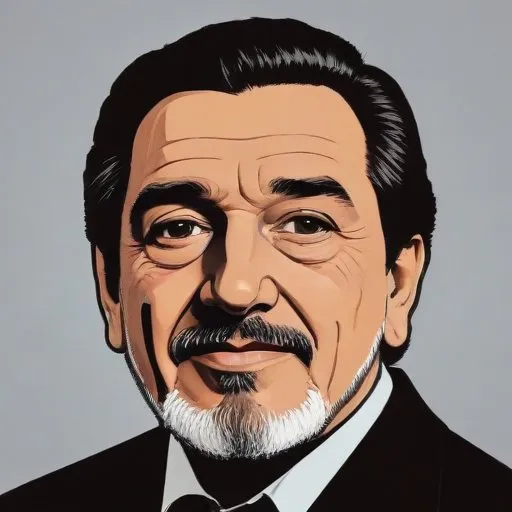
A renowned author and academic who wrote extensively on love, relationships, and human connection, inspiring millions with his heartfelt and insightful works.
Known affectionately as "Dr. Love," Leo Buscaglia was a renowned American author, motivational speaker, and professor who dedicated his life to spreading the power of love, kindness, and human connection. His groundbreaking concept of humanity's need for hugs - 5 to survive, 8 to maintain, and 12 to thrive - continues to inspire and educate people of all ages.
Felice Leonardo Buscaglia was born on March 31, 1924, in Los Angeles, California, to Italian immigrant parents. He spent his early childhood in Aosta, Italy, before returning to the United States for education. Buscaglia graduated from Theodore Roosevelt High School and later served in the U.S. Navy during World War II, where he worked in the dental section of a military hospital, helping to reconstruct shattered faces.
Using G.I. Bill benefits, Buscaglia attended the University of Southern California, where he earned three degrees: BA in 1950, MA in 1954, and PhD in 1963. He later joined the faculty and became a professor in the Department of Special Education. His dynamic speaking style and charismatic personality led to his discovery by the Public Broadcasting Service (PBS), which televised his lectures and made him a household name.
Buscaglia's most notable work is his book "Love," which was born out of his noncredit class "Love 1A" at USC. This course was a response to a student's suicide, which moved him to contemplate human disconnectedness and the meaning of life. The book explores the concept of love and its significance in our lives, and it has become a classic in the self-help genre.
Buscaglia believed that love is not just a feeling, but a choice. He advocated for the importance of human touch, stating that hugs are essential for our emotional and physical well-being. His philosophy centered around the idea that love is the foundation of all relationships, and that by embracing love, we can create a more compassionate and harmonious world.
Upon his retirement, Buscaglia was named Professor at Large, one of only two such designations on campus at that time. This honor recognized his tireless efforts to spread love, kindness, and compassion throughout his career.
Buscaglia's unique approach to life was reflected in his quirky habits. He would often rake leaves in his yard and study them, marveling at the fact that every leaf is different. He would also introduce himself to strangers in elevators, saying, "This might be the only chance I'll ever get to meet you, and I don't want to miss this chance." These anecdotes showcase his zest for life and his appreciation for the little things.
Leo Buscaglia's legacy continues to inspire generations of readers and audiences. His work has been translated into numerous languages, and his lectures have reached millions of people worldwide. His concept of the importance of hugs has become a staple in popular culture, and his philosophy of love and compassion remains a beacon of hope in today's world.
As we reflect on Buscaglia's remarkable life and achievements, we are reminded of the transformative power of love and kindness. His story serves as a testament to the impact one person can have on humanity, and his message will continue to resonate for generations to come.
Leo Buscaglia's remarkable life serves as a testament to the power of love, kindness, and compassion. His legacy will continue to inspire and educate, reminding us of the importance of human connection and the transformative power of love.
Born in 1908
Developed the Hierarchy of Needs, a pyramid-shaped model that prioritizes human needs, from basic physiological needs to self-actualization and personal growth. His work focuses on human motivation and the pursuit of happiness.
Born in 1902
Developed person-centered therapy, emphasizing empathy and genuineness to promote personal growth and self-actualization. Focused on creating a non-judgmental space for individuals to explore their thoughts and feelings.
Born in 1900
A German psychologist and sociologist who developed the concept of "social character" and explored the relationship between psychology and society, known for his humanistic and socialist approach.
Born in 1905
Austrian neurologist and psychiatrist who developed logotherapy, a form of therapy focused on finding meaning in life, and wrote about his experiences in Nazi concentration camps in "Man's Search for Meaning".
Born in 1915
A Trappist monk and writer who explored spirituality and social justice through his poetry and essays, leaving a lasting impact on Christian mysticism and contemplative thought.
