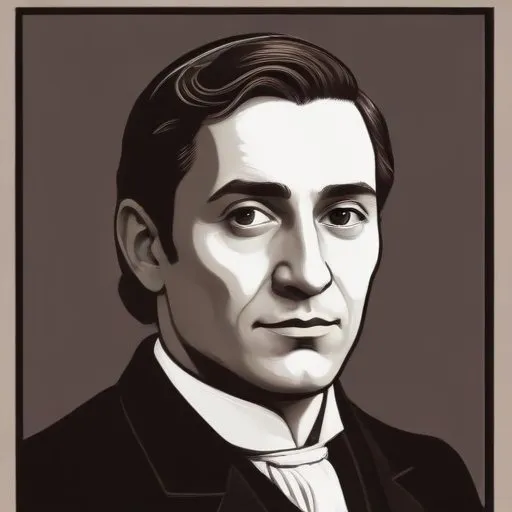
Leonardo Balada: The Pioneering Catalan-American Composer
A Musical Maestro Known for His Operas and Orchestral Works
Leonardo Balada is a renowned Catalan-American classical composer, celebrated for his innovative and eclectic approach to opera and orchestral music. With a career spanning over six decades, Balada has left an indelible mark on the world of classical music.
Early Life and Education
Born on September 22, 1933, in Barcelona, Spain, Balada began his musical journey at the Conservatori Superior de Música del Liceu, where he studied piano. In 1956, he emigrated to the United States, receiving a scholarship to study at the New York College of Music. He later transferred to the Juilliard School, graduating in 1960. During his time at Juilliard, Balada studied composition with
Vincent Persichetti, Alexandre Tansman, and
Aaron Copland, and conducting with Igor Markevitch.
Teaching Career and Notable Students
In 1970, Balada began teaching at Carnegie Mellon University in Pittsburgh, Pennsylvania, where he spent four decades shaping the next generation of musicians. Among his notable students are
John Zorn, Hankus Netsky, and Victor Padilla. Balada's pedagogical expertise has also been sought after in Spain, where he taught courses on musical composition at the Universitat Politècnica de València from 2010 to 2020.
Musical Style and Evolution
Balada's compositional style has undergone significant transformations throughout his career. Initially influenced by neoclassicism, he later adopted an avant-garde approach, as seen in his iconic work,
Guernica (1966). In the 1970s, Balada's style evolved to incorporate folk dance rhythms with avant-garde techniques, resulting in works like
Homage to Sarasate and
Homage to Casals. His mature period is characterized by a unique blend of tonality and atonality, often featuring complex rhythms and innovative orchestration.
Notable Works and Legacy
Some of Balada's most celebrated compositions include:
- Guernica (1966)
- Homage to Sarasate
- Homage to Casals
- Columbus (1983)
- The Town of Greymouth (1992)
Throughout his career, Balada has received numerous awards and honors, including the National Endowment for the Arts Fellowship and the Pennsylvania Council on the Arts Grant. His contributions to classical music have left an enduring impact, inspiring future generations of composers and musicians.
Awards and Honors
Balada has been recognized for his outstanding contributions to music with various awards and honors, including:
- National Endowment for the Arts Fellowship
- Pennsylvania Council on the Arts Grant
- Carnegie Mellon University's Distinguished Professor of Music
Personal Milestones and Key Life Events
In 1981, Balada became a naturalized citizen of the United States. He continues to compose music and teach, leaving a lasting legacy in the world of classical music.
Leonardo Balada's remarkable career serves as a testament to his innovative spirit, dedication to his craft, and tireless pursuit of musical excellence.
FAQ
What is Leonardo Baladas music style?
Leonardo Baladas music style is a fusion of modernist and avant-garde techniques with folk and popular music elements from his native Spain and adopted America.
What are some of Leonardo Baladas notable compositions?
Leonardo Balada is famous for his operas, including El Jardín de Senderos and La Muerte de Colón, as well as his orchestral works and chamber music.
Has Leonardo Balada received any awards for his music?
Yes, Leonardo Balada has received several awards, including the Premio Nacional de Música from Spain and the Serge Koussevitzky International Recording Award.
What is Leonardo Baladas contribution to music education?
Leonardo Balada has made significant contributions to music education, teaching at several institutions, including the University of Pittsburgh and Carnegie Mellon University.
Did Leonardo Balada have a performing career?
Before becoming a full-time composer, Leonardo Balada had a performing career as a pianist and conductor, performing in Spain, the United States, and Latin America.