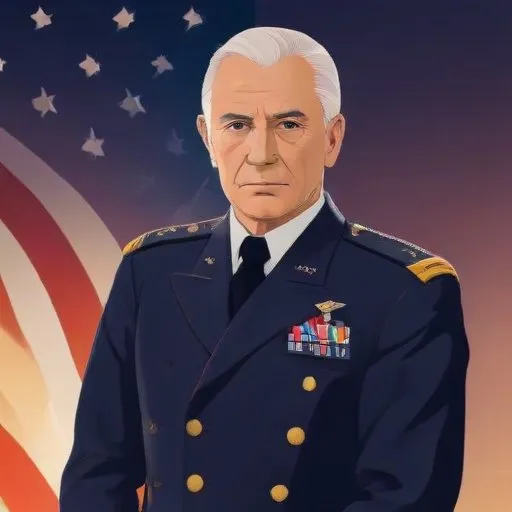
Les Aspin

Les Aspin

Les Aspin was born on July 21st, 1938

Nationality: American
Profession: Politician, Captain
Place of Birth: Detroit, Michigan, USA
Notable Work: 18th United States Secretary of Defense
Party: Democratic Party
Active Years: 1960s-1990s
Term: 1993-1994
Award: Bronze Star Medal

The 18th United States Secretary of Defense, a captain and politician, served during the Clinton administration, overseeing the US military and implementing the "don't ask, don't tell" policy. He's known for his efforts to reform the military and his role in the Somalia crisis.

Written by: Carlos Hernandez Carlos Hernandez

Known for Shaping U.S. Defense Policy and Controversial Decision-Making

Les Aspin, the 18th United States Secretary of Defense, left an indelible mark on U.S. defense policy during his tenure from 1993 to 1994. Aspin's reputation as an intellectual politician was forged through his 22-year stint as the U.S. representative for Wisconsin's 1st congressional district, where he played a pivotal role in shaping the country's defense strategy.

Early Life and Education

Born on July 21, 1938, in Milwaukee, Wisconsin, Aspin graduated summa cum laude from Yale University with a Bachelor of Arts in history in 1960. He then earned a Master of Philosophy in economics from the University of Oxford in 1962 and a Doctor of Philosophy in economics from the Massachusetts Institute of Technology in 1966. Aspin's academic pedigree laid the foundation for his future role as a influential voice in U.S. politics.

Political Career and Middle-of-the-Road Approach

Aspin's political career began in 1971 when he was elected to the U.S. House of Representatives, serving Wisconsin's 1st congressional district for 22 years. During his tenure, he developed a reputation for taking a middle-of-the-road position on contentious issues. Aspin's willingness to work across the aisle led him to support the Reagan administration's initiatives, such as the MX missile and aid to the Nicaraguan Contras, while opposing the B2 bomber and the Strategic Defense Initiative.

Convincing the House to Support the Gulf War

Aspin played a crucial role in convincing the House to support the January 1991 resolution authorizing President George H.W. Bush to use force against Iraq in response to its invasion of Kuwait. This decision showcased Aspin's ability to navigate complex foreign policy issues and build bipartisan consensus.

As Secretary of Defense: Social Issues and Military Reforms

Aspin's appointment as Secretary of Defense in 1993 marked a significant shift in his career. He faced numerous challenges, including the integration of homosexuals into the military, the role of women in combat, and the use of military force in Somalia, Bosnia, and Haiti. Aspin proposed budget cuts and restructuring of forces as part of the post-Cold War downsizing of the military, sparking controversy and debate.

The Somalia Controversy and Resignation

The deaths of U.S. soldiers in Somalia, attributed to inadequate military support, led to Aspin's resignation in 1994. This incident marked a low point in his tenure as Secretary of Defense and remains a contentious issue in his legacy.

Philosophical Contributions and Beliefs

Aspin's intellectual approach to politics was rooted in his commitment to pragmatic decision-making. He believed in balancing national security concerns with fiscal responsibility, often taking a centrist stance on complex issues. This pragmatic approach earned him respect from across the political spectrum.

Personal Life and Milestones

Aspin met his wife, Maureen Shea, in Saigon during the Vietnam War. The couple's relationship was forged amidst the tumultuous backdrop of international conflict. Aspin's personal life was marked by a sense of duty and public service, reflecting his commitment to serving the nation.

Legacy and Historical Context

Les Aspin's legacy is multifaceted, reflecting both his achievements and controversies. His commitment to pragmatic decision-making and his willingness to take a middle-of-the-road approach have inspired future generations of politicians. Aspin's tenure as Secretary of Defense played a significant role in shaping the country's defense policy, leaving a lasting impact on the military and foreign policy establishments.

Quote and Memorable Saying

"As we move into a new era, we must be prepared to adapt our military to the changing nature of the threats we face." - Les Aspin This quote encapsulates Aspin's commitment to adapting U.S. defense policy to meet evolving global challenges, a theme that resonates throughout his career.
Timeline
1938
Born in Detroit, Michigan
Les Aspin was born on July 21, 1938, in Detroit, Michigan, USA. He would go on to become an American captain and politician.
1960
Served in US Army
Aspin served in the US Army, rising to the rank of captain.
1970
Elected to US Congress
Aspin was elected to the US Congress, representing Wisconsins 1st congressional district.
1993
Became US Secretary of Defense
Aspin became the 18th US Secretary of Defense, serving under President Bill Clinton.
1995
Resigned as Secretary of Defense
Aspin resigned as Secretary of Defense, citing health reasons.
Les Aspin

Les Aspin Quiz

What was Les Aspin's role in the US government?

Score: 0/5
FAQ
What was Les Aspins role in the US government?
Les Aspin served as the 18th United States Secretary of Defense from 1993 to 1994 and later as a US Representative from Wisconsins 1st congressional district.
What were Les Aspins views on national security?
Aspin was a strong advocate for reducing military spending and shifting resources towards domestic programs. He believed in a more agile and adaptable military that could respond to emerging global threats.
How did Les Aspins military background influence his policy decisions?
Aspins experience as a captain in the US Army and his later work as a defense analyst shaped his views on national security and informed his decisions as Secretary of Defense.
What was Les Aspins relationship like with President Bill Clinton?
Aspin worked closely with President Clinton, sharing his expertise on defense issues and providing counsel on national security matters. Clinton ultimately appointed Aspin as Secretary of Defense in 1993.
What was Les Aspins legacy in the US government?
Aspins legacy is marked by his commitment to reducing military spending, promoting international cooperation, and redefining the role of the US military in a post-Cold War era.

Related People:

Caspar Weinberger

Born in 1917

A decorated military officer and lawyer who served as Secretary of Defense, playing a key role in shaping US foreign policy and military strategy during the Cold War. He's most known for his hawkish stance and significant military budget increases.

Dick Cheney

85 Years Old

The 46th Vice President of the United States, a powerful and influential figure in American politics, known for his strong conservative stance and role in shaping the country's foreign policy during the War on Terror.

Colin Powell

89 Years Old

The first African American to serve as Secretary of State, he played a crucial role in shaping US foreign policy during the Gulf War and War on Terror. He's also known for his diplomatic efforts and leadership in the military.

Donald Rumsfeld

93 Years Old

The 13th United States Secretary of Defense, a high-ranking government official, oversaw the US military during the Iraq War and was known for his controversial decisions and quotes. He's infamous for his "known unknowns" phrase.

Robert Gates

82 Years Old

The 22nd United States Secretary of Defense, serving from 2006 to 2011, is a highly respected figure in American politics and defense, known for his pragmatic approach to national security and foreign policy. He's also a renowned academic and author, having served as the president of Texas A&M University.

Leon Panetta

87 Years Old

The 23rd United States Secretary of Defense, a key figure in shaping national security policies and overseeing military operations, known for his leadership during the Iraq and Afghanistan wars.

Chuck Hagel

79 Years Old

A decorated war veteran who served as the 24th US Secretary of Defense, overseeing the country's military operations and strategy. He's known for his bipartisan approach to politics and foreign policy.