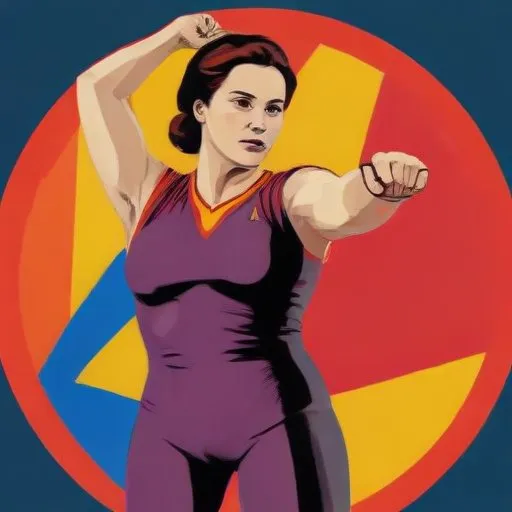
Lia Manoliu: The Romanian Discus Thrower Who Defied Age and Expectations
A Trailblazing Career in Track and Field
Lia Manoliu is renowned for being the first track and field athlete to compete in six consecutive Olympic Games, from 1952 to 1972. This remarkable feat is a testament to her dedication, perseverance, and passion for the sport. During her illustrious career, Manoliu won one gold and two bronze Olympic medals, cementing her position as one of the greatest discus throwers of all time.
Early Life and the Path to Success
Born on April 25, 1932, Manoliu began her athletic journey as a teenager, competing at the national level in tennis, table tennis, volleyball, and basketball. However, it wasn't until she turned 16 that she found her true calling in throwing events. Just two years later, she became the first Romanian woman to throw the discus over 40 meters, with a record-breaking throw of 41.44 meters in 1950.
International Career and Olympic Success
Manoliu's international career spanned over two decades, during which she participated in six Olympic Games. Her maiden Olympic appearance was in 1952 at Helsinki, where she finished sixth. In the subsequent Games, she continued to improve, winning her first Olympic bronze medal in 1960 at Rome, followed by another bronze in 1964 at Tokyo.
Defying Age and Expectations
In 1968, when many would have considered her career over, Manoliu was told by the Romanian Athletics Federation that she was too old to compete in the Olympics again. This only fueled her determination, and after months of individual training, she qualified for the Mexico City Olympics. Despite carrying an arm injury, she produced a phenomenal throw of 58.28 meters on her first attempt, winning the gold medal.
Post-Olympic Success and Legacy
After her Olympic triumph, Manoliu continued to compete, winning the UK national WAAA discus title in 1969. Her final Olympic appearance was in 1972 at Munich, where she finished ninth. She retired shortly after, leaving behind a legacy that inspired generations of athletes.
Awards and Honors
Manoliu's achievements have been recognized with numerous awards and honors, including:
- Olympic gold medalist (1968)
- Olympic bronze medalist (1960, 1964)
- UK national WAAA discus title (1969)
Personal Milestones and Key Life Events
Throughout her life, Manoliu achieved several personal milestones, including:
- Graduating from the Polytechnic Institute of Bucharest in the mid-1950s
- Overcoming age-related doubts and expectations to win the Olympic gold medal at 36
Legacy and Impact on Modern Society
Lia Manoliu's remarkable career serves as an inspiration to athletes and individuals alike. Her determination, perseverance, and passion for the sport have left an indelible mark on the world of track and field. Her legacy continues to motivate and empower others to push beyond their limits and defy expectations.
FAQ
What is Lia Manolius most famous athletic achievement?
Lia Manoliu is best known for winning the gold medal in the discus throw at the 1960 Summer Olympics in Rome, becoming the first Romanian woman to win an Olympic gold medal.
How did Lia Manoliu balance athletics and politics during her career?
Lia Manoliu was an active politician who served in the Romanian Senate and European Parliament. She balanced her athletic career with her political responsibilities, often using her platform to promote womens sports and empowerment.
What is Lia Manolius connection to the Romanian Olympic Committee?
Lia Manoliu was a member of the Romanian Olympic Committee and played a key role in promoting Olympic values and supporting Romanian athletes.
How did Lia Manolius athletic career address gender inequality in sports?
Lia Manolius athletic career helped to challenge gender inequality in sports, paving the way for future generations of female athletes. She advocated for greater recognition and support for womens sports.
What awards did Lia Manoliu receive for her athletic achievements and political service?
Lia Manoliu received several awards for her athletic achievements and political service, including the Romanian National Order of Merit and the European Olympic Committees Golden Pin.