


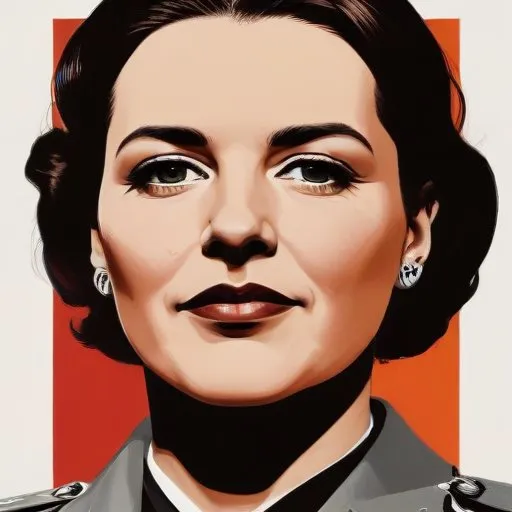
A German resistance fighter who worked to overthrow the Nazi regime from within, using their position in the Luftwaffe to gather and share intelligence with the Soviet Union. They played a key role in the Red Orchestra, a network of anti-Nazi spies.
Libertas SchulzeBoysen, a German Prussian noblewoman, defied the Nazi regime with courage and conviction, becoming a pioneering resistance fighter and an espionage agent for the Soviet Union during World War II. Born Libertas Viktoria Haas-Heye on November 20, 1913, in Paris, she would ultimately sacrifice her life for the cause, but not before leaving an indelible mark on history.
From the early 1930s to 1940, SchulzeBoysen pursued a literary career, first as a press officer and later as a writer and journalist. As an aristocrat, she had access to various echelons of German society, which she leveraged to recruit like-minded individuals into discussion groups. These gatherings, held at her and her husband Harro's apartment, became hotbeds of anti-Nazi sentiment, where they sought to influence their guests and sow the seeds of resistance.
Initially, SchulzeBoysen was sympathetic to the Nazi ideology, but her perspective shifted after marrying Luftwaffe officer Harro SchulzeBoysen. As she became more aware of the regime's atrocities, she joined her husband in actively resisting the Nazis, utilizing her position to document war crimes and gather intelligence that would eventually be used to supply the Soviet Union.
By 1940, the SchulzeBoysens had established connections with other Berlin-based anti-fascist resistance groups, including Arvid Harnack's organization. They collaborated to form an espionage network, known as the Red Orchestra (Rote Kapelle), which supplied military and economic intelligence to the Soviet Union. As a key operative, SchulzeBoysen worked as a courier, writer of seditious pamphlets, and recruiter for the group, often deputizing as the leader in her husband's absence.
When Harro was arrested by the Gestapo in August 1942, SchulzeBoysen made a valiant attempt to destroy evidence of their work and warn other members of the resistance. Despite her efforts, she was eventually captured and executed by the Nazis on December 22, 1942, at Plötzensee Prison, a victim of the very regime she fought against.
Libertas SchulzeBoysen's bravery and selflessness have inspired generations, serving as a testament to the power of resistance and defiance in the face of oppression. Her contributions to the anti-Nazi movement, as well as her role in the Red Orchestra, have cemented her place in history as a pioneering female spy and a champion of human rights.
"The only way to deal with an unfree world is to become so absolutely free that your very existence is an act of rebellion."
Libertas SchulzeBoysen's remarkable story serves as a beacon of hope and a testament to the human spirit's capacity for courage, resilience, and defiance in the face of adversity.
