


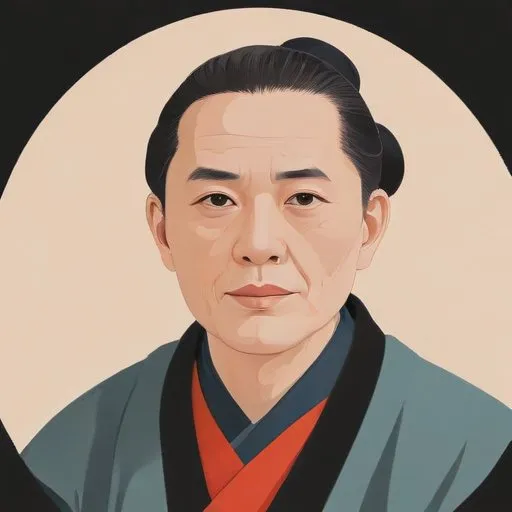
A pioneering female architect and poet who blended traditional Chinese aesthetics with modernist principles, creating iconic buildings and verses that continue to inspire.
Lin Huiyin, also known as Phyllis Whei Yin Lin, was a trailblazing Chinese architect, writer, and poet who made history as the first female architect in modern China. She was a creative force to be reckoned with, leaving an indelible mark on China's cultural heritage and architectural landscape.
Born on June 10, 1904, in Hangzhou, China, Lin Huiyin was destined for greatness. Her father, Lin Changmin, recognized her talent and encouraged her to pursue her passions. In 1920, she traveled to Europe with her father, where she was exposed to the works of renowned architects and writers, sparking her interest in the field.
In 1923, Lin Huiyin participated in the activities of the Crescent Moon Society, a prestigious literary organization. She then traveled to the United States, where she studied architecture at the University of Pennsylvania School of Fine Arts, earning a Bachelor of Arts degree in 1927. She went on to study stage art at Yale University School of Drama and later received a degree from Northeastern University in 1928.
In 1928, Lin Huiyin met her future husband, Liang Sicheng, a renowned architect and historian. Together, they formed a formidable partnership, both romantically and professionally. They collaborated on numerous projects, including the annotation and review of the Great Tang Records on the Western Regions, which led to the discovery of the Foguang Temple on Mount Wutai, a significant cultural heritage site.
Lin Huiyin's contributions to Chinese culture are vast and varied. She played a crucial role in the design of the emblem of the People's Republic of China and the Monument to the People's Heroes. She also innovated cloisonné craftsmanship, a traditional Chinese art form. Her literary works, including Poetry Collection of Lin Huiyin and Essays of Lin Huiyin, are still celebrated today.
In 1949, Lin Huiyin and her husband became professors at Tsinghua University in Beijing, where they dedicated themselves to restoring China's cultural heritage sites. This passion project became a lifelong commitment, and Lin Huiyin continued to work tirelessly until her passing on April 1, 1955. Her niece, the American artist Maya Lin, has carried on her legacy, making a name for herself in the world of architecture and design.
Lin Huiyin's life's work has left an indelible mark on modern China. She was a true pioneer, breaking barriers and paving the way for future generations of women in architecture and literature. Her dedication to preserving China's cultural heritage has inspired countless individuals, and her creative legacy continues to inspire and influence artists, architects, and writers around the world.
Born in 1917
A renowned architect who designed iconic buildings that blend modernity with cultural sensitivity, leaving an indelible mark on the urban landscape.
