


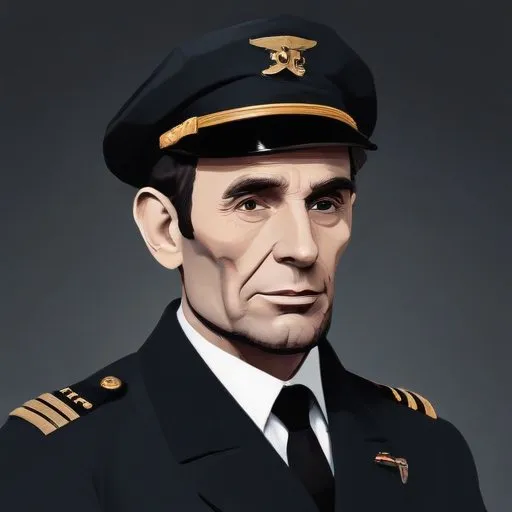
A pioneering aviator who set numerous records for altitude and distance, and performed death-defying stunts in his biplane, earning him the nickname "The King of the Sky."
Known as the "Master Birdman" and "The King of the Sky," Lincoln J. Beachey was a pioneering American aviator who thrilled audiences with his daring aerial stunts and contributed significantly to the development of modern aerobatics. With a career spanning over a decade, Beachey's groundbreaking feats in the skies earned him international recognition and paved the way for future generations of pilots.
Born on March 4, 1887, in San Francisco, California, Beachey developed an interest in aviation at a young age. He began his career in 1905 as a mechanic for the California-based Baldwin Park Aerodrome, where he built and repaired gliders. This hands-on experience eventually led him to learn flying from renowned aviator and instructor, Thomas Baldwin.
In 1911, Beachey started performing aerial stunts and quickly gained popularity for his death-defying tricks, including loops, dives, and spirals. He became the first pilot to perform a loop-the-loop, earning him the nickname "The King of the Sky." Beachey's innovative techniques also included flying upside down, backwards, and even with his feet dangling outside the cockpit.
Beachey's passion for flying was not just about performing stunts; he believed that aviation could bring people together and promote world peace. He advocated for the development of commercial air travel, foreseeing its potential to bridge geographical divides and foster global understanding.
Despite his daredevil profession, Beachey was known for his humble and kind nature. He married twice and had two children. Tragically, his life was cut short in a plane crash on March 14, 1915, during a demonstration flight at the San Francisco Panama-Pacific Exposition.
Lincoln J. Beachey's contributions to aerobatics and aviation paved the way for modern airshows and aerobatic competitions. His legacy extends beyond the skies, inspiring generations with his courage, innovation, and philanthropic spirit. His story serves as a testament to the power of human achievement and the importance of pushing boundaries to achieve greatness.
Born in 1871
Co-founder of the Wright Company, credited with inventing and building the world's first successful airplane, making powered, controlled, and sustained heavier-than-air human flight a reality.
Born in 1867
Designed and built the world's first successful airplane, making the first controlled, powered, and sustained heavier-than-air human flight. This innovation revolutionized transportation and global connectivity.
Born in 1897
Pioneering female aviator who broke records and pushed boundaries in flight, mysteriously disappearing during a attempted circumnavigation of the globe.
Born in 1902
The first person to fly solo non-stop across the Atlantic Ocean, completing a historic 33.5-hour flight in 1927 and becoming an international hero and aviation icon.
Born in 1890
A Medal of Honor recipient and pioneering aviator, known for his heroic feats in World War I and his leadership in the aviation industry.
Born in 1896
Led a daring bombing raid on Tokyo in 1942, earning the Medal of Honor for his bravery and helping to turn the tide of World War II.
Born in 1923
The first test pilot to break the sound barrier, achieving a historic milestone in aviation and paving the way for supersonic flight. This daring feat cemented his status as a legendary figure in the history of flight.
Born in 1889
Designed and built the first successful single-main-rotor helicopter, revolutionizing air travel and search-and-rescue operations. Founded a leading aircraft manufacturing company that still bears his name.
