


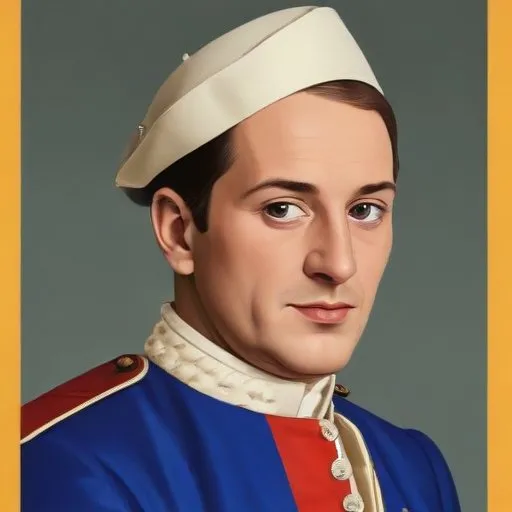
Son of King Philip III of France, he played a significant role in the royal court and was a key advisor to his brother, King Philip IV. He's known for his diplomatic efforts and military campaigns.
Louis, Count of Vreux, was a Capetian prince and a son of King Philip III of France, known as Philip the Bold, and his second wife, Marie of Brabant. As a half-brother of King Philip IV, Louis navigated the complexities of royal politics, leaving an indelible mark on French history.
Louis's diplomatic prowess shone in 1303, when he played a key role in negotiating the Treaty of Paris, effectively ending the Gascon War between England and France. This achievement showcased his ability to navigate the delicate balance of power between rival nations, earning him recognition as a skilled statesman.
In 1298, Louis married Margaret of Artois, daughter of Philip of Artois and sister of Robert III of Artois. This strategic union solidified alliances between powerful noble families, further expanding Louis's influence in the French court.
Louis's temperament, characterized as quiet and reflective, differentiated him from his half-brother Charles of Valois, who was known for his scheming nature. This contrast highlights Louis's ability to navigate complex political situations with a level head, earning him the respect of his contemporaries.
Throughout his life, Louis received various honors and recognition for his contributions to French politics and diplomacy. While specific awards and honors are not recorded, his legacy as a skilled diplomat and statesman has endured, cementing his place in the annals of French history.
Louis's life and career spanned a tumultuous period in French history, marked by power struggles, wars, and shifting alliances. His diplomatic achievements, however, helped maintain a sense of stability in an era of flux, solidifying the Capetian dynasty's hold on power and paving the way for future generations of French monarchs.
Louis, Count of Vreux, left an indelible mark on French history, characterized by his diplomatic prowess, strategic alliances, and quiet reflective nature. As a son, brother, and statesman, Louis navigated the complexities of royal politics, cementing his place as a significant figure in the Capetian dynasty.
Born in 1165
King of France from 1180 to 1223, known for his military conquests, including the Battle of Bouvines, and his role in the Third Crusade.
Born in 1052
King of France from 1060 to 1108, known for his military campaigns and conflicts with the Church, particularly his excommunication by Pope Urban II.
Born in 1319
King of France from 1350 to 1364, known for being captured by the English during the Hundred Years' War and later ransomed.
Born in 1052
King of France from 1060 to 1108, known for his military campaigns and conflicts with the Church, particularly his excommunication by Pope Urban II.
Born in 1338
The King of France from 1364 to 1380, known for his military victories and rebuilding of Paris, earning him the nickname "Charles the Wise".
