


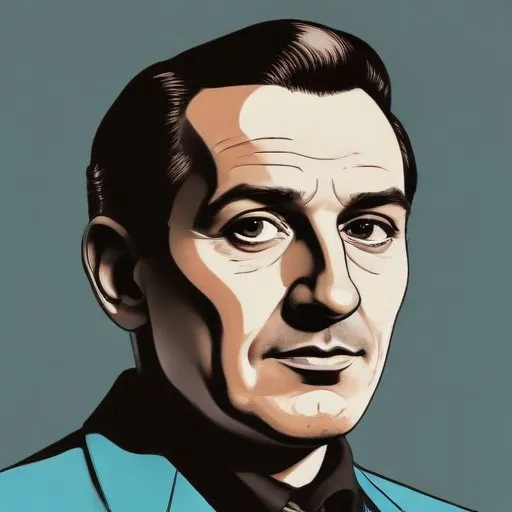
A Luxembourgish sculptor renowned for his modernist and abstract works, often featuring geometric shapes and exploring the relationship between form and space.
Lucien Wercollier, a renowned Luxembourgish sculptor, is celebrated for his stunning works of art in bronze, marble, wood, alabaster, stone, and onyx. His creations, ranging from public monuments to private masterpieces, have left an indelible mark on the art world.
Born on July 26, 1908, in Luxembourg, Wercollier's artistic talents were evident from a young age. During World War II, he refused to join the Nazi-backed Reichskulturkammer, an organization that sought to suppress artistic freedom and imposed the "Aryan spirit" on creative works. This bold move led to his arrest in 1942, following his participation in a nationwide strike against the Nazi occupation.
Wercollier's imprisonment took him to the Neumünster Abbey in Luxembourg City, where he was initially held. Today, the abbey is home to the Lucien Wercollier Cloister, showcasing an impressive collection of his private works. Later, he was transferred to the Hinzert concentration camp in Germany, where he witnessed firsthand the atrocities of the war. This experience profoundly impacted his art, as seen in his poignant bronze sculpture on the camp's grounds, honoring the prisoners and victims of the camp.
After his liberation, Wercollier returned to Luxembourg and joined the Nouvelle Équipe, a group of progressive artists seeking innovation and modernity in art. In 1954, he co-founded Iconomaques, another influential art collective that pushed the boundaries of Luxembourgish art.
Wercollier's public monuments in bronze and marble are scattered across Luxembourg, Belgium, France, Germany, Israel, Switzerland, and the United States. One of his most notable works is the lighthouse-shaped National Monument to the Strike in Wiltz, Luxembourg, which he created in 1965. This monument commemorates the bravery of those who resisted the Nazi occupation.
Wercollier's art is characterized by its emotional depth, technical mastery, and commitment to social justice. His sculptures often explore the human condition, love, and the struggle for freedom. Through his work, he aimed to celebrate life, hope, and the resilience of the human spirit.
Lucien Wercollier's remarkable life and artistic achievements serve as a beacon of hope, resistance, and creativity in the face of adversity. His legacy continues to inspire generations of artists, art lovers, and anyone who believes in the transformative power of art.
"Art is not just a reflection of life, but a way to transform it."
This quote, often attributed to Wercollier, encapsulates his philosophy on the role of art in society. Through his life and work, Wercollier showed us that art can be a powerful force for change, a beacon of hope in times of darkness, and a testament to the enduring human spirit.
