


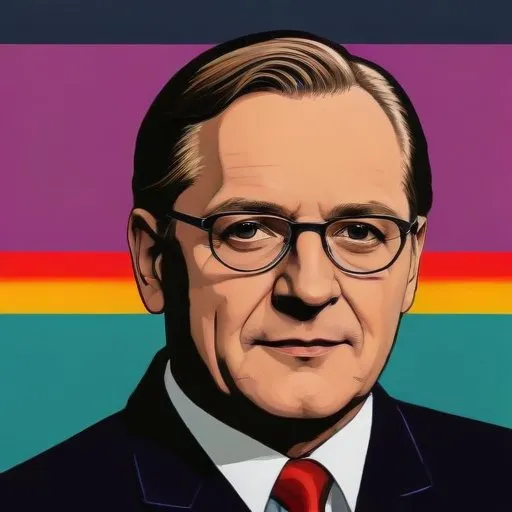
A German politician who served as a member of the Bundestag and was a prominent figure in the East German dissident movement, known for his advocacy for human rights and democracy.
Lutz Heilmann, a German politician, made headlines in 2005 when he was elected to the Bundestag as a member of the left-wing party Die Linke. However, his political career was marred by controversy when it was revealed that he had worked for the Stasi, the East German secret police, from 1985 to 1990.
Heilmann's employment record at the Stasi states that he joined the organization due to political motivation and identified strongly with his work. He was part of the Hauptverwaltung Aufklrung Personenschutz department, a key entity within the Stasi responsible for personal security and surveillance. This revelation sparked outrage among many, including Hubertus Knabe, the director of the Berlin-Hohenschnhausen Memorial, who criticized Heilmann's nomination as an MP.
Despite the controversy, Heilmann narrowly survived an impeachment by the party electorate following his untruthfulness about his Stasi career prior to becoming an MP. His Bundestag term ended in 2009, and he failed to be nominated for a second term.
In 2008, Heilmann caused a stir when he obtained a preliminary injunction to block the website wikipedia.de, a search portal run by Wikimedia Deutschland. This move sparked national and international attention, further fueling the controversy surrounding his political career.
Lutz Heilmann's legacy is marked by controversy and criticism. His Stasi connection has led many to question his commitment to democratic values and his fitness for political office. Despite this, his election to the Bundestag highlights the complexities and nuances of German politics, where individuals with checkered pasts can still rise to prominence.
Lutz Heilmann was born on September 7, 1966, in Zittau, East Germany. Little is known about his personal life, although it is clear that his political career has been marked by controversy and turmoil.
Lutz Heilmann's story serves as a reminder that politics is often a complex and messy arena, where individuals with questionable pasts can still wield significant influence. While his political career may have been cut short, his legacy continues to spark important conversations about accountability, transparency, and the role of politicians in shaping our democratic institutions.
72 Years Old
The first female Chancellor of Germany, serving for 16 years, known for her leadership during the European sovereign-debt crisis and her role in shaping the European Union's policy. She's a highly influential figure in modern politics.
68 Years Old
A physician-turned-politician who served as Germany's Defense Minister and later became the President of the European Commission, known for shaping the EU's policies and response to global crises.
68 Years Old
Federal Minister for Special Affairs of Germany, overseeing various government departments and advising the Chancellor, known for his key role in shaping the country's policies and crisis management.
