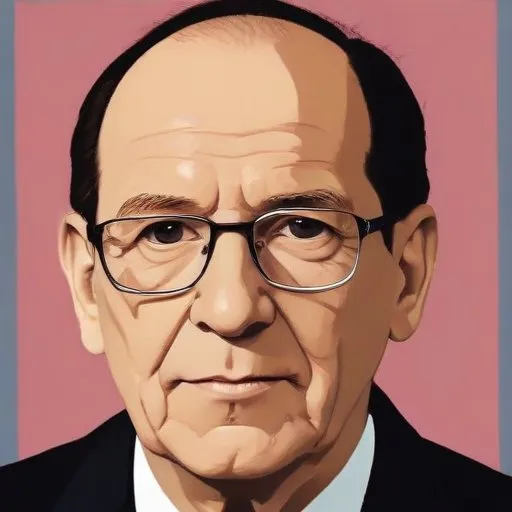
The Enigmatic Life and Legacy of Lyndon LaRouche
A Political Activist and Perennial Presidential Candidate
Lyndon LaRouche was a prominent figure in American politics, known for founding the LaRouche movement and its main organization, the National Caucus of Labor Committees (NCLC). He was a polarizing figure, perpetually shrouded in controversy, and yet, his influence on modern society cannot be ignored.
Early Life and Radicalization
Born on September 8, 1922, in Rochester, New Hampshire, LaRouche was drawn to socialist and Marxist movements in his twenties during World War II. As a Trotskyist, he worked as a management consultant in New York City in the 1950s. However, by the 1960s, he became increasingly radical, engaging in smaller and more fringe groups.
The Birth of the LaRouche Movement
In the 1970s, LaRouche created the foundation of the LaRouche movement, which would eventually become synonymous with conspiracy theories, violent and illegal activities, and political extremism. This marked a significant shift from his earlier left-wing ideologies to radical right-wing politics, embracing antisemitism and conspiracy theories.
Electoral Success and Controversy
Despite the movement's relatively small size, estimated to be only a few thousand members, it had an outsized political influence. The LaRouche movement raised over $200 million and fielded candidates in more than 4,000 elections in the 1980s. In 1986, LaRouchite candidates won the Democratic primaries for the Illinois gubernatorial election and related state offices, alarming Democratic Party officials, who branded them as "kook fringe."
Philosophical Contributions and Beliefs
LaRouche's beliefs were a complex web of conspiracy theories, Marxist ideologies, and right-wing extremism. He alleged that he was targeted for assassination by Queen
Elizabeth II, Zionist mobsters, and even his own associates, who he claimed were brainwashed by CIA and British spies.
Personal Milestones and Key Life Events
- In 1989, LaRouche was convicted of fraud and served five years in prison.
- Throughout his life, LaRouche ran for president eight times, from 1976 to 2004.
Influence on Modern Society
LaRouche's movement had a significant impact on modern society, influencing the political landscape and spreading conspiracy theories. Despite being widely criticized, his followers remained fiercely loyal, and his ideology continues to permeate fringe groups and online communities.
Controversies and Public Perception
LaRouche was often described as a cult leader, and his movement was likened to a cult. He was accused of harassing opponents, using violent tactics, and disseminating misinformation. His extreme beliefs and actions led to widespread condemnation from both the left and right.
Legacy and Historical Context
LaRouche's life and legacy are a testament to the complexities of American politics and the dangers of extremism. His movement serves as a cautionary tale, highlighting the risks of unchecked power, conspiracy theories, and the blurring of political lines.
Notable Quotes
- "The only way to get a good job is to create it yourself." - Lyndon LaRouche
Comparative Analysis with Contemporaries
LaRouche's movement and ideology can be compared to other controversial figures and groups, such as the Church of Scientology, the Ku Klux Klan, and the John Birch Society. While distinct in their beliefs, they share a common thread of extremism, conspiracy theories, and a rejection of mainstream politics.
Personal Relationships and Anecdotes
LaRouche's personal relationships were marked by controversy and turmoil. His followers often described him as charismatic and persuasive, while critics saw him as manipulative and controlling.
Impact on Pop Culture
LaRouche's influence can be seen in popular culture, from references in TV shows and films to his cameo appearances in documentaries and news programs. His larger-than-life persona and extreme beliefs have captivated audiences, solidifying his place in modern infamy.
Trivia and Fun Facts
- LaRouche was a prolific writer, publishing numerous books and articles on politics, economics, and philosophy.
- He was known for his eclectic fashion sense, often wearing a signature gray suit and tie.
Conclusion
Lyndon LaRouche's life was a complex tapestry of extremism, controversy, and speculation. While his beliefs and actions were widely condemned, his influence on modern society cannot be ignored. As we reflect on his life and legacy, we are reminded of the dangers of unchecked power and the importance of critical thinking in the face of extremism.