


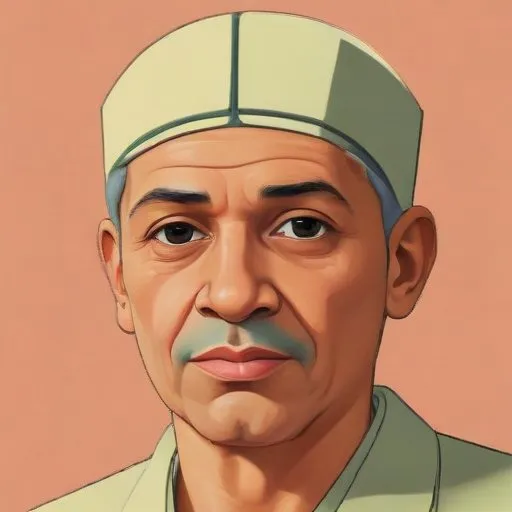
Egypt's pioneer of modern sculpture, credited with creating iconic works that blended Pharaonic and Islamic styles, earning him the title "Father of Modern Egyptian Sculpture."
Mahmoud Mokhtar, a pioneering Egyptian sculptor, is credited with signaling the beginning of the Egyptian modernist movement and is often referred to as the father of modern Egyptian sculpture. His iconic work, "Nahdat Misr" or "Egypt's Awakening," is a testament to his influential role in shaping the country's art scene.
Born on May 10, 1891, in the village of Tanbara, in the Nile Delta region of Egypt, Mokhtar's early life was marked by tragedy, losing his father at a young age. He moved to Cairo with his mother, where he developed a passion for art. In 1908, he joined the newly founded Egyptian School of Fine Arts, marking the beginning of his artistic journey.
In 1912, Mokhtar traveled to Paris, where he joined the studio of Jules Coutan at the École des Beaux-Arts. During his time in Paris, he was exposed to various artistic styles, including Art Nouveau and Cubism. He remained in Paris through World War I, eventually becoming employed at the Musée Grévin, where he worked under the direction of his former teacher, Guillaume Laplagne.
Inspired by the Egyptian Revolution of 1919, Mokhtar sculpted a small maquette of "Nahdat Misr," a work that would go on to become an iconic symbol of Egyptian nationalism. The maquette caught the attention of young Egyptian revolutionaries, who launched a national campaign to erect a monumental version of the work. The unveiling ceremony took place in Cairo's Bab al-Hadid Square, outside the city's main train station. The statue was later relocated to a site outside Cairo University.
Mokhtar's legacy extends beyond his iconic work, "Nahdat Misr." He is credited with paving the way for modern Egyptian art, influencing generations of artists to come. His work is characterized by its unique blend of traditional Egyptian motifs and modernist techniques, earning him a place among the pioneers of the Egyptian Art movement.
In Cairo, the Mukhtar Museum houses Mokhtar's works in various media, providing a glimpse into the artist's creative process and artistic vision. The museum serves as a testament to Mokhtar's enduring legacy, showcasing his contribution to Egyptian art and culture.
In 2012, Google commemorated Mokhtar's 121st birth anniversary with a Google Doodle, recognizing his significance in the world of art and culture.
Mahmoud Mokhtar's remarkable life and career serve as a testament to his enduring legacy in the world of Egyptian art. His iconic work, "Nahdat Misr," continues to inspire generations, solidifying his position as the father of modern Egyptian sculpture.
Born in 1918
Led Egypt through a period of rapid modernization and nationalism, becoming a symbol of Arab unity and resistance to Western influence. He nationalized the Suez Canal and implemented socialist reforms.
Born in 1911
Renowned Egyptian literary mastermind behind rich, poignant novels and plays that explore the human condition, earning the Nobel Prize in Literature in 1988.
