


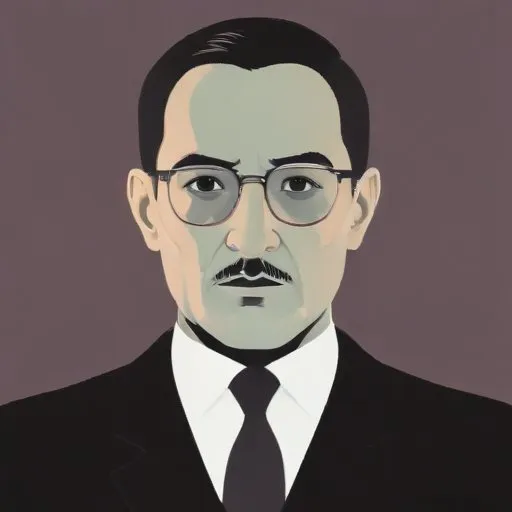
Developed insulin coma therapy for schizophrenia treatment, a controversial yet influential approach in psychiatry.
Manfred Sakel, a distinguished Austrian-American neurophysiologist and psychiatrist, is renowned for developing insulin shock therapy in 1927, a groundbreaking treatment for mental illnesses. This innovative approach revolutionized the field of psychiatry, making Sakel a trailblazer in his time.
Sakel was born on June 6, 1900, in Nadvirna, a small town in the former Austria-Hungary Empire (now Ukraine). He pursued medicine at the University of Vienna, specializing in neurology and neuropsychiatry from 1919 to 1925.
In 1927, Sakel stumbled upon an unusual observation while working at a hospital in Vienna. He noticed that insulin-induced comas and convulsions had a temporary, yet profound, impact on the mental state of drug addicts and psychotics. This chance discovery led him to develop insulin shock therapy, which he began practicing in 1933.
Sakel's treatment involved administering high doses of insulin to induce a hypoglycemic crisis, resulting in coma and convulsions. He reported that up to 88% of his patients showed significant improvement, sparking widespread interest and adoption of the therapy worldwide. However, other researchers soon revealed mixed results, and the treatment was eventually discredited due to its biased patient selection, risks, adverse effects, and fatalities.
In 1936, Sakel emigrated to the United States, where he became an attending physician and researcher at the Harlem Valley State Hospital. He continued to work on his insulin shock therapy, refining his techniques and methods.
Sakel's insulin shock therapy, despite its controversies, contributed significantly to the development of modern psychiatry. His work paved the way for the introduction of electroconvulsive therapy in the 1940s and the first neuroleptics in the 1950s. Although his method was eventually replaced, Sakel's innovative spirit and determination to find new treatments for mental illnesses remain an inspiration to researchers and clinicians today.
Sakel passed away on December 2, 1957, due to a heart attack in New York City. Throughout his life, he remained dedicated to his work, driven by a passion to understand and treat mental health disorders.
Sakel's legacy serves as a testament to the power of innovative thinking and the importance of continued research in the pursuit of better understanding and treating mental health disorders.
Born in 1856
Pioneering psychoanalyst who developed theories on the subconscious mind, childhood experiences, and the structure of personality, revolutionizing our understanding of human behavior and psychology.
Born in 1875
Developed the concept of collective unconscious and archetypes, and founded analytical psychology, which emphasizes the integration of opposites and the process of individuation.
Born in 1857
A Swiss psychiatrist who coined the term "schizophrenia" and developed a more humane approach to treating mental illnesses, also advocating for forced sterilization of people with mental disabilities.
Born in 1870
Developed the concept of individual psychology, focusing on the importance of early childhood experiences and the drive for superiority to overcome feelings of inferiority.
Born in 1882
Developed groundbreaking psychoanalytic theories, particularly on child development and the role of unconscious emotions, influencing modern psychotherapy and parenting practices.
Born in 1901
A pioneering psychiatrist who developed unconventional hypnotherapy techniques, using storytelling and indirect suggestion to treat patients, and wrote extensively on the subject.
