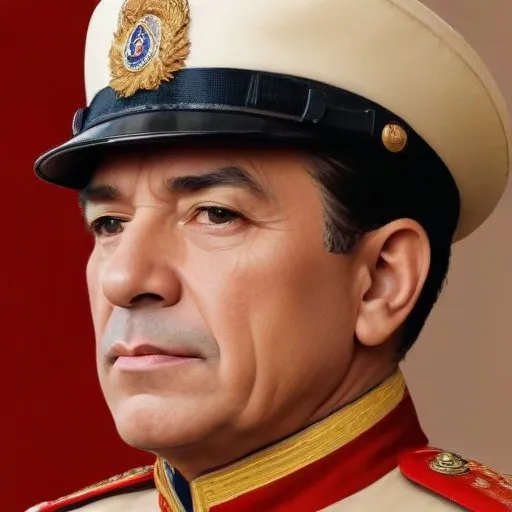
Manuel Contreras

Manuel Contreras

Manuel Contreras was born on May 4th, 1929

Full Name: Manuel Sebastián Contreras Sepúlveda
Place of Birth: Santiago, Chile
Profession: Chilean general
Known For: Director of DINA
Nationality: Chilean
Birth Date: May 4, 1929
Death Date: August 7, 2015
Zodiac Sign: Taurus

A Chilean general who led the country's secret police during Augusto Pinochet's regime, notorious for human rights abuses and political repression. He was convicted of multiple crimes, including murder and kidnapping.

Written by: Thomas Blackwood Thomas Blackwood

Manuel Contreras: The Notorious Head of Chile's Secret Police

Manuel Contreras, also known as Juan Manuel Mamo Guillermo Contreras Sepúlveda, was a notorious Chilean Army officer who served as the head of the National Intelligence Directorate (DINA), Chile's secret police during the dictatorship of General Augusto Pinochet. He is infamous for his role in numerous human rights abuses, forced disappearances, and assassinations, earning him the nickname "The Butcher of Chile."

Early Life and Career

Contreras was born on May 4, 1929, in Santiago, Chile. After his parents' death when he was just six or seven years old, he was raised by his father's relatives in Osorno, where he completed his primary education. He later enrolled in the Military School in 1944, graduating with top honors in 1947.

Contreras' military career progressed rapidly, with him becoming a lieutenant in 1952 and returning to the Military School as a sapper instructor. He married María Teresa Valdebenito Stevenson in 1953 and became part of the newly established San Antonio School of Engineers.

Rise to Power and DINA

Contreras' fortunes changed dramatically when he met Captain Augusto Pinochet at the War Academy, where he was a professor of strategy. Pinochet's lectures often centered around his concerns about the success of the Cuban Revolution, which resonated with Contreras. This encounter marked the beginning of a long and fateful relationship between the two men.

In 1966, Contreras returned to the War Academy as a professor of intelligence, and in 1973, Pinochet, now General, seized power in a military coup. Contreras became the head of DINA, Chile's secret police, which he used to crush opposition to Pinochet's regime. During this period, DINA was responsible for countless human rights abuses, forced disappearances, and assassinations.

In 1995, Contreras was convicted of the murder of Chilean diplomat Orlando Letelier in Washington, D.C. and sentenced to seven years in prison. However, at the time of his death in 2015, he was serving 59 unappealable sentences totaling 529 years in prison for kidnapping, forced disappearance, and assassination.

Manuel Contreras' legacy is one of terror and brutality. His role in Pinochet's regime has been widely condemned, and he remains one of the most hated figures in Chilean history. Despite his eventual conviction and imprisonment, the impact of his actions continues to be felt, and his name serves as a reminder of the dark days of Chile's past.

  • After graduating from the Military School, Contreras was known for his exceptional military skills and strategic thinking.
  • He was a professor of intelligence and logistics at the War Academy, where he taught future military leaders, including Pinochet.
  • Under Contreras, DINA became one of the most feared and notorious secret police forces in Latin America.
  • Contreras was accused of embezzling millions of dollars from DINA's funds, which he used to finance his lavish lifestyle.
  • He was known for his close relationship with Pinochet, who protected him from accountability for his crimes until the end of the regime.

Manuel Contreras' life was marked by violence, corruption, and terror. His actions will be remembered as a dark stain on Chile's history, and his legacy serves as a reminder of the dangers of unchecked power and the importance of holding those responsible for human rights abuses accountable.

Timeline
1929
Born in Santiago, Chile
Manuel Contreras was born on May 4, 1929, in Santiago, Chile. He would go on to become a prominent Chilean general.
1950
Joined Chilean Army
Contreras enlisted in the Chilean Army, beginning his military career.
1960
Rapid Rise Through Ranks
Contreras quickly rose through the ranks, becoming a general and influential figure in the Chilean military.
1973
Played Key Role in Coup
Contreras played a key role in the military coup that overthrew President Salvador Allende, leading to a period of authoritarian rule.
2003
Convicted of Human Rights Abuses
Contreras was convicted of human rights abuses committed during the Pinochet regime, serving time in prison.
Manuel Contreras

Manuel Contreras Quiz

What was Manuel Contreras' role in Augusto Pinochet's regime?

Score: 0/5
FAQ
What was Manuel Contreras role in the Chilean military?
Contreras was a Chilean general who served as the head of the Dirección de Inteligencia Nacional (DINA), the secret police force established by Augusto Pinochets military regime, from 1973 to 1978.
What human rights abuses were attributed to Manuel Contreras?
Contreras was accused of ordering and covering up numerous human rights abuses, including torture, forced disappearances, and extrajudicial killings, during his tenure at DINA.
How did Manuel Contreras actions impact Chilean politics and society?
Contreras actions contributed to a climate of fear and repression in Chile, undermining democratic institutions and human rights, and leading to widespread international condemnation.
What were the consequences of Manuel Contreras actions?
Contreras was eventually arrested and charged with various crimes, including murder and kidnapping, and was sentenced to life imprisonment in 2002.
How did Manuel Contreras legacy influence Chilean-Pinochet regime relations?
Contreras legacy continues to cast a shadow over Chilean politics, serving as a reminder of the regimes atrocities and the need for accountability and truth-telling.

Related People:

Augusto Pinochet

Born in 1915

Chile's authoritarian leader from 1973 to 1990, known for his military coup and human rights abuses, as well as implementing free-market economic policies.