


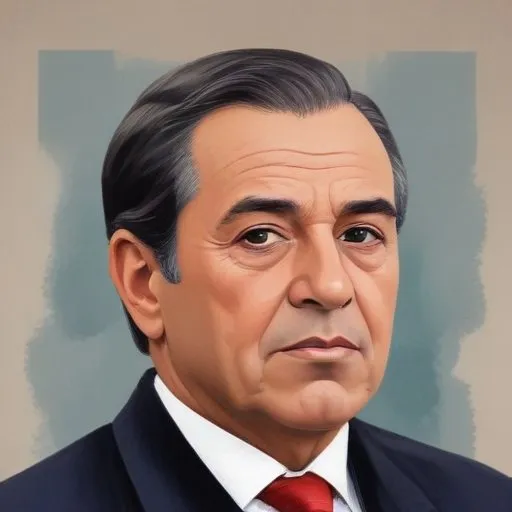
The 4th President of Brazil, a key figure in the country's early 20th-century politics, known for his role in shaping Brazil's economy and international relations. He's also remembered for his efforts to reduce foreign debt and promote national development.
Manuel Ferraz de Campos Sales is best known for his instrumental role in shaping modern Brazil's economy and politics during the late 19th and early 20th centuries. As a prominent statesman, lawyer, and diplomat, Sales played a crucial part in negotiating Brazil's foreign debt, reforming the country's financial system, and promoting regional development.
Born on February 15, 1841, in Campinas, São Paulo, Brazil, Sales came from a family of farmers. He pursued higher education in law at the University of São Paulo, graduating in 1863. His early years as a lawyer and journalist laid the foundation for his future political career.
Sales' political journey began in 1873 when he was elected to the São Paulo Provincial Assembly. He later served as the Governor of São Paulo (1889-1891) and President of Brazil (1898-1902). During his presidency, Sales implemented several significant reforms, including:
Sales was a strong advocate for federalism, decentralization, and regional autonomy. He believed in the importance of balancing individual rights with the need for a strong, centralized government. His political philosophy emphasized the role of the state in promoting economic development and social welfare.
Sales married Maria José de Oliveira in 1867, and they had six children together. He was known for his strong work ethic, simplicity, and modesty, which earned him the respect of his contemporaries. Sales passed away on June 28, 1913, in Santos, São Paulo.
Sales' legacy extends beyond his presidency. His economic reforms and decentralization policies have had a lasting impact on Brazil's development. He is remembered as a statesman who worked towards strengthening regional autonomy, promoting social welfare, and stabilizing the economy.
Sales' presidency was not without controversy. He faced criticism for his handling of the Brazilian Navy Revolt in 1893-1894 and his involvement in the Vaccine Revolt of 1904. Despite these challenges, Sales remained committed to his vision for a stronger, more unified Brazil.
One of Sales' most famous quotes is: "A nação que não tem consciência de sua grandeza, não é grande" ("A nation that is not aware of its greatness is not great"). This quote reflects his belief in the importance of national pride and self-awareness.
Sales' presidency coincided with a period of significant transformation in Brazil, marked by the abolition of slavery, the establishment of the republic, and rapid modernization. His reforms and policies played a crucial role in shaping the country's future, earning him a place among Brazil's most important historical figures.
Born in 1847
The 6th President of Brazil, a key figure in the country's early 20th-century development, known for modernizing the nation's infrastructure and economy. He's also recognized for his role in establishing the country's Supreme Court.
