


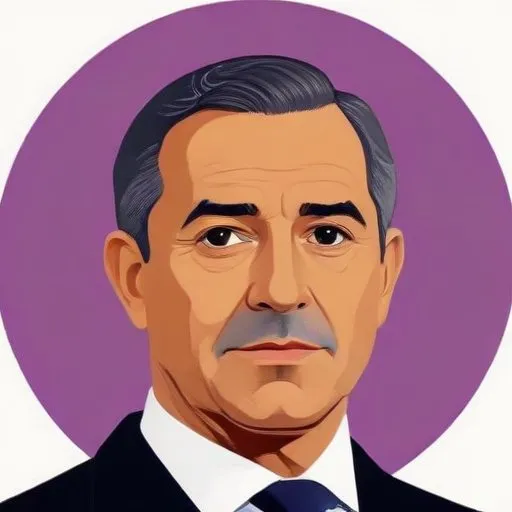
A Portuguese politician who served as a Minister of Finance and played a key role in the country's economic development during the 1980s.
Manuel Loff, a renowned Portuguese historian, politician, and academic, has left an indelible mark on the country's understanding of its complex and multifaceted past. As a member of the Assembly of the Republic, Portugal's national legislature, Loff has been instrumental in shaping the country's historical narrative, offering a critical perspective on the nation's most tumultuous periods.
Born on February 3, 1965, in Porto, Portugal, Loff pursued his passion for history, earning a degree in the subject from the University of Porto in 1984. He further enhanced his academic credentials with a postgraduate qualification in history education in 1991 and a master's degree in 19th and 20th century history from NOVA University Lisbon in 1994. His thesis, titled "Franquismo y Salazarismo en la época de Hitler. Régimen político, prejuicio ideológico y oportunidad histórica en la redefinición internacional de Portugal y España (1936-1942)," demonstrated his profound understanding of the intricacies of European history.
Loff's academic career has been marked by his unwavering commitment to historical research and education. He served as a teaching assistant at the Autonomous University of Madrid (1996-1997) and later as an assistant lecturer (1997-2004) and assistant professor (2004-2010) at the University of Porto. In 2010, he became a tenured associate professor, a position he held until 2023. Loff's expertise has also been sought after by international institutions, including the Hebrew University of Jerusalem, where he was a visiting professor in 2013.
In addition to his academic pursuits, Loff has been an active participant in Portuguese politics. As an independent affiliated with the Portuguese Communist Party, he represented Porto in the Assembly of the Republic from March 2023 to September 2023. His experience as a columnist for the newspaper Público (2011-2023) and a commentator on CNN Portugal (2022-2023) and Rádio e Televisão de Portugal has provided him with a platform to engage with the broader public and share his insights on historical and political matters.
Loff's research has focused on the Portuguese and Spanish dictatorships of the 20th century, and his work has been characterized by its meticulous attention to detail and depth of analysis. His doctoral thesis, "As duas ditaduras ibéricas na Nova Ordem eurofascista (1936-1945). Autodefinição, mundivisão e Holocausto no Salazarismo e Franquismo," is a testament to his dedication to understanding the complexities of European history. Loff is also a researcher at the Instituto de História Contemporânea (NOVA University Lisbon) and the Centre d'Estudis sobre Dictadures i Democràcies (Autonomous University of Barcelona).
Manuel Loff's contributions to Portuguese historiography and politics have been significant, offering a nuanced understanding of the country's complex past and its implications for the present. His work serves as a testament to the power of rigorous research and critical inquiry, inspiring future generations of scholars and politicians to engage with the rich tapestry of Portuguese history.
As a prominent figure in Portuguese academia and politics, Manuel Loff continues to shape the nation's understanding of its past, informing and inspiring a new generation of scholars, policymakers, and citizens.
