


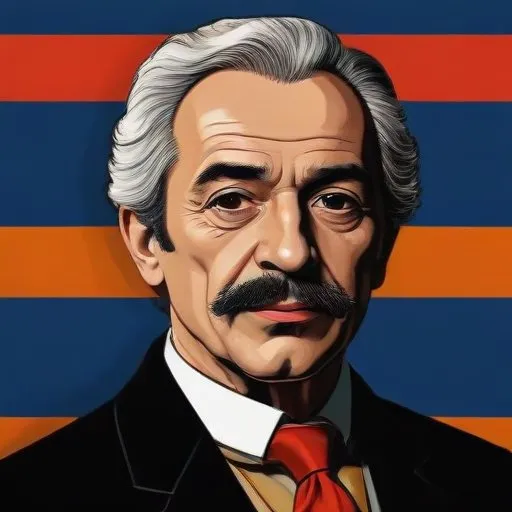
A 17th-century Portuguese historian and poet who wrote extensively on Portuguese history and mythology, and is particularly famous for his epic poem "Europa Portuguesa".
Manuel de Faria e Sousa is renowned for his monumental work in chronicling the history of Portugal and its empire, as well as his poetic endeavors that garnered attention in both Portugal and Spain. As a historian, he is celebrated for his magnum opus, the unfinished yet exhaustive work, História de Portugal, which covers the nation's history from its earliest beginnings to the mid-17th century.
Born on March 18, 1590, into a noble Portuguese family, Faria e Sousa received his education in Braga, where he developed a strong foundation in classical languages and literature. He later entered the service of the Bishop of Porto, which laid the groundwork for his future literary pursuits.
Faria e Sousa's literary output was staggering, with works spanning multiple genres, including history, poetry, and translation. His first major work, Epitome de las historias Portuguezas (1628), received widespread acclaim and set the tone for his subsequent projects.
Faria e Sousa's works had a profound impact on the literary and historiographical landscape of his time. His meticulous research and attention to detail set a new standard for historical scholarship, while his poetic endeavors contributed to the development of the Gongorist style.
Despite his passing on June 3, 1649, Faria e Sousa's legacy continues to inspire scholars and enthusiasts of Portuguese history and literature. His unwavering dedication to his craft and his vast literary output have cemented his place as one of the most significant figures in Portuguese cultural heritage.
Faria e Sousa was married to Catarina Machado, known as "Albania" in his poetry, with whom he shared a studious and domestic life. The couple had children, and his affection for them is reflected in his poetry.
During his lifetime, Faria e Sousa was involved in the Portuguese embassy in Rome (1631-1634) and later settled in Madrid, where he spent the majority of his life.
Despite facing censorship and temporary incarceration due to his writings, Faria e Sousa remained committed to his intellectual pursuits, leaving behind a rich and diverse literary legacy.
Born in 1502
A 16th-century Renaissance humanist who wrote influential works on philosophy, history, and literature, earning him recognition as a pioneer of Portuguese humanism.
