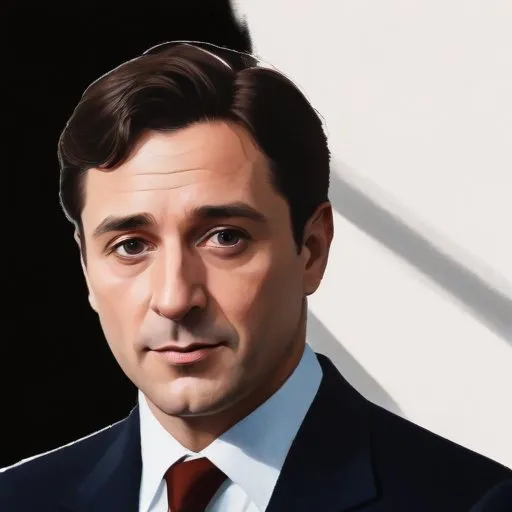
Marcel Carrire: The Visionary Film Director and Sound Engineer
A Pioneer in Canadian Cinema
Marcel Carrire, born on April 16, 1935, is a renowned Canadian film director and sound engineer, celebrated for his innovative approach to filmmaking and his remarkable contributions to the National Film Board of Canada (NFB). With a career spanning over four decades, Carrire has left an indelible mark on the Canadian film industry, earning recognition for his technical expertise and artistic vision.
Early Career and Technical Innovations
Carrire joined the NFB in 1955, following his studies in electronic engineering. During his early years at the NFB, he developed his skills as a sound engineer, working on wildlife films, the Candid Eye series, and the French Unit's productions. His passion for experimentation led him to devise a method for recording synchronized sound, a technical feat that was unprecedented at the time. This innovation enabled him to work on the groundbreaking documentary film
Pour la suite du monde (1963), where sound played a pivotal role.
DIRECTORIAL DEBUT AND CRITICAL ACCLAIM
Carrire's directorial debut,
Villeneuve, peintre-barbier (1964), marked the beginning of his journey as a filmmaker. However, it was his documentary short
Avec tambours et trompettes (1968) that brought him critical acclaim. This film showcased his ability to capture the essence of everyday characters, a theme that would become a hallmark of his work.
Feature Film Success and Qubcois Cinema
In 1973, Carrire directed his first feature film,
O.K. ... Lalibert, a seminal work of Qubcois cinema. This comical social satire tells the story of a middle-aged man struggling to make ends meet, and its success cemented Carrire's reputation as a masterful storyteller.
Leadership and Legacy
Carrire's contributions to the NFB extended beyond his film work. In 1978, he was nominated as director of the Program Committee for French Productions, and later, as director of Technical Services, Distribution, Research, and Development. This marked a significant milestone, as no other French Canadian had previously held such a high position within the NFB's hierarchy. He held this position until his retirement in 1994.
Post-NFB Career and Consulting
After retiring from the NFB, Carrire continued to make significant contributions to the film industry. He played an active role in founding INIS and the Phonothque qubcoise, and still offers his expertise as a consultant on documentary films.
Filmography
- St-Denis dans le temps... (1969)
- O.K. ... Lalibert (1973)
- Le grand voyage (short film)
Legacy and Impact
Marcel Carrire's remarkable career has left a lasting impact on Canadian cinema. His innovative approach to sound engineering, his mastery of storytelling, and his leadership within the NFB have inspired generations of filmmakers. As a testament to his enduring influence, Carrire's work continues to be celebrated and studied, ensuring his legacy as a true pioneer in Canadian film history.
FAQ
What type of films did Marcel Carrière direct?
Marcel Carrière directed a wide range of films, including dramas, comedies, and documentaries.
What was Marcel Carrières most famous film?
Marcel Carrières most famous film is The Apprenticeship of Duddy Kravitz, which won several awards, including the Golden Bear at the Berlin International Film Festival.
Did Marcel Carrière work with any notable actors?
Yes, Marcel Carrière worked with several notable actors, including Richard Dreyfuss and Randy Quaid.
What was Marcel Carrières approach to filmmaking?
Marcel Carrières approach to filmmaking was known for its simplicity, honesty, and sensitivity, often focusing on the human condition.
Did Marcel Carrière win any awards for his direction?
Yes, Marcel Carrière won several awards for his direction, including the Genie Award for Best Director.