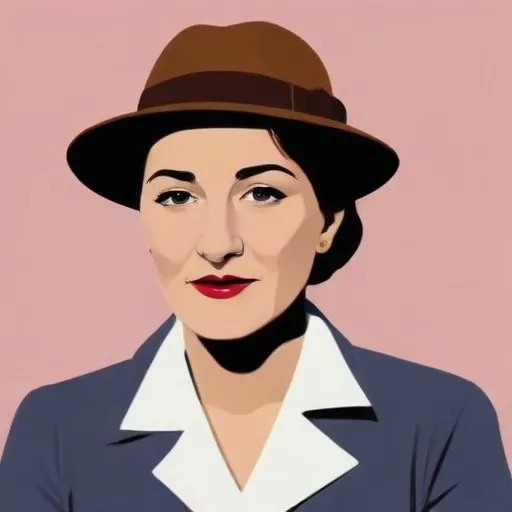
Unraveling the Whimsical World of Margery Allingham: The Queen of Crime
The Gentleman Sleuth and the Birth of a Legacy
Margery Allingham, one of the renowned "Queens of Crime" from the Golden Age of Detective Fiction, is celebrated for creating the iconic gentleman sleuth, Albert Campion. With 18 novels and numerous short stories, Campion has become an integral part of the literary canon, captivating readers with his blend of wit, charm, and detective prowess.
A Literary Upbringing
Born on May 20, 1904, in Ealing, London, Margery was the eldest daughter of Herbert John and Emily Jane Allingham, both writers and editors. Her family's literary influences were evident from an early age, with her parents encouraging her creativity. Her father, editor of the Christian Globe and The New London Journal, would later publish her early works, while her mother, Emmie Allingham, contributed stories to women's magazines, inspiring Margery's own literary endeavors.
Early Life and Inspirations
The Allingham family moved to Layer Breton, Essex, when Margery was young, where she attended a local school and later the Perse School for Girls in Cambridge. During this period, she wrote stories and plays, earning her first fee at the age of eight for a story published in her aunt's magazine. This early success fueled her passion for writing, and she continued to hone her craft, eventually studying drama and speech training at Regent Street Polytechnic to overcome her childhood stammer.
A Collaborative Union
In 1927, Margery married Philip Youngman Carter, a fellow writer and illustrator who would become her collaborator and design the covers for many of her books. Their partnership not only brought joy to their personal lives but also contributed to the success of Margery's literary career.
Albert Campion: A Parody Turned Icon
Initially conceived as a parody of
Dorothy L. Sayers' Lord Peter Wimsey, Albert Campion evolved into a distinctive and complex character, blending detective skills with adventurous spirit. Through Campion, Margery crafted a unique blend of mystery, humor, and wit, captivating readers and cementing her position as a leading crime writer.
Legacy and Impact
Margery Allingham's contributions to the detective genre are undeniable. Her work has inspired generations of writers, including
Ruth Rendell and P.D. James. Her influence extends beyond literature, with Campion's character influencing television adaptations and inspiring new interpretations.
Personal Milestones and Key Life Events
- 1920: Returns to London and studies drama and speech training at Regent Street Polytechnic.
- 1927: Marries Philip Youngman Carter, her collaborator and husband.
- 1930s: Begins writing the Albert Campion series, which gains popularity and critical acclaim.
- 1966: Passes away on June 30, leaving behind a legacy of 18 Campion novels and numerous short stories.
Quotes and Memorable Sayings
"I do not write for such dull elves as have not a great deal of ingenuity themselves." – Margery Allingham
"In the context of the modern world, where everyone is constantly trying to simplify things, I think it's much more important to be complicated, to be nuanced, to be multifaceted." – Margery Allingham (on her writing approach)
Inspirational Stories and Motivations
Margery Allingham's life serves as a testament to the power of creativity, perseverance, and collaboration. Her journey, marked by early successes and personal struggles, demonstrates the importance of nurturing one's passion and embracing the complexities of life. As a writer, she continues to inspire generations, offering a unique blend of wit, charm, and intrigue that transcends time and genre.
FAQ
What is Margery Allinghams most famous literary creation?
Margery Allinghams most famous literary creation is the character of Albert Campion, a charming and ingenious amateur detective who appears in 18 of her novels and numerous short stories.
What genre of fiction did Margery Allingham primarily write in?
Margery Allingham primarily wrote in the genre of detective fiction, although her works often incorporated elements of mystery, thriller, and adventure.
When did Margery Allingham start writing detective fiction?
Margery Allingham started writing detective fiction in the 1920s, publishing her first novel, The Crime at Black Dudley, in 1929.
What was Margery Allinghams approach to writing detective fiction?
Margery Allinghams approach to writing detective fiction emphasized character development, atmosphere, and intricate plotting, often incorporating elements of social commentary and humor.
How did Margery Allinghams work influence the development of British detective fiction?
Margery Allinghams work influenced the development of British detective fiction by helping to establish the Golden Age of detective fiction, alongside authors such as Agatha Christie and Dorothy L. Sayers.