


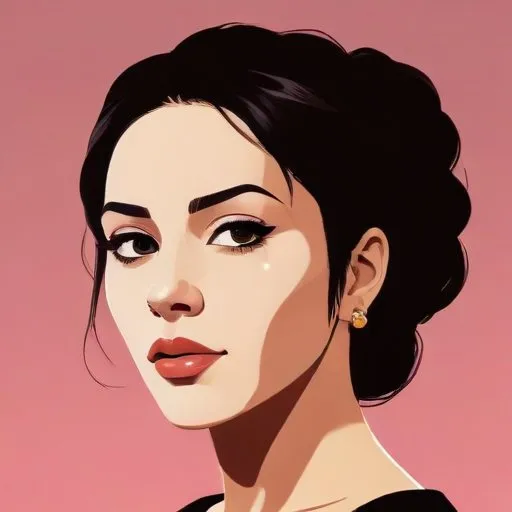
A renowned Brazilian singer, known for her powerful, emotive voice and iconic interpretations of traditional Brazilian music, particularly MPB (Brazilian popular music).
Maria Bethnia is a Brazilian singer and songwriter known for her powerful voice and immense contribution to Brazilian music. With a career spanning over 50 years, she has released 50 studio albums, sold over 26 million records, and has been ranked as the fifth-biggest voice in Brazilian music by Rolling Stone Brasil magazine.
Maria Bethnia was born on June 18, 1946, in Santo Amaro, Bahia, Brazil. She is the sixth of eight children born to Jos Telles Veloso and Claudionor Viana Telles Veloso. Her family moved to Salvador, Bahia when she was 13, where she was exposed to the bohemian and intellectual circles of the city.
Bethnia's music career began in 1964 with the show Opiniao (Opinion) in Rio de Janeiro. Her 1965 single "Carcar" became a huge success, propelling her to stardom in Brazil. Her popularity led to performances all over the country, cementing her status as a Brazilian music icon.
Maria Bethnia is the sister of renowned singer-songwriter Caetano Veloso and writer-songwriter Mabel Velloso. She is also the aunt of singers Bel Velloso and Jota Velloso. Her brother Caetano Veloso played a significant role in her early career, inviting her to sing in a film soundtrack, which she initially refused. However, it was through him that she met film director lvaro Guimares, who later invited her to perform in the 1963 musical Boca de Ouro.
Maria Bethnia has received numerous awards and honors for her contributions to Brazilian music. She has been ranked among the 10 best-selling music artists in Brazil and has sold over 26 million records throughout her career. Her impact on Brazilian music has been immense, earning her the title "The Queen of Brazilian Music."
Maria Bethnia has released an impressive 50 studio albums throughout her career, making her one of the most prolific Brazilian artists of all time. Her discography is a testament to her dedication to her craft and her enduring popularity in Brazil and beyond.
Bethnia's music is not only a reflection of her talent but also of her values and beliefs. Her songs often touch on themes of love, social justice, and Brazilian culture, showcasing her deep connection to her roots and her commitment to using her platform to promote positive change.
Maria Bethnia's influence extends beyond the music world. She has been an icon and a role model for generations of Brazilians, inspiring countless artists and musicians. Her music has also played a significant role in promoting Brazilian culture globally, helping to cement Brazil's position as a cultural powerhouse.
Throughout her illustrious career, Maria Bethnia has achieved numerous milestones, from selling out shows across Brazil to receiving prestigious awards and honors. Her dedication to her craft has earned her a place in the hearts of Brazilians and music lovers worldwide.
One of Maria Bethnia's most famous quotes is "A arte pode mudar o mundo, mas preciso mudar primeiro a gente mesma" ("Art can change the world, but first, we need to change ourselves"). This quote reflects her belief in the power of art to inspire positive change and her commitment to using her platform to promote self-awareness and personal growth.
Maria Bethnia's influence can be seen in various aspects of pop culture, from music to film and beyond. Her unique voice and style have inspired countless artists, and her music has been featured in numerous films, TV shows, and commercials.
Throughout her career, Maria Bethnia has received numerous awards and honors, including several Latin Grammy Awards, Brazilian Music Awards, and a honorary doctorate from the University of Bahia.
Maria Bethnia's legacy is cemented in the annals of Brazilian music history. She has played a significant role in promoting Brazilian culture and has inspired generations of musicians and artists. Her contributions have helped to shape the country's musical identity and have left an indelible mark on the global music scene.
84 Years Old
A Brazilian cultural icon, he's a master of Tropicalia, a genre that blends traditional Brazilian music with psychedelic rock and folk, and is known for his poetic lyrics and soothing voice.
84 Years Old
A Brazilian music legend and politician who blended traditional styles with modern sounds, promoting cultural diversity and social justice through his music and public service.
81 Years Old
A Brazilian tropicalia icon, known for blending traditional Brazilian music with psychedelic rock and folk elements, creating a unique sound that defined a generation.
95 Years Old
A pioneer of bossa nova, a genre that combines samba rhythms with jazz harmonies, known for his smooth, intimate vocals and innovative guitar playing.
99 Years Old
Brazilian singer-songwriter and pianist who blended jazz and samba to create a unique sound, composing iconic songs like "The Girl from Ipanema" and "Insensatez".
Born in 1913
A renowned poet, playwright, and composer who merged Brazilian rhythms with French existentialism, creating iconic bossa nova songs like "The Girl from Ipanema".
84 Years Old
A legendary Brazilian musician celebrated for his soaring vocals and genre-bending fusion of folk, rock, and jazz, creating a unique sound that transcends borders. He's a national treasure in Brazil, inspiring generations of musicians.
