


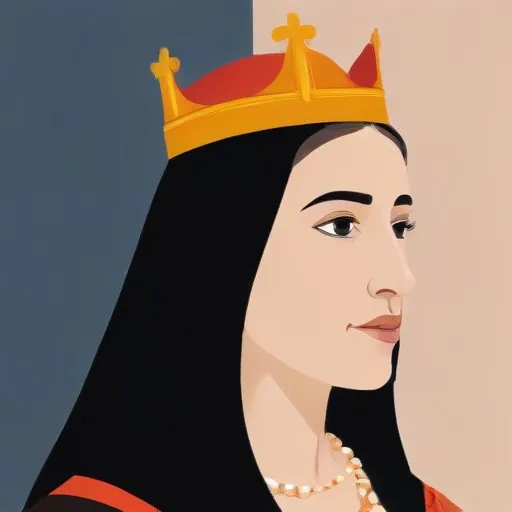
The wife of King Philip III of France, known for her alleged role in the scandalous Tour de Nesle affair, which led to the execution of several nobles and ladies-in-waiting. She was also a patron of the arts and architecture.
Marie of Brabant, Queen of France, is best known for her marriage to King Philip III and her scandalous reign from 1274 to 1285, marked by mysterious deaths, suspicions of poisoning, and a web of intrigue that still fascinates historians today. As the second wife of the French monarch, Marie's life was a complex tapestry of politics, power, and family drama, shaping the fate of the French crown.
Born on May 13, 1254, in Leuven, Brabant, Marie was the daughter of Henry III, Duke of Brabant, and Adelaide of Burgundy. Her prestigious lineage and advantageous marriage to Philip III solidified her position as a powerful queen, influencing the course of French history.
Marie's marriage to Philip III on August 21, 1274, was a strategic move to strengthen the ties between France and Brabant. However, the union was marked by tension, as Philip's first wife, Isabella of Aragon, had already borne him three sons: Louis, Philip, and Charles. Marie's outsider status at the French court made her a target for suspicion and hostility, particularly from Philip's powerful mother, Margaret of Provence.
In 1276, Marie's stepson Louis died under mysterious circumstances, sparking whispers of poisoning and pointing fingers at the queen herself. La Broce, Philip's trusted chamberlain, was also implicated and eventually executed for the crime. This dark episode cast a shadow over Marie's reign, perpetuating rumors and fueling suspicions about her role in the royal court.
Following Philip III's death in 1285, Marie's political influence waned, and she dedicated her life to raising their three children: Louis, Blanche, and Margaret. As queen dowager, she played a crucial role in shaping the lives of her offspring, ensuring their positions within the French monarchy.
Marie's diplomatic prowess shone through in her negotiations with Joan I of Navarre and Blanche of Artois, securing peace between England and France in 1294. Her notable achievements as queen and queen dowager solidified her place in French history, earning her a lasting legacy as a strong and effective female leader.
In her later years, Marie retreated to the monastery at Les Mureaux, near Meulan, where she lived a life of devotion and contemplation. She died on January 12, 1322, aged 67, and was laid to rest in the Cordeliers Convent, in Paris.
Marie of Brabant, Queen of France, remains an enigmatic figure, shrouded in mystery and intrigue. Her complex life, marked by power struggles, family drama, and scandal, continues to captivate historians and inspire fascination. As a testament to her legacy, Marie's story serves as a powerful reminder of the enduring influence of strong women in shaping the course of history.
Born in 1165
King of France from 1180 to 1223, known for his military conquests, including the Battle of Bouvines, and his role in the Third Crusade.
Born in 1052
King of France from 1060 to 1108, known for his military campaigns and conflicts with the Church, particularly his excommunication by Pope Urban II.
Born in 1273
The queen who ruled Navarre and married into the French monarchy, known for her diplomatic efforts to maintain peace between her husband's kingdom and her own. She played a significant role in shaping the politics of medieval Europe.
