


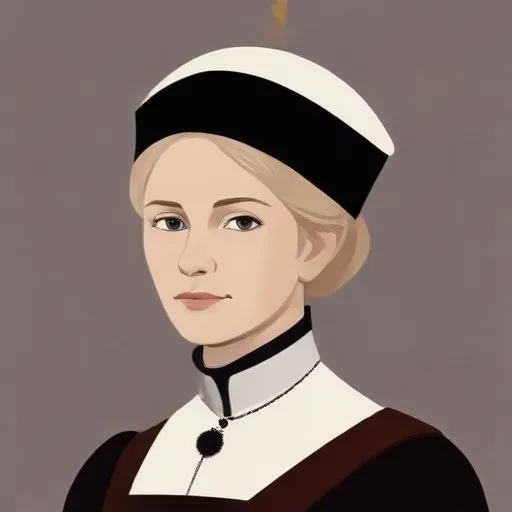
A German princess who married into the Russian royal family and became a prominent figure in St. Petersburg society, known for her beauty and fashion sense.
Known as the queen who brought solace to the wounded and comfort to the afflicted, Marie of Prussia is renowned for her humanitarian efforts, particularly in founding the Bavarian Red Cross. As the Queen of Bavaria, she reigned with kindness, empathy, and a deep understanding of her people's needs, leaving an indelible mark on the kingdom's history.
Born on October 15, 1825, in Berlin, Marie was the daughter of Prince Wilhelm of Prussia and Landgravine Marie Anna of Hesse-Homburg. Her childhood was spent between Berlin and Fischbach Castle in Silesia, where she developed a love for nature and the outdoors. In 1842, she married Crown Prince Maximilian II of Bavaria, with whom she had two sons, Ludwig II and Otto of Bavaria.
As queen, Marie focused on alleviating the sufferings of her people, particularly during times of war. She was instrumental in reactivating the Bavarian Women's Association, which aimed to care for wounded soldiers. Her efforts led to the establishment of the Bavarian Red Cross in 1869, an organization that continues to provide humanitarian aid to this day.
After King Maximilian II's sudden death in 1864, Marie became a widow. She continued to devote herself to her people, converting to Catholicism in 1874. She spent her summer holidays at Schloss Hohenschwangau, a castle her husband had lovingly restored, and at her country estate in Elbigenalp, surrounded by the majestic Lechtal Alps.
Marie of Prussia's legacy extends far beyond her royal title. She was a queen who embodied the values of compassion, empathy, and kindness. Her humanitarian efforts paved the way for future generations, inspiring countless individuals to make a positive impact on their communities. As a testament to her enduring legacy, the Bavarian Red Cross remains a vital organization, continuing to provide aid to those in need.
"Care and support of soldiers wounded and injured in the field" – Marie of Prussia's motto for the Bavarian Women's Association, which reflected her deep commitment to humanitarian aid.
During a time of great social and political change, Marie of Prussia's compassionate reign stood out as a beacon of hope and kindness. Her humanitarian efforts paved the way for future generations, inspiring a sense of social responsibility that continues to resonate today.
In conclusion, Marie of Prussia's remarkable life serves as a testament to the power of compassion, empathy, and kindness. As the Queen of Bavaria, she reigned with a heart full of love for her people, leaving behind a legacy that continues to inspire and uplift generations to come.
Born in 1786
The King of Bavaria who commissioned the iconic Neuschwanstein Castle, a fairytale-like palace that inspired the Disney castle, and was a patron of the arts, supporting Richard Wagner's operas.
Born in 1455
A Dutch bishop who served as the Prince-Bishop of Utrecht from 1496 to 1517, known for his role in the Burgundian-Habsburg struggle for power in the Netherlands.
