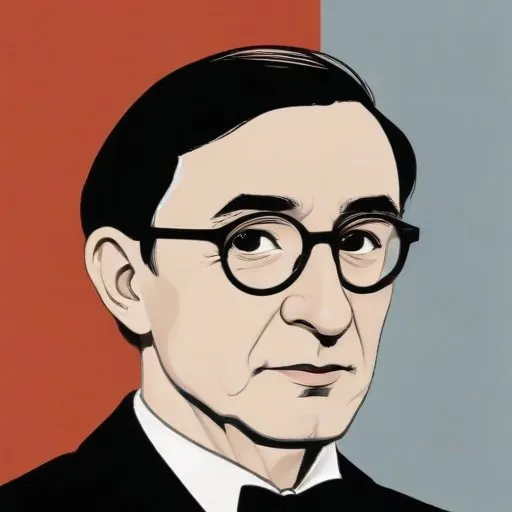
Mario Davidovsky: The Pioneer of Electroacoustic Music
A Life of Harmony and Innovation
Mario Davidovsky was a renowned Argentine-American composer, best known for his groundbreaking
Synchronisms series, a fusion of acoustic instruments and electroacoustic sounds that revolutionized the music world. Born on March 4, 1934, in Médanos, Buenos Aires Province, Argentina, Davidovsky's contributions to music spanned over six decades, leaving an indelible mark on the industry.
Early Musical Roots
Davidovsky's musical journey began at the tender age of seven, when he started learning the violin. By thirteen, he was already composing his own pieces. His dedication and passion led him to study composition and theory under the guidance of Guillermo Graetzer at the University of Buenos Aires. This foundational education laid the groundwork for his future innovations.
A New Frontier: Electroacoustic Music
In 1958, Davidovsky attended the Berkshire Music Center (now the Tanglewood Music Center) in Lenox, Massachusetts, where he studied with the iconic composers
Aaron Copland and Milton Babbitt. It was during this period that he developed a fascination with electroacoustic music, thanks to Babbitt's influence and the opportunities provided by the Columbia-Princeton Electronic Music Center. This exposure laid the groundwork for his pioneering work in the
Synchronisms series.
The Synchronisms Series: A Revolutionary Composition
Davidovsky's
Synchronisms series, begun in the 1960s, was a game-changer in the music world. By combining traditional acoustic instruments with electroacoustic sounds played from a tape, he created a novel soundscape that captivated audiences. This innovative approach earned him widespread recognition and acclaim.
A Life of Teaching and Mentorship
In addition to his composing career, Davidovsky was a dedicated educator. He served as the associate director of the Columbia-Princeton Electronic Music Center and later became its director from 1981 to 1993. Throughout his career, he had the privilege of teaching and mentoring numerous students, leaving a lasting impact on the music community.
Awards and Honors
Davidovsky's contributions were recognized with numerous awards and honors, including the Pulitzer Prize in Music in 1971 for his
Synchronisms No. 6. He also received commissions from prestigious organizations, such as the National Endowment for the Arts and the Koussevitzky Foundation.
Legacy and Impact
Mario Davidovsky's innovative spirit, passion for teaching, and groundbreaking compositions have left an indelible mark on the music world. His
Synchronisms series continues to inspire generations of composers, ensuring his legacy as a pioneer in electroacoustic music. As we reflect on his life and work, we are reminded of the transformative power of music to bring people together and transcend boundaries.
Personal Milestones and Key Life Events
- 1934: Born on March 4th in Médanos, Buenos Aires Province, Argentina
- 1958: Studied with Aaron Copland and Milton Babbitt at the Berkshire Music Center
- 1960: Emigrated to the United States and began working at the Columbia-Princeton Electronic Music Center
- 1971: Won the Pulitzer Prize in Music for Synchronisms No. 6
- 1981-1993: Director of the Columbia-Princeton Electronic Music Center
- 2007: Premiered Synchronisms No. 11 and Synchronisms No. 12 at the SEAMUS National Conference
- 2019: Passed away on August 23rd
Fun Facts
- Davidovsky's Synchronisms series was initially met with skepticism, but he remained committed to his vision.
- He was an avid sailor and enjoyed spending time on the water in his free time.
- Davidovsky's music has been performed by renowned ensembles, including the New York Philharmonic and the Boston Symphony Orchestra.
FAQ
What was Mario Davidovskys role in American music?
Mario Davidovsky was an Argentinian-American composer and academic who made significant contributions to American music. He was known for his electronic and acoustic compositions, often incorporating elements of Latin American music.
What was Mario Davidovskys most famous composition?
Mario Davidovskys most famous composition is Synchronisms No. 6, a work for piano and electronic sounds that won the Pulitzer Prize for Music in 1971.
What awards did Mario Davidovsky receive?
Mario Davidovsky received several awards for his compositions, including the Pulitzer Prize for Music, the Guggenheim Fellowship, and the Fromm Music Foundation Commission.
What was Mario Davidovskys impact on American music?
Mario Davidovskys impact on American music was significant, as he helped promote the development of electronic music and inspired future generations of composers.
What was Mario Davidovskys legacy in music?
Mario Davidovskys legacy in music is one of innovation and creativity, pushing the boundaries of what is possible in electronic and acoustic composition.