


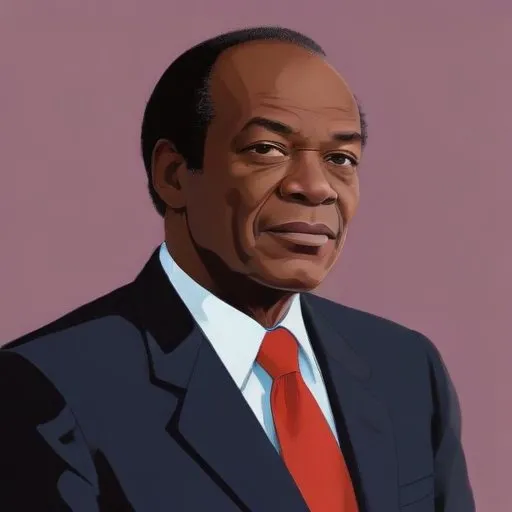
The 2nd Mayor of the District of Columbia, a civil rights activist and politician, known for his advocacy for African American rights and his tumultuous personal life. He served four terms as mayor, despite being arrested for drug use during his third term.
Marion Barry, the former mayor of Washington, D.C., is known for his dynamic personality, his commitment to the civil rights movement, and his tumultuous career in politics. From his grassroots activism to his three non-consecutive terms as mayor, Barry's legacy is marked by both triumph and scandal, cementing his place as one of the most intriguing figures in American politics.
Born on March 6, 1936, in Itta Bena, Mississippi, Marion Barry Jr. grew up in Memphis, Tennessee, after his mother moved the family there when he was just five years old. Barry's early life was marked by hardship and tragedy, with his father passing away when he was four and his mother later struggling to raise him and his siblings. Despite these challenges, Barry went on to earn a Bachelor's degree in chemistry from LeMoyne-Owen College and later received his Master's degree in organic chemistry from Fisk University.
In the 1960s, Barry became an active participant in the civil rights movement, joining the Nashville Student Movement and later becoming the first chairman of the Student Nonviolent Coordinating Committee (SNCC). His work with SNCC took him to Washington, D.C., where he became a prominent figure in the local civil rights movement. Barry's commitment to social justice and his natural charisma made him a compelling leader, earning him recognition and respect within the movement.
Barry's foray into politics began in the 1970s, when he was elected as an at-large member of the Council of the District of Columbia. He served in this position from 1975 to 1979, before being elected as the mayor of Washington, D.C. in 1978. Barry's first term as mayor was marked by significant progress in areas such as affordable housing and economic development, earning him widespread popularity and the nickname "Mayor for Life."
However, Barry's political career was also marred by controversy, including his arrest in 1990 for drug possession and his subsequent trial and imprisonment. Despite this setback, Barry remained a popular figure in Washington, D.C. politics, and he was re-elected to the Council of the District of Columbia in 1992 and again as mayor in 1994.
Marion Barry's legacy is complex and multifaceted. While his commitment to social justice and his leadership in the civil rights movement are undeniable, his political career was also marked by controversy and scandal. Despite these contradictions, Barry remains an important figure in American politics, and his impact on Washington, D.C. is still felt today.
Throughout his career, Barry was a fierce advocate for the rights of African Americans and the poor, using his platform to push for policies that benefited these communities. His work in the areas of affordable housing, economic development, and education helped to improve the lives of countless individuals and families in Washington, D.C.
"I serve the people, not the system."
"We have to be willing to take risks and make sacrifices if we want to achieve our goals."
Marion Barry's legacy continues to influence modern society, particularly in the areas of social justice and politics. His commitment to the civil rights movement and his advocacy for the rights of African Americans and the poor serve as a model for activists and politicians today.
In Washington, D.C., Barry's impact is still felt in the areas of affordable housing, economic development, and education. His leadership and vision helped to shape the city into what it is today, and his legacy continues to inspire future generations of leaders and activists.
55 Years Old
The 6th Mayor of the District of Columbia, a lawyer and politician, is known for implementing education reforms and promoting a healthy lifestyle through bike-friendly initiatives. He's also recognized for his tech-savvy approach to governance.
54 Years Old
The Mayor of Washington, D.C. is a prominent figure in American politics, known for overseeing the nation's capital and advocating for D.C. statehood. They are a key player in shaping the city's policies and development.
89 Years Old
A trailblazing lawyer and politician who fought for civil rights and women's rights, serving as a non-voting delegate to the US House of Representatives.
78 Years Old
The 45th Vice President of the United States and Nobel Prize laureate is a prominent advocate for environmental protection, particularly climate change awareness, and has produced influential documentaries on the subject.
85 Years Old
A prominent civil rights leader who fought for racial equality and social justice through activism and advocacy, known for his impassioned speeches and protests.
