


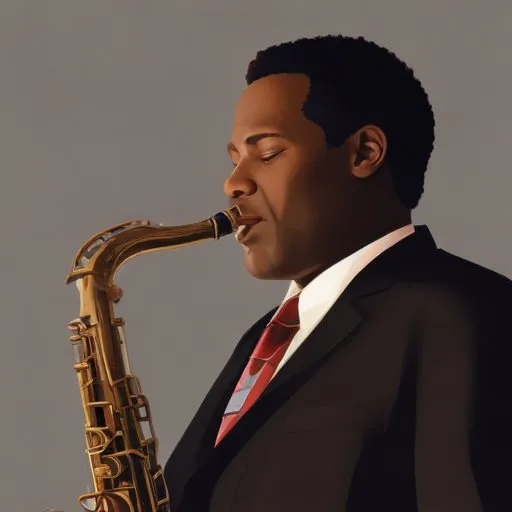
Free-jazz pioneer and composer, known for pushing boundaries of improvisation and collaboration, creating a unique sound that blended jazz, blues, and African music.
Known for his lyrical and melodic approach to saxophone playing, Marion Brown was a pioneering figure in the avant-garde jazz scene of the 1960s. As a composer, writer, visual artist, and ethnomusicologist, Brown's contributions to the world of music were multifaceted and far-reaching.
Born on September 8, 1931, in Atlanta, Georgia, Brown grew up in a single-parent household, raised by his mother. His maternal grandfather, an escaped slave from the Sea Islands of Georgia, played a significant role in shaping Brown's early life. Charlie Parker's music served as a catalyst for Brown's interest in the saxophone, which he began studying at a young age.
After leaving high school in the 10th grade, Brown joined the army, where he played alto saxophone, clarinet, and baritone saxophone during his three-year enlistment. Stationed in Hokkaido, Japan, for part of his service, Brown's military experience had a profound impact on his later work. Upon his return to Atlanta, Brown enrolled at Clark College, where he studied music under the guidance of Wayman Carver.
In 1962, Brown left Howard University's law school and moved to New York City, where he became an integral part of the city's thriving avant-garde jazz scene. During this period, he befriended writers such as Amiri Baraka (then known as LeRoi Jones) and A.B. Spellman, as well as musicians like John Coltrane, Ornette Coleman, and Archie Shepp. These relationships played a significant role in shaping Brown's artistic vision.
Brown's most notable collaboration was with John Coltrane on the landmark 1965 album Ascension, which showcased his saxophone playing alongside Coltrane's. This album is widely regarded as a seminal work in the avant-garde jazz canon. Brown also recorded with Archie Shepp and John Tchicai, further solidifying his position within the avant-garde movement.
"The writers who listened to me and liked my playing, they inspired me to be better, and I inspired them to keep listening."
Brown's work is often compared to that of his contemporaries, such as Ornette Coleman and Archie Shepp. While sharing similarities with these musicians, Brown's unique approach to saxophone playing and composition set him apart, earning him a distinct place within the avant-garde movement.
Born in 1926
A legendary jazz saxophonist and composer who revolutionized the genre with his innovative, spiritually-driven improvisations and iconic albums like "A Love Supreme".
96 Years Old
A free-jazz pioneer who shattered conventions with his improvisational style and genre-bending compositions, creating a new language for jazz. 82
Born in 1914
A visionary musician who blended jazz, funk, and science fiction to create a unique sound, leading a collective of musicians known as the Arkestra. He's also a prolific poet and philosopher.
90 Years Old
Free-jazz pioneer who fused spiritual and avant-garde elements with traditional blues and gospel, creating a unique, intense sound that continues to influence jazz and rock musicians.
85 Years Old
A pioneering free jazz saxophonist and bandleader, known for his intense, spiritual, and avant-garde playing style that pushed the boundaries of jazz.
89 Years Old
A pioneering figure in avant-garde jazz, known for blending free jazz and African American music traditions with a strong social justice message. His saxophone playing and compositions continue to inspire generations of musicians.
97 Years Old
A pioneer of free jazz, pushing boundaries with unconventional techniques and poetic improvisations, creating a unique sound that defies traditional norms.
81 Years Old
A visionary jazz musician and composer who pushed the boundaries of improvisation and avant-garde music, creating a unique and influential body of work.
