


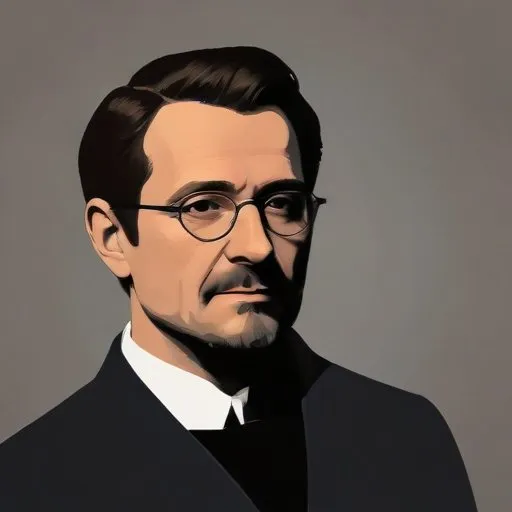
A 16th-century composer and music theorist who wrote influential treatises on music and composed sacred and secular works, contributing to the development of Lutheran church music.
Martin Agricola, a German composer of Renaissance music and a music theorist, is best known for his influential writings on musical notation and his significant contributions to the development of organology. Born on January 6, 1486, in Wiebodzin, Western Poland, Agricola's life was marked by a passion for music and a dedication to sharing his knowledge with others.
Agricola adopted his surname later in life, a common practice among Lutherans to emphasize humble, peasant origins. From 1524 until his death, he lived in Magdeburg, Germany, where he worked as a teacher or cantor in the Protestant school. During this time, he formed a close friendship with Georg Rhau, a publisher and senator in Wittenberg, who would later become his publisher.
Agricola's theoretical writing played a vital role in expounding the change from the old to the new system of musical notation. His seminal work, Musica instrumentalis deudsch, published in 1528, 1530, 1532, and 1542, and later heavily revised in 1545, was one of the most important early works in organology and on the elements of music. This comprehensive treatise provided valuable insights into the world of music, making it an indispensable resource for musicians and theorists alike.
Agricola's contributions to music extend beyond his theoretical writings. He was the first to harmonize in four parts Martin Luther's famous chorale, "Ein feste Burg ist unser Gott" (A Mighty Fortress Is Our God). This iconic work has become an integral part of Protestant hymnology, cementing Agricola's place in the annals of musical history.
Martin Agricola's work has had a lasting impact on the world of music. His theoretical writings and contributions to organology paved the way for future generations of musicians and theorists. His harmonization of "Ein feste Burg ist unser Gott" continues to be celebrated and performed to this day, remaining an integral part of Protestant hymnology.
Agricola's life and work are a testament to the cultural and artistic flourishment of the Renaissance period. His dedication to sharing his knowledge and passion for music has left an indelible mark on the world of music, earning him a place among the most respected and revered composers and theorists of his time.
Born in 1459
A renowned organist and composer of the Renaissance era, known for his innovative and intricate compositions that showcased his mastery of the organ. He was a prominent figure in the development of the organ repertoire.
