


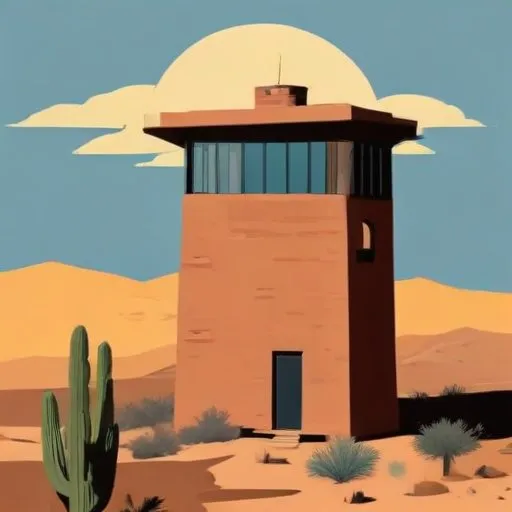
Designed iconic buildings in the American Southwest, blending Native American and Spanish Colonial styles, including the Desert View Watchtower at the Grand Canyon.
Mary Colter, a pioneering American architect and designer, left an indelible mark on the Southwestern landscape with her innovative fusion of Spanish Colonial Revival, Mission Revival architecture, and Native American motifs. Her iconic designs for the Fred Harvey Company and the Santa Fe Railroad continue to inspire awe in the Grand Canyon National Park.
Born on April 4, 1869, in Pittsburgh, Pennsylvania, to Irish immigrants William and Rebecca Crozier Colter, Mary's early life was marked by frequent moves, eventually settling in St. Paul, Minnesota, where she developed a deep fascination with Native American cultures.
As a child, a family friend gifted her Sioux drawings made by prisoners at Fort Keogh, sparking her lifelong passion for Native American art and design. When her mother attempted to burn these drawings due to fear of smallpox contamination, Mary secretly preserved them, later bequeathing them to the Custer Battlefield National Monument in 1956.
Colter graduated from high school at the age of 14 in 1883 and later attended the California School of Design (now the San Francisco Art Institute) from 1886 to 1890, where she honed her skills in art and design.
After her father's passing in 1886, Colter supported her family by teaching art and design, eventually joining the Fred Harvey Company in 1902 as an interior designer. Her talent and dedication earned her the position of chief architect and designer in 1910.
Colter's most celebrated works include:
Her work not only redefined the architectural landscape of the Southwest but also promoted cultural sensitivity and appreciation for Native American art and design.
Colter's contributions were recognized with the American Institute of Architects (AIA) Honorary Membership in 1947 and her induction into the Arizona Women's Hall of Fame in 1986.
Colter's perfectionism, attention to detail, and dedication to her art earned her the respect of her peers and clients. Her philosophy of blending cultural influences to create a unique, regionally grounded aesthetic continues to inspire architects and designers today.
In a predominantly male-dominated field, Colter's accomplishments serve as a testament to her perseverance, creativity, and passion for her craft.
Mary Colter's legacy extends beyond her iconic designs, influencing generations of architects, designers, and artists. Her work continues to inspire cultural exchange, appreciation, and understanding, solidifying her place as a pioneering figure in American architectural history.
As a testament to her enduring impact, the Mary Jane Colter Building in the Grand Canyon National Park, a National Historic Landmark, stands as a celebration of her innovative spirit and artistic vision.
Born in 1867
Visionary architect behind iconic, harmonious structures that blend seamlessly into their surroundings, redefining modern American architecture.
Born in 1892
A pioneering architect who designed iconic buildings that blended seamlessly into their surroundings, revolutionizing modernist architecture with his sleek, functional, and elegant style.
Born in 1886
A pioneering architect who revolutionized modern skyscraper design with sleek, minimalist, and functional buildings that redefined urban landscapes. His iconic creations continue to inspire architects and influence city skylines.
Born in 1887
A pioneer of modern architecture, famous for designing innovative, functional, and visually striking buildings that transformed urban landscapes. His works continue to inspire architects and designers worldwide.
Born in 1910
A Finnish-American architect and furniture designer who created iconic, futuristic structures and designs that blended art and functionality, including the iconic Gateway Arch.
97 Years Old
A visionary architect and designer, known for his bold, expressive, and curvaceous structures that defy conventional norms, redefining urban landscapes and pushing the boundaries of art and architecture.
