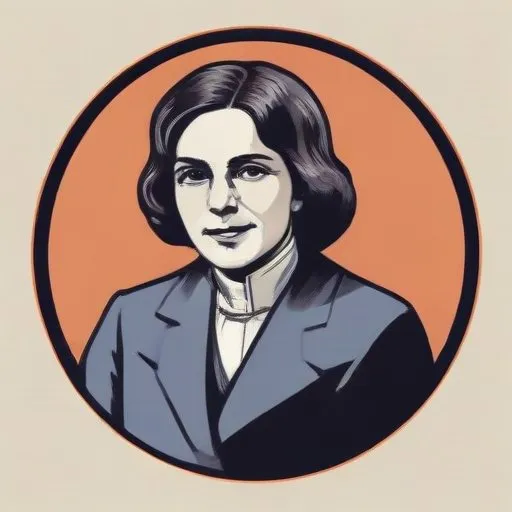
Mary E. Byrd: The Pioneering Astronomer and Educator
A Trailblazer in the Field of Astronomy
Mary E. Byrd was a true pioneer in the field of astronomy, determined to crack open the doors of opportunity for women in a male-dominated profession. As one of the first female astronomers at the college level, she paved the way for future generations of women to pursue careers in science and education.
Early Life and Influences
Born on November 15, 1849, in Le Roy, Michigan, Mary was raised in a family that valued education and moral principles. Her father, Reverend John Huntington Byrd, was an abolitionist who managed a station of the Underground Railroad, while her mother, Elizabeth Adelaide Lowe, was a descendant of John Endecott. These influences instilled in Mary a strong sense of justice and a desire to make a difference in the world.
Education and Career
Despite the challenges faced by women in higher education during the late 19th century, Mary persevered, teaching on and off while pursuing her own education. She graduated from Leavenworth High School and attended Oberlin College from 1871 to 1874. After leaving Oberlin, she completed her degree at the University of Michigan in 1878. Mary's passion for astronomy led her to study at Harvard College Observatory under Dr. E.C. Pickering, and she later received her Ph.D. from Carleton College in 1904.
A New Era in Astronomy Education
In 1883, Mary became the First Assistant at the Godsell Observatory at Carleton College, marking a significant milestone in her career. Four years later, she was appointed Director of the Smith College Observatory and professor of astronomy, a position that allowed her to inspire and educate a new generation of women in the field.
Pioneering Research and Contributions
Mary's groundbreaking research focused on determining cometary positions through photography. Her work not only advanced the field of astronomy but also provided a platform for women to contribute to scientific discovery. As a trailblazer, Mary's legacy extends beyond her own achievements, inspiring countless women to pursue careers in science, technology, engineering, and mathematics (STEM).
Personal Milestones and Legacy
Throughout her life, Mary Byrd remained committed to education and social justice. Her unwavering dedication to her craft paved the way for future generations of women in astronomy. As a testament to her pioneering spirit, Mary's legacy continues to inspire and motivate individuals to pursue careers in STEM fields.
Philosophical Contributions and Beliefs
Mary's strong Puritan upbringing instilled in her a sense of moral principles and a commitment to social justice. Her belief in the importance of education and equal opportunities for women drove her to challenge the status quo and push boundaries in her field.
Influence on Modern Society
Mary Byrd's pioneering work in astronomy education has had a lasting impact on modern society. Her legacy continues to inspire women to pursue careers in STEM fields, breaking down barriers and challenging stereotypes. As a result, her influence extends beyond the field of astronomy, contributing to a more diverse and inclusive scientific community.
Career Highlights and Major Works
- First Assistant, Godsell Observatory, Carleton College (1883)
- Director, Smith College Observatory, and Professor of Astronomy (1887)
- Ph.D., Carleton College (1904)
- Pioneering research on determining cometary positions through photography
Remembering Mary E. Byrd
Mary E. Byrd's remarkable life serves as a testament to the power of dedication, perseverance, and passion. As we reflect on her groundbreaking achievements, we are reminded of the importance of education, social justice, and equal opportunities for women. Her legacy continues to inspire us, motivating future generations to pursue careers in science, education, and beyond.
FAQ
What were Mary E. Byrds contributions to astronomy?
Mary E. Byrd was an American astronomer and educator who made significant contributions to the field of astronomy, particularly in the areas of stellar spectroscopy and the study of variable stars.
What was Mary E. Byrds approach to science education?
Mary E. Byrd was a pioneering educator who believed in making science accessible to all, and she worked tirelessly to promote science education and literacy among students and the general public.
How did Mary E. Byrd promote women in science?
Mary E. Byrd was a strong advocate for women in science, and she worked to promote opportunities for women in astronomy and other fields, inspiring future generations of women scientists.
What awards and honors did Mary E. Byrd receive for her work?
Mary E. Byrd was awarded the Annie Jump Cannon Award in 1931 for her contributions to astronomy, and was recognized for her service to science education.
What is Mary E. Byrds legacy in modern astronomy?
Today, Mary E. Byrd is remembered as a trailblazing astronomer and educator who paved the way for future generations of women in science, and her contributions to astronomy and science education continue to inspire and motivate students and researchers around the world.