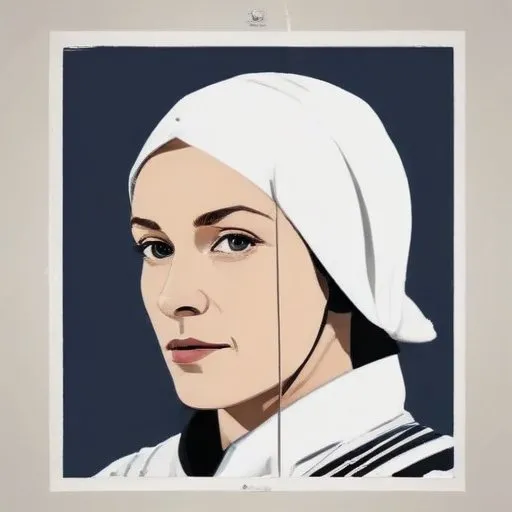
Dame Mary GlenHaig: A Fencing Legend and Pioneer
The Olympian and Commonwealth Champion
Dame Mary GlenHaig is renowned for being a four-time Olympian and a two-time gold medalist at the Commonwealth Games in fencing. Born into a family of athletes, she followed in her father's footsteps to become a prominent figure in the sport, making history as one of the first female members of the International Olympic Committee.
Early Life and Inspiration
Mary Alison James, later GlenHaig, was born on July 12, 1918, in London, to William James, a fencer who competed in the 1908 Summer Olympics. Her interest in fencing was sparked by her father, with whom she would often train and practice. Unlike her siblings, who pursued tennis, Mary's passion for fencing only grew stronger with time.
Olympic and Commonwealth Career
GlenHaig's Olympic journey began in 1948, when she qualified for the London Games, just hours after completing her shift at King's College Hospital. She went on to compete in three more Olympics – 1952, 1956, and 1960 – as well as in the British Empire Games.
- In 1948, she reached the finals of the Women's Foil, Individual competition, finishing 8th.
- She participated in the same event in the subsequent Olympics, adding the Women's Foil, Team event to her repertoire in 1960.
Although she never medaled in the Olympics, GlenHaig claimed that she never worried about winning, focusing instead on the joy of competing.
Honors and Legacy
In recognition of her contributions to fencing and the Olympic movement, GlenHaig was appointed a Dame Commander of the Order of the British Empire in 1993. She became one of the first female members of the International Olympic Committee in 1982, serving until 2004.
Ambassador to the 2012 Summer Olympics
After London's successful bid for the 2012 Summer Olympics, GlenHaig played an active role as the host nation's ambassador to the games. Her involvement helped promote the event and inspire a new generation of athletes.
Personal Milestones and Key Life Events
- 1937: Began competing professionally in fencing.
- 1948: Qualified for the London Olympics.
- 1959: Participated in her last world championship.
- 1960: Competed in her fourth and final Olympics.
- 1982: Became one of the first female members of the International Olympic Committee.
- 1993: Appointed a Dame Commander of the Order of the British Empire.
Dame Mary GlenHaig's remarkable journey serves as a testament to her dedication, perseverance, and passion for fencing. Her contributions to the sport have inspired countless athletes, and her legacy continues to shape the Olympic movement.
FAQ
What is Mary Glen-Haigs fencing career like?
Mary Glen-Haig had a successful fencing career, winning multiple medals at the Commonwealth Games, World Championships, and Olympic Games, and representing Great Britain and England.
What are Mary Glen-Haigs most notable fencing achievements?
Mary Glen-Haigs most notable fencing achievements include winning gold at the 1960 and 1964 Olympic Games, and claiming multiple World Championship titles in the womens foil event.
Has Mary Glen-Haig coached any fencers?
Mary Glen-Haig has coached several notable fencers, including her daughter, Clare, and helped develop the British fencing team into a world-class program.
What is Mary Glen-Haigs legacy in British fencing?
Mary Glen-Haigs legacy in British fencing is that of a trailblazing athlete who achieved great success, inspired future generations, and contributed to the growth and development of the sport.
What awards has Mary Glen-Haig received for her contributions to fencing?
Mary Glen-Haig has received multiple awards for her contributions to fencing, including an MBE (Member of the Order of the British Empire) and induction into the British Fencing Hall of Fame.