


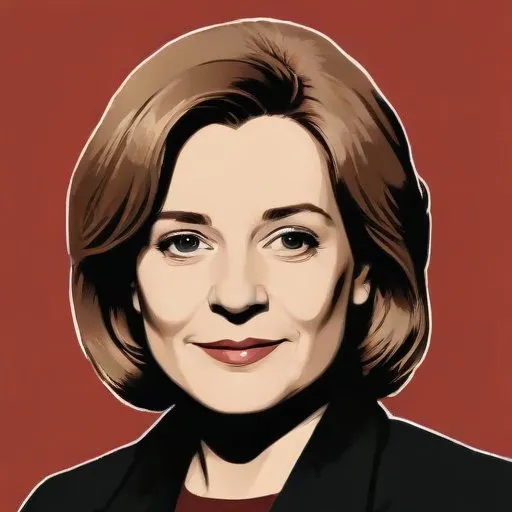
Irish journalist, author, and playwright known for her provocative columns and plays that often tackled feminist and social issues. Her work sparked lively debates and discussions in Ireland and beyond.
Mary Kenny is a renowned Irish journalist, broadcaster, and playwright, best known for her fearless activism and contribution to the Irish Women's Liberation Movement. As one of Ireland's first and foremost feminists, Kenny has been aptly described as the "grand dame of Irish journalism."
Born on April 4, 1944, in Dublin, Ireland, Mary Kenny grew up in Sandymount with her sister Ursula. Her father, born in 1877, played a significant role in shaping her life. Kenny's education was cut short when she was expelled from convent school at the age of 16, an event that would later influence her writing and activism.
Kenny began her journalism career in 1966 as a columnist for the London Evening Standard's Londoners Diary. She later became a general feature writer and eventually took on the role of women's editor at The Irish Press in the early 1970s. Her writing was not limited to journalism alone; Kenny has also written several plays, showcasing her versatility as a writer.
One of Kenny's most significant contributions is as a founding member of the Irish Women's Liberation Movement. Although the group had no formal structure, Kenny was often seen as the ring leader, driving the movement's campaigns and protests. In 1971, she famously walked out of Haddington Road church in response to the Archbishop of Dublin's pastoral, which declared that contraceptive acts were always wrong.
In 1971, Kenny, along with Nell McCafferty, June Levine, and other Irish feminists, embarked on the infamous Contraceptive Train from Dublin to Belfast to purchase condoms, which were then illegal in the Republic of Ireland. This bold move sparked national debate and paved the way for future feminist campaigns. Later that year, Kenny returned to London as Features Editor of the Evening Standard.
In 1973, Kenny was embroiled in a controversy involving a former cabinet minister of President Obote of Uganda. The incident, which she humorously referred to as "snogging an intelligent African judge who had one leg," ended in tragedy when the judge was later murdered by Idi Amin. This episode was immortalized by poet James Fenton, who coined the phrase "Ugandan discussions" to describe the affair.
Mary Kenny's contributions to Irish journalism and feminism are undeniable. Her fearless activism and writing have inspired generations of women to stand up for their rights. As a testament to her legacy, Kenny continues to write columns for the Irish Independent, remaining a respected voice in Irish journalism.
Through her remarkable life and work, Mary Kenny has cemented her place as a true icon of Irish journalism and feminism.
87 Years Old
Acclaimed author of heartwarming, relatable novels and short stories that explore human relationships, love, and small-town Irish life. Her works are often adapted into successful films and TV shows.
64 Years Old
Australian Minister for Employment who oversaw significant labor market reforms and job creation initiatives. Known for his efforts to boost economic growth and reduce unemployment.
81 Years Old
A renowned Irish footballer turned journalist, known for his candid and provocative commentary on the sport, offering insightful analysis and opinions that spark lively debates.
80 Years Old
A pioneer of underground filmmaking, creating provocative and irreverent movies that blend camp, comedy, and social commentary, often featuring outsiders and misfits.
