


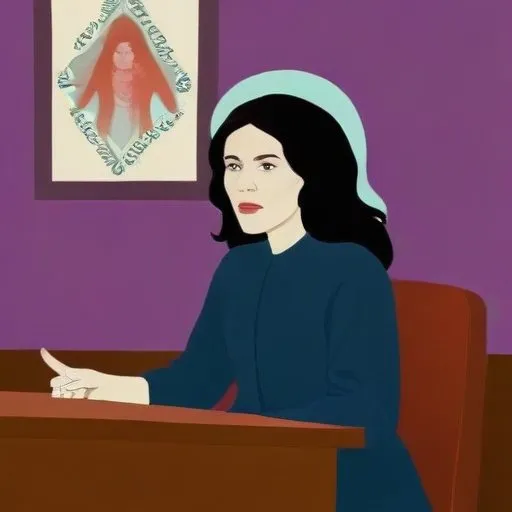
Accuser and witness at the Salem witch trials, known for her testimony that led to the execution of 20 people accused of witchcraft. Her accusations sparked a wave of hysteria and paranoia in colonial Massachusetts.
Mary Walcott, a name etched in the annals of American history, is widely recognized as one of the primary accusers during the infamous Salem Witch Trials of 1692-1693. Her claims of witchcraft and possession, along with those of her friends, led to the execution of 20 people, imprisonment of many others, and a lasting impact on the course of American history.
Mary Walcott was born in 1675 in Salem Village (now Danvers), Massachusetts, to John and Mary Walcott. Her early life was marred by tragedy, with the loss of her father at a young age and her mother's subsequent struggles to provide for the family.
In January 1692, Mary, along with her cousin Abigail Williams, began exhibiting strange behaviors, such as convulsions, contortions, and trance-like states, which were soon attributed to witchcraft. Their accusations, fueled by fear, superstition, and societal pressures, sparked a wave of hysteria that would engulf the community.
As the trials progressed, Mary's accusations became more frequent and far-reaching, targeting many prominent members of the community, including Rebecca Nurse, a 71-year-old grandmother and respected member of the community. Her accusations, often based on hearsay and speculation, led to the execution of 20 people, 14 of whom were women.
In later years, Mary would express deep regret and remorse for her actions during the trials, acknowledging the harm she had caused. She married Eleazar Day in 1695 and had seven children, but the trauma and guilt of her past would continue to haunt her.
Mary Walcott's role in the Salem Witch Trials serves as a poignant reminder of the dangers of mass hysteria, false accusations, and the importance of upholding due process. Her story has been the subject of numerous literary and theatrical works, including Arthur Miller's The Crucible, which continues to captivate audiences to this day.
In a rare display of introspection, Mary Walcott once stated, "I did it not out of anger, malice, or ill will, but out of my ignorance." This admission, while imperfect, offers a glimpse into the complexities of her character and the enduring impact of her actions.
The Salem Witch Trials, of which Mary Walcott was an integral part, occurred during a time of great social, political, and religious upheaval. The trials, a dark chapter in American history, have come to symbolize the dangers of unchecked fear, superstition, and the importance of protecting individual rights and freedoms.
Mary Walcott's story continues to resonate with modern audiences, serving as a cautionary tale about the importance of critical thinking, skepticism, and the need for a fair and just legal system. Her legacy extends beyond the boundaries of Salem, influencing literature, theater, and popular culture.
In many ways, Mary Walcott's story mirrors that of her contemporaries, including Abigail Williams and Ann Putnam, both of whom were also involved in the Salem Witch Trials. Their experiences, while distinct, are intertwined, and their collective actions have left an indelible mark on American history.
Mary Walcott's relationships with her family, particularly her cousin Abigail Williams, played a significant role in shaping her experiences during the trials. Her marriage to Eleazar Day, while marked by turbulence, provided a sense of stability and normalcy in the aftermath of the trials.
As we reflect on the life and legacy of Mary Walcott, we are reminded of the importance of compassion, empathy, and responsibility. Her story, a complex tapestry of trauma, regret, and redemption, continues to captivate and educate us, serving as a powerful reminder of the enduring impact of our actions.
Born in 1632
A farmer who was wrongly accused and executed for witchcraft during the infamous Salem witch trials, symbolizing the dangers of mass hysteria and false accusations.
Born in 1621
A Massachusetts colonist wrongly accused and executed for witchcraft during the Salem witch trials, symbolizing the dangers of mass hysteria and false accusations.
