


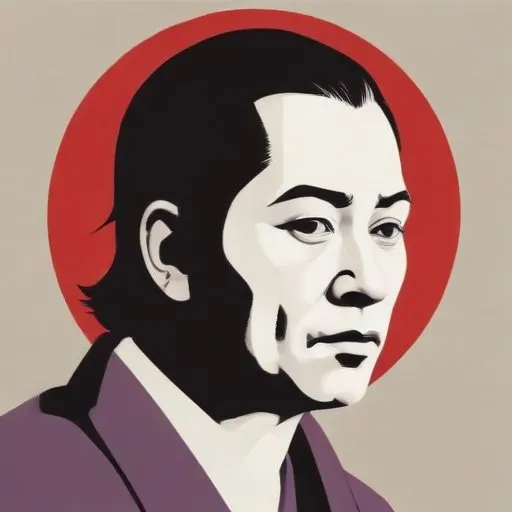
A leading figure in Japanese literature, known for revitalizing haiku poetry and creating a new style that focused on everyday life and nature. His work had a significant impact on modern Japanese literature.
Masaoka Shiki, born Noboru, is renowned as a Japanese poet, author, and literary critic who revolutionized the art of haiku poetry in the Meiji period. With an astonishing output of nearly 20,000 stanzas in his short lifetime, Shiki is revered as one of the four great haiku masters, alongside Matsuo Bashō, Yosa Buson, and Kobayashi Issa.
Shiki was born on October 14, 1867, in Matsuyama City, Iyo Province (now Ehime Prefecture), to a modest samurai-class family. His early life was marked by turmoil, with his father, Tsunenao, passing away when Shiki was just five years old. His mother, Yae, was a daughter of Hara Kanzan, a Confucian scholar, who became Shiki's tutor at the age of seven.
Shiki's educational journey began at Matsuyama Middle School, where he was influenced by the Freedom and Peoples Rights Movement. He became a political radical at 15, getting banned from public speaking by the school's principal. In 1883, he moved to Tokyo, where he attended Kyritsu Middle School and later matriculated into University Preparatory School, affiliated with Imperial University.
Shiki's poetic career took off in the late 1880s, as he began to reform traditional haiku poetry. He introduced a more modern and accessible style, focusing on everyday life and nature. His innovations included the use of colloquial language, realistic descriptions, and a more flexible syllable count.
Shiki's tanka poetry also underwent significant reforms, as he emphasized the importance of emotion and personal experience. His work in this genre is characterized by its lyrical quality, depth of feeling, and use of imagery.
Shiki's contributions to Japanese literature are immeasurable. He inspired a new generation of poets, writers, and intellectuals, paving the way for modern Japanese literature. His emphasis on realism, individuality, and social commentary continues to influence Japanese poetry and literature today.
Shiki's poetry and literary criticism reflect his deep-seated convictions about the importance of individuality, social reform, and the power of literature to shape society. He believed that art should be accessible to all, not just the elite, and that it should reflect the realities of everyday life.
Through his work, Shiki advocated for the democratization of literature, arguing that poetry should be a force for social change. His emphasis on realism and individuality continues to inspire writers and artists today.
By embracing the beauty of nature, the power of individuality, and the importance of social reform, Masaoka Shiki's remarkable life and work continue to inspire generations of writers, poets, and artists. His legacy serves as a testament to the transformative power of literature to shape our world.
Born in 1878
A pioneering Japanese poet, feminist, and social reformer who advocated for women's rights, pacifism, and social change through her powerful writings. Her works continue to inspire generations of women and social activists.
Born in 1892
A leading figure in Japanese literature, known for his dark, psychologically complex short stories that explored the human condition, often incorporating elements of mystery and horror.
