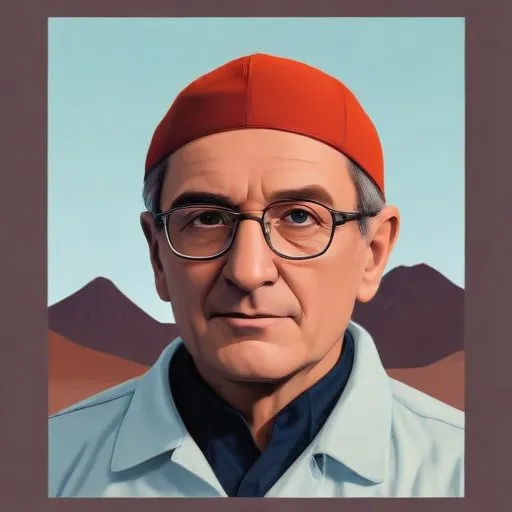
The Volcanic Visionary: Unveiling the Life and Legacy of Maurice Krafft
A Life Dedicated to the Fierce Beauty of Volcanoes
Maurice Krafft was a French volcanologist and filmmaker who dedicated his life to capturing the awe-inspiring power of volcanoes. With his wife, Katia, he traveled to the most treacherous and inaccessible volcanoes on Earth, documenting their fury and beauty in a way that had never been seen before.
A Pioneering Spirit
Born on March 25, 1946, in Guebwiller, France, Maurice developed an early fascination with volcanoes. He studied geology and later earned a degree in volcanology from the University of Strasbourg. However, it was his passion for filmmaking that set him apart from other volcanologists. Maurice's unique blend of scientific expertise and artistic vision enabled him to create documentaries that not only educated but also captivated audiences worldwide.
Filming the Fiery Depths
Maurice's film career spanned over two decades, during which he produced over 40 documentaries on volcanology. His most notable works include
Sacrée Furnace (1975),
Fuego Grande (1976), and
The Volcano saga (1983). These films showcased the sheer force and majesty of volcanic eruptions, often putting Maurice and his crew in harm's way.
Personal Milestones and Key Life Events
- 1970: Maurice meets his future wife, Katia, while filming a documentary in Mexico.
- 1985: Maurice and Katia become the first Westerners to film an eruption from the crater rim of Mount Yasur, Vanuatu.
- 1991: Maurice and Katia are awarded the prestigious Golden Lion for Best Documentary at the Venice Film Festival for their film, Fires of Pele.
A Career Marked by Controversy and Public Perception
Maurice's fearless approach to filming volcanic eruptions often raised eyebrows among his peers. Critics accused him of being reckless and putting his crew in unnecessary danger. However, Maurice remained defiant, believing that the pursuit of scientific knowledge and artistic expression justified the risks.
Philosophical Contributions and Beliefs
Maurice's work was not only about capturing the visual magnificence of volcanoes but also about conveying the profound respect and humility that these natural wonders inspired. He believed that volcanoes held the key to understanding the Earth's history and the fragility of human existence.
Historical Context and Legacy
Maurice's contributions to the field of volcanology are immeasurable. His documentaries not only educated the public but also inspired a new generation of volcanologists. Tragically, Maurice and Katia lost their lives on June 3, 1991, while filming an eruption at Mount Unzen, Japan. Their legacy continues to inspire scientists, filmmakers, and anyone who has ever been fascinated by the raw power of volcanoes.
Visual Timeline and Milestones
| 1946 |
Maurice Krafft born in Guebwiller, France |
| 1970 |
Maurice meets Katia while filming a documentary in Mexico |
| 1975 |
Sacrée Furnace is released, earning critical acclaim |
| 1985 |
Maurice and Katia become the first Westerners to film an eruption from the crater rim of Mount Yasur, Vanuatu |
| 1991 |
Maurice and Katia awarded the Golden Lion for Best Documentary at the Venice Film Festival for Fires of Pele |
| 1991 |
Maurice and Katia die while filming an eruption at Mount Unzen, Japan |
Inspirational Stories and Motivations
Maurice's life is a testament to the power of passion and dedication. His fearlessness in the face of danger, his unwavering commitment to his craft, and his ability to inspire others continue to motivate and captivate audiences worldwide. As we remember Maurice Krafft, we are reminded of the importance of pursuing our dreams, no matter the risk, and honoring the beauty and fury of the natural world.
FAQ
What is Maurice Krafft known for?
Maurice Krafft was a renowned French volcanologist known for his groundbreaking research and documentary filmmaking on volcanic eruptions. He spent his career studying and capturing the majesty of volcanoes on film, earning him the nickname the volcanologist of the century.
What was Maurice Kraffts most notable expedition?
One of Maurice Kraffts most notable expeditions was to Mount Nyiragongo in the Democratic Republic of Congo, where he documented the volcanos eruption in 1977. This expedition led to the production of his award-winning documentary Volcano Adventures.
How did Maurice Krafft die?
Tragically, Maurice Krafft died on June 3, 1991, while filming a documentary on Mount Unzen in Japan. He was caught in a pyroclastic flow and killed instantly, along with his wife Katia.
What was Maurice Kraffts contribution to volcanology?
Maurice Kraffts work greatly advanced the field of volcanology, providing valuable insights into volcanic behavior and eruption patterns. His documentation of volcanic activity has helped scientists better understand these complex natural wonders.
What awards did Maurice Krafft receive for his work?
Maurice Krafft received numerous awards for his documentary films and scientific contributions, including the prestigious Peabody Award and the Médaille de Vermeil from the French Academy of Sciences.