


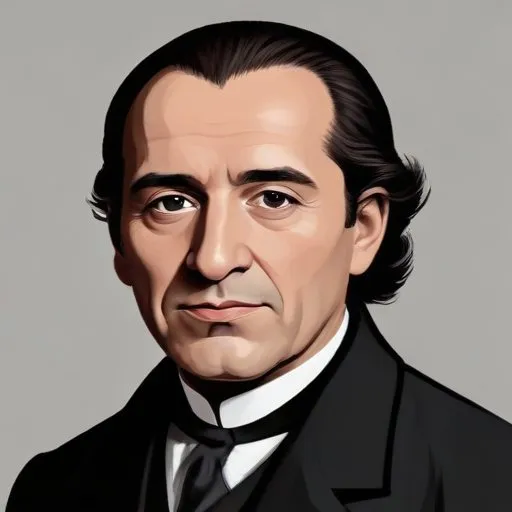
A visionary composer and scholar who blended music, theater, and visual arts to create innovative, often provocative works that challenged conventions and explored the boundaries of sound and performance.
Argentine-German composer and academic teacher Mauricio Kagel is renowned for his pathbreaking compositions that blurred the lines between music, theatre, and visual arts. His unique aesthetic, which often incorporated unconventional theatrical instructions for performers, has been hailed as a pioneering force in the world of classical music.
Born on December 24, 1931, in Buenos Aires, Argentina, to an Ashkenazi Jewish family that had fled Russia in the 1920s, Kagel's early life was marked by a rich cultural heritage. He studied music, literature, and philosophy in Buenos Aires, laying the foundation for his future experiments in interdisciplinary art.
Kagel's academic career spanned several decades, during which he taught at prestigious institutions such as the Darmstadt Summer Courses, the University at Buffalo, and the Berlin Film and Television Academy. He was a visiting professor of music theory at the University at Buffalo and later became a professor of new music theatre at the Cologne Hochschule for Music and Dance.
His students, including notable composers such as Moya Henderson, Kevin Volans, and Gerald Barry, testify to his profound influence on the next generation of musicians and composers.
Kagel's compositions often featured unconventional theatrical instructions, prompting performers to adopt specific facial expressions, make dramatic entrances, or engage in physical interactions with other performers. This distinctive approach led critics to draw parallels with the theatre of the absurd.
His music was not just a reflection of his artistic vision but also a commentary on the role of music in society. Kagel's critical intelligence and willingness to challenge conventions earned him recognition as a visionary composer.
Kagel received the prestigious Ernst von Siemens Music Prize in 2000, a testament to his groundbreaking contributions to the world of classical music.
In 1991, he was featured as the second composer in the Komponistenporträt series at the Rheingau Musik Festival, a platform that celebrates the works of renowned composers.
Mauricio Kagel's innovative spirit and boundary-pushing compositions have left an indelible mark on the world of classical music. His influence can be seen in the works of countless composers and musicians who have followed in his footsteps.
Through his compositions, he has inspired a new generation of artists to experiment, challenge conventions, and push the boundaries of what is possible in the realm of music and theatre.
Mauricio Kagel's compositions continue to defy categorization, inspiring new generations of musicians, composers, and artists to explore the uncharted territories of music and theatre.
98 Years Old
A pioneer of electronic and avant-garde music, this composer pushed boundaries with unconventional sounds and performances, influencing generations of musicians and artists.
Born in 1925
A renowned French musician who revolutionized classical music with his avant-garde compositions and innovative conducting style, pushing boundaries and redefining the genre.
Born in 1925
An Italian maestro who blended classical and avant-garde styles, creating innovative compositions that pushed musical boundaries. He's renowned for his bold, eclectic works that challenged traditional conventions.
Born in 1923
A visionary composer and educator who pushed the boundaries of classical music with his avant-garde and innovative works, blending dissonance and harmony in unique ways.
Born in 1905
A German composer who blended modernist and neoclassical styles, creating symphonies and chamber music that explored the human condition.
Born in 1926
A renowned composer and educator, he is celebrated for his innovative and eclectic style, blending modernist and traditional elements in his operas, symphonies, and chamber music.
Born in 1908
A pioneering composer of modern classical music, known for his complex and innovative works that pushed the boundaries of harmony and rhythm.
