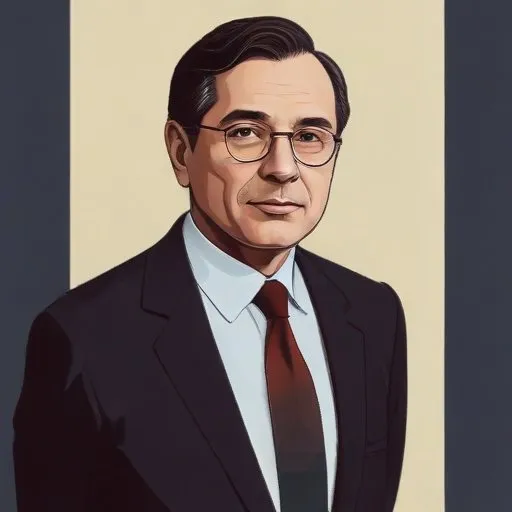
Mauricio Rojas: The Chilean-Swedish Politician and Economist Shaping Cultural Heritage
A Brief Introduction
Mauricio Rojas is a Chilean-Swedish politician and economist who has made a name for himself in the world of politics and economics. As a former member of the Riksdag and Minister of Cultures, Arts, and Heritage of Chile, Rojas has been instrumental in shaping cultural heritage policies and promoting economic growth.
Early Life and Education
Born on June 28, 1950, in Santiago, Chile, Rojas grew up in a tumultuous time. As a young socialist and member of the MIR (Movimiento de Izquierda Revolucionaria), he was forced to flee to Sweden in 1974 following the military coup and persecution of leftist activists by the Pinochet regime. This experience would later influence his shift towards liberalism.
Rojas pursued higher education in Sweden, earning a Ph.D. in economic history from Lund University in 1986. He became a Docent and Associate Professor of Economic History at Lund University in 1995. His academic background laid the foundation for his future roles in politics and economics.
Political Career
Rojas's political career took off in 2002 when he was elected as a Member of Parliament for the Liberal Party, despite not being a party member at the time. He became a member of the Liberal People's Party in 2004 and was appointed spokesperson on refugee and integration policy. Rojas served as the Director of the Centre for Welfare Reform at the Stockholm-based think tank Timbro and later became its President.
In 2018, Rojas made history by becoming the Minister of Cultures, Arts, and Heritage of Chile, serving for four days under the presidency of
Sebastián Piñera. This appointment marked a significant milestone in his career, solidifying his position as a respected figure in both Swedish and Chilean politics.
Economic Contributions and Writings
Rojas has written extensively on international economics, immigration, and the Swedish model. His books have been translated into several languages, including English. Some of his notable works include:
- The Rise and Fall of the Swedish Model (1998)
- Millennium Doom (1999)
- Beyond the Welfare State (2001)
- The Sorrows of Carmencita: Argentina's Crisis in a Historical Perspective (2002)
- Reinventar el Estado del bienestar (2008)
These writings demonstrate Rojas's expertise in economic policy and his ability to analyze complex systems.
Legacy and Impact
Mauricio Rojas's contributions to politics, economics, and cultural heritage have left an indelible mark. His commitment to promoting liberal values and advocating for refugee and integration policies has inspired a new generation of politicians and economists. As a scholar, politician, and leader, Rojas continues to shape cultural heritage policies and promote economic growth, leaving a lasting legacy in both Sweden and Chile.