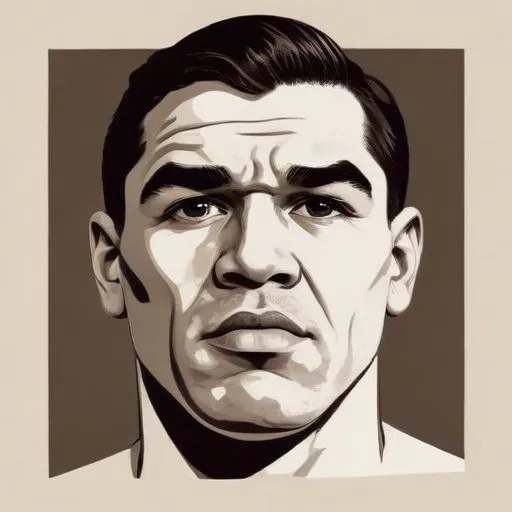
Max Schmeling: The German Boxing Legend
Known for His Historic Fights and Unwavering Spirit
Max Schmeling, born Maximilian Adolph Otto Siegfried Schmeling, is a German boxing legend known for his incredible skills in the ring and his two epic fights against
Joe Louis in the 1930s. As the heavyweight champion of the world between 1930 and 1932, Schmeling made his mark on the boxing world, earning himself a place in the history books.
Early Life and Career
Born on September 28, 1905, in Klein Luckow, Germany, Schmeling began his professional boxing career in 1924. He quickly gained popularity, and in 1928, he moved to the United States to continue his career. His big break came in 1930 when he became the first boxer to win the heavyweight championship on a foul, defeating
Jack Sharkey in a controversial match.
Historic Fights and Controversies
Schmeling's fights against Joe Louis in 1936 and 1938 were worldwide cultural events, with both matches being highly publicized and politicized. The first fight, in which Schmeling knocked out Louis, was seen as a victory for Germany, while the second fight, in which Louis won by technical knockout, was seen as a victory for the United States. These fights also sparked controversy due to Schmeling's perceived association with the Nazi Party, although he never officially joined.
Personal Life and Philanthropy
In 1933, Schmeling married Czech film actress Anny Ondra, and the couple remained together until his death in 2005. During World War II, Schmeling served with the German Air Force as a paratrooper, and after the war, he worked for The Coca-Cola Company. Despite his controversies, Schmeling was known for his charitable work, and he remained friends with Joe Louis until his death.
Career Highlights and Legacy
- Heavyweight champion of the world (1930-1932)
- First boxer to win the heavyweight championship on a foul (1930)
- Notable fights against Joe Louis (1936 and 1938)
- Served with the German Air Force during World War II
- Worked for The Coca-Cola Company after retirement
Impact on Boxing and Society
Schmeling's legacy extends beyond his boxing career. He played a significant role in popularizing boxing in the 1930s, and his fights against Joe Louis helped to define the era. Additionally, his perceived association with the Nazi Party and his later charitable work made him a complex and multifaceted figure.
Trivia and Fun Facts
- Schmeling was known as the "Black Uhlan of the Rhine" due to his dark hair and German heritage.
- He was the first boxer to be featured on the cover of Time Magazine.
- Schmeling's friendship with Joe Louis lasted until his death in 2005.
Conclusion
Max Schmeling's remarkable career and personal life make him a fascinating figure in the world of boxing. His historic fights, controversies, and philanthropic efforts have cemented his place in history, and he remains an inspiration to boxing fans around the world.
FAQ
What was Max Schmelings boxing career like?
Max Schmeling was a German boxer who had a successful career in the 1920s and 1930s. He held the world heavyweight title from 1930 to 1932 and was known for his strong punching power and defensive skills.
What was Schmelings significance in German sports history?
Schmeling was a national hero in Germany during the 1930s and was seen as a symbol of German athletic prowess. He was also a rival of the American boxer Joe Louis, and their fights were seen as a symbol of national pride.
How did Schmeling fare against Joe Louis?
Schmeling lost to Joe Louis in 1938, but he had previously defeated him in 1936. The rivalry between the two boxers was intense and was seen as a symbol of the ideological struggle between Nazi Germany and the United States.
What did Schmeling do during World War II?
Schmeling served in the German paratrooper corps during World War II and was wounded in combat. He was also involved in the rescue of Jewish lives during the war.
What is Schmelings legacy in boxing?
Schmelings legacy is one of tenacity and courage. He was a pioneering figure in German boxing and left a lasting impact on the sport.