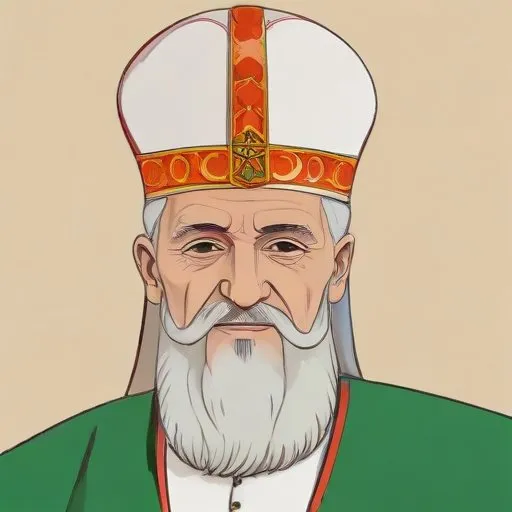
Maxim of Bulgaria: The Unwavering Patriarch of the Bulgarian Orthodox Church
A Life of Devotion and Leadership
Patriarch Maxim of Bulgaria is best known for his unwavering dedication to the Bulgarian Orthodox Church, which he led as its head for over four decades until his passing in 2012. As the longest-serving patriarch in Bulgarian history, Maxim played a pivotal role in shaping the country's spiritual landscape and navigating the Church through turbulent times.
Early Life and Education
Born Marin Naydenov Minkov on October 29, 1914, in Oreshak, Bulgaria, Maxim began his spiritual journey at a young age. He became a novice monk at the Troyan Monastery, where he received his early education. Later, he pursued higher studies in Orthodox Theology at Sofia University, graduating with honors in 1935. He furthered his education at the Saint Clement of Ohrid State University of Sofia, earning a degree in 1942.
Rise to Patriarch
Maxim's ascension to the patriarchate began with his ordination as a priest in 1941. He quickly rose through the ranks, becoming secretary general of the Holy Synod in 1955 and titular bishop of Branit in 1956. His election as Metropolitan of Lovech in 1960 marked a significant milestone in his career. Finally, on July 4, 1971, he was elected Patriarch of the Bulgarian Orthodox Church, a position he held for 41 years.
Challenges and Controversies
During his tenure, Maxim faced numerous challenges, including allegations of cooperation with the communist regime. In the early 1990s, a split in the Church was sparked by the government's support for an alternative synod, which questioned Maxim's legitimacy. However, Maxim skillfully navigated these challenges, maintaining control over the majority of parishes and ensuring the unity of the Church.
Legacy and Impact
Patriarch Maxim's legacy extends far beyond his leadership of the Church. He played a crucial role in preserving Bulgaria's spiritual heritage, promoting ecclesiastical art, and fostering relations with other Orthodox Churches. His commitment to education and cultural development earned him recognition from the government, which awarded him honorary citizenship of Sofia in 2011.
Personal Milestones
Throughout his life, Maxim celebrated numerous milestones, including his 94th birthday in 2008 and his 97th birthday in 2011. These occasions were marked by gratitude and reverence from the Bulgarian people, who revered him as a symbol of spiritual guidance and national identity.
Awards and Honors
Maxim received numerous awards and honors for his contributions to the Church and Bulgarian society, including:
- Honorary citizen of Sofia (2011)
- Order of the Balkan Mountains (2004)
- Order of the Stara Planina (2001)
Quotes and Memorable Sayings
Some of Maxim's most notable quotes include:
- "The Church is not a museum, but a living organism, and its role is to serve the people."
- "Faith is not a theoretical construct, but a living reality that guides us in our daily lives."
Historical Context and Legacy
Patriarch Maxim's life and legacy are inextricably linked with the complex history of Bulgaria, from the tumultuous years of communist rule to the country's transition to democracy. As a leader who navigated these challenges with wisdom and determination, Maxim left an indelible mark on the Bulgarian Orthodox Church and the nation as a whole.
FAQ
What was Maxim of Bulgarias early life and career like?
Maxim of Bulgaria was born on November 29, 1914, in Oreschak, Bulgaria. He began his ecclesiastical career in the 1940s, eventually becoming the Patriarch of Bulgaria in 1971.
What were some of Maxim of Bulgarias most notable achievements?
Maxim of Bulgaria played a key role in promoting Orthodox Christian unity and ecumenical dialogue during his tenure as Patriarch. He also oversaw the restoration of the Bulgarian Orthodox Churchs autocephaly.
How did Maxim of Bulgarias leadership style influence the Bulgarian Orthodox Church?
Maxim of Bulgarias leadership style was marked by his wisdom, compassion, and commitment to Orthodox Christian tradition. He played a key role in guiding the Bulgarian Orthodox Church through a period of significant change and challenge.
What were some of Maxim of Bulgarias notable writings and teachings?
Maxim of Bulgaria was a prolific writer and teacher, producing several influential works on Orthodox Christian theology and spirituality.
What was Maxim of Bulgarias legacy after his death?
After his death in 2012, Maxim of Bulgarias legacy continued to grow, with many Orthodox Christians citing him as an inspiration. He remains a celebrated figure in the history of the Bulgarian Orthodox Church.