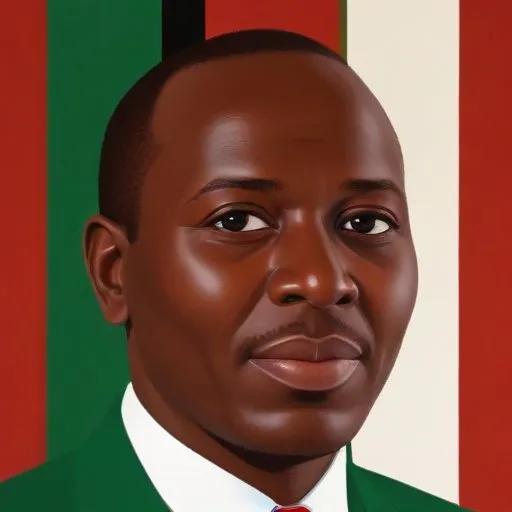
Melchior Ndadaye: The Trailblazing President of Burundi
A Beacon of Hope in a Divided Nation
Melchior Ndadaye was a Burundian banker and politician who made history by becoming the first democratically elected and first Hutu president of Burundi in 1993. His landmark election marked a significant shift in the country's political landscape, offering a glimmer of hope for a nation torn apart by ethnic divisions.
Early Life and Education
Born on March 28, 1953, in the commune of Nyabihanga, Ruanda-Urundi (present-day Burundi), Ndadaye was the first of ten children in a Hutu family. He attended primary school in Mbogora and later enrolled at the normal school in Gitega. Following the 1972 Ikiza, a bloody crackdown on educated Hutus, Ndadaye fled to Rwanda, where he completed his secondary studies at the Groupe Scolaire Officiel in Butare.
The Rise of a Political Leader
Ndadaye's political career began to take shape in the late 1970s. In 1976, he founded the Mouvement des étudiants Progressistes Burundais au Rwanda (BEMPERE), a progressive movement for exiled Burundian Hutu students. Three years later, he co-founded the Burundi Workers Party (Umugambwe waBakozi Uburundi, UBU), a Marxist-Leninist political party, where he served as the party's secretary for information and editor-in-chief of its newspapers, Le Flambeau and Ukuri.
A New Era for Burundi
In 1993, Ndadaye's UBU party won the landmark democratic election, and he was sworn in as the first Hutu president of Burundi. His election was seen as a major breakthrough in the country's ethnic divide, with many hoping that his reforms would bring much-needed stability and unity to the nation.
Assassination and Legacy
Tragically, Ndadaye's presidency was short-lived. Just three months into his term, he was assassinated on October 21, 1993, amidst a failed military coup. His death sparked a wave of brutal reprisals between the Tutsi and Hutu ethnic groups, ultimately leading to the decade-long Burundi Civil War.
Remembering a Leader
Despite his untimely death, Melchior Ndadaye's legacy continues to inspire hope for a unified Burundi. His courageous efforts to bridge the ethnic divide and his commitment to democratic values remain an enduring testament to his vision for a better future.
Key Dates and Events
- March 28, 1953: Born in Nyabihanga, Ruanda-Urundi
- 1972: Fled to Rwanda following the Ikiza
- 1976: Founded the Mouvement des étudiants Progressistes Burundais au Rwanda (BEMPERE)
- 1979: Co-founded the Burundi Workers Party (Umugambwe waBakozi Uburundi, UBU)
- 1993: Elected as the first Hutu president of Burundi
- October 21, 1993: Assassinated amidst a failed military coup
Quote
"I am not a Hutu, I am not a Tutsi, I am a Burundian." - Melchior Ndadaye
FAQ
What is Melchior Ndadayes role in Burundian politics?
Melchior Ndadaye was a Burundian politician who served as the President of Burundi from 1993 until his assassination in 1993. He was the countrys first elected president and a prominent figure in the countrys transition to democracy.
What is Melchior Ndadayes biography?
Melchior Ndadaye was born on March 28, 1953, in Rotho, Burundi. He studied economics and politics at the University of Burundi and later earned a masters degree in economics from the University of Ottawa.
What is Melchior Ndadayes legacy?
Melchior Ndadayes legacy in Burundian politics is marked by his commitment to democracy and reconciliation. Although his presidency was cut short, his efforts to promote national unity and establish a democratic government continue to inspire Burundians today.
What is Melchior Ndadayes role in promoting democracy?
Melchior Ndadaye played a crucial role in promoting democracy in Burundi, advocating for free and fair elections, and working to establish a stable and inclusive government.
What is Melchior Ndadayes place in African history?
Melchior Ndadayes place in African history is significant, as he was a pioneering figure in the continents transition to democracy. His leadership and vision for a more democratic and inclusive Africa continue to inspire future generations of leaders and citizens.