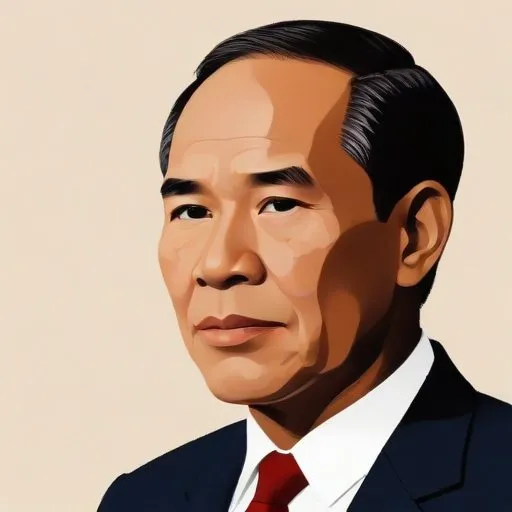
Mi: The Vietnamese Communist Politician who Shaped the Nation's Future
A Legacy of Leadership and Economic Reform
Mi, a prominent Vietnamese communist politician, is renowned for his instrumental role in shaping the country's political landscape and driving economic reforms. As the General Secretary of the Communist Party of Vietnam (CPV) from 1991 to 1997, Mi led the nation through a period of significant transformation, solidifying his legacy as a visionary leader.
Early Life and Career
Born on February 2, 1917, in Dong Phu, Thanh Tr, Hanoi, Mi, also known as Bo, began his life as Nguyn Duy Cng, the son of Nguyen Xeng. His early years were marked by a passion for nationalist politics, which led him to join the popular front against colonialism at the age of 14. At 18, he married Hng Phm and embarked on a journey that would take him to the highest echelons of Vietnamese politics.
Rise to Prominence
Mi joined the Communist Party of Vietnam in 1939, but his early years in politics were not without challenges. He was arrested by French authorities in 1941 and sentenced to 10 years of forced labor at the Hoa Lo Prison. However, he managed to escape in 1945, when the Japanese overthrew French rule of Indochina and established the Empire of Vietnam. This turning point marked the beginning of Mi's ascent to power.
Leadership and Economic Reform
After escaping from prison, Mi became a member of the Viet Minh and eventually rose through the party hierarchy in the late 1940s. In 1988, he became the Chairman of the Council of Ministers, and in 1991, he was elected as the General Secretary of the CPV at the 7th Congress. During his tenure, Mi continued his predecessors' policy of ruling through a collective leadership and implemented Nguyn Vn Linh's policy of economic reform. His leadership led to significant economic growth and stability in Vietnam.
Personal Milestones and Key Life Events
- In 1945, Mi became the commander at the Battle of Haiphong, a pivotal conflict during the First Indochina War.
- In 1991, he was elected as the General Secretary of the CPV, marking the beginning of his tenure as the nation's top leader.
- In 1997, Mi stepped down as General Secretary, but continued to exert influence as an advisor to the Central Committee.
- He died on October 1, 2018, at the age of 101, leaving behind a legacy of leadership and economic reform.
Influence on Modern Society
Mi's leadership and economic reforms have had a lasting impact on Vietnamese society. His policies have led to increased economic growth, improved living standards, and a more stable political environment. Today, Vietnam is a thriving nation, and Mi's contributions to its development are still felt.
Legacy and Historical Context
Mi's life and career serve as a testament to the power of perseverance and visionary leadership. His rise to prominence, despite facing numerous challenges, is a shining example of determination and commitment to one's ideals. As a statesman, Mi played a crucial role in shaping Vietnam's future, and his legacy continues to inspire generations of Vietnamese leaders and citizens alike.
Trivia and Fun Facts
- Mi was known for his humility and simplicity, often preferring to live a modest life despite holding high offices.
- He was an avid reader and enjoyed literature and poetry, often citing the works of famous Vietnamese writers as inspirations.
Conclusion
Mi's remarkable life and career serve as a testament to the power of leadership, perseverance, and vision. As a prominent Vietnamese communist politician, he has left an indelible mark on the nation's history, shaping its future and inspiring generations to come.
FAQ
What is Đặ Mườis role in Vietnamese politics?
Đặ Mười was the 5th Prime Minister of Vietnam, serving from 1988 to 1991. He played a significant role in implementing economic reforms and opening up Vietnam to the global economy.
What are Đặ Mườis notable achievements?
Đặ Mườis government introduced market-oriented reforms, which led to rapid economic growth and improved living standards in Vietnam. He also sought to normalize relations with neighboring countries and the international community.
What awards did Đặ Mười receive?
Đặ Mười received the Gold Star Order, the highest national honor in Vietnam, for his contributions to the countrys development and reunification.
How did Đặ Mười promote Vietnamese economic development?
Đặ Mườis government implemented policies to encourage foreign investment, promote exports, and develop infrastructure, which laid the foundation for Vietnams rapid economic growth in the 1990s and 2000s.
Did Đặ Mười face any challenges during his premiership?
Yes, Đặ Mười faced challenges related to Vietnams economic transition, including inflation, corruption, and opposition from conservative elements within the Communist Party.