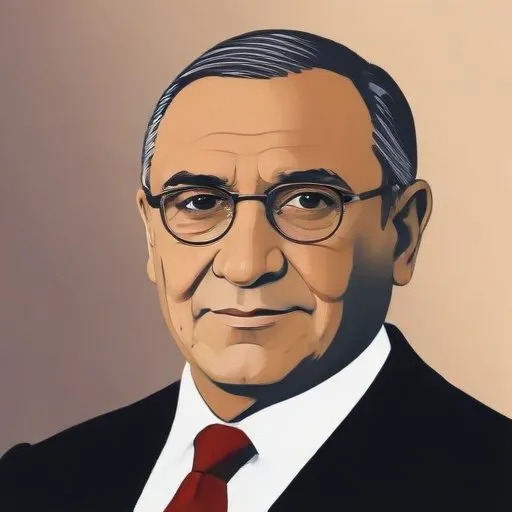
Michael Sarris

Michael Sarris

Michael Sarris was born on April 14th, 1946

Full Name: Michael Sarris
Nationality: Cypriot
Profession: Economist and Politician
Office: Minister of Finance
Tenure: 2013
Political Party: Democratic Rally
Education: University of Cambridge
Awards: Honorary Doctorate

Cypriot Minister of Finance who oversaw the country's 2013 financial crisis and bailout negotiations with the European Union. Known for his controversial handling of the crisis, which led to significant economic reforms and austerity measures.

Written by: Isabel Sanchez Isabel Sanchez

Michael Sarris: The Visionary Economist Behind Cyprus' Economic Triumph

Instrumental in Cyprus' Entry into the Eurozone

Michael Sarris, a Greek Cypriot economist and politician, is renowned for his pivotal role in guiding Cyprus' economic transformation, particularly its successful adoption of the euro as its national currency.

Throughout his illustrious career, Sarris has been a driving force behind economic development and policy reform, earning him a reputation as a seasoned expert in international economics and finance.

Early Life and Education

Born on April 14, 1946, in Cyprus, Sarris pursued his academic interests in economics, earning a B.Sc. in Economics from the London School of Economics and Political Science (LSE). He later obtained his Doctorate in Economics from Wayne State University in the United States.

Career Highlights

  • In 1972, Sarris joined the research department of the Central Bank of Cyprus.
  • In 1974, he moved to the Bank of Cyprus, where he worked in planning and project analysis.
  • In 1975, he began his international career at the World Bank, where he spent over three decades, rising to the position of Department Director.
  • During his tenure at the World Bank, Sarris' work encompassed a broad range of sectors in Africa, Latin America, and East Asia, including country strategy design, policy advice, and structural adjustment programs.
  • In 2005, he was appointed Minister of Finance by President Tassos Papadopoulos, a position he held until 2008.

Key Achievements

  • Instrumental in Cyprus' successful adoption of the euro as its national currency in 2008.
  • Implemented an aggressive austerity program, which resulted in a fiscal deficit reduction from 6.3% in 2003 to a surplus of 1.2% in 2008.
  • Played a crucial role in shaping Cyprus' economic policy, contributing to the country's economic growth and development.

Legacy

Michael Sarris' remarkable career is a testament to his dedication to economic development and his ability to navigate complex policy challenges. His visionary leadership has had a lasting impact on Cyprus' economy, cementing his place as a respected figure in the world of international economics and finance.

Personal Milestones

Sarris' accomplishments extend beyond the realm of economics. He has been recognized for his contributions to society, earning him a reputation as a respected public figure.

Philosophical Contributions

Sarris' work is underpinned by a deep understanding of the intricacies of economic development and a commitment to fostering sustainable growth. His philosophical approach to economics has been guided by a desire to create a more equitable and prosperous society.

Influence on Modern Society

Michael Sarris' contributions have had far-reaching consequences, shaping the course of Cyprus' economic development and informing policy decisions in the region. His influence extends beyond the world of economics, inspiring a new generation of leaders and policymakers.

Timeline
1946
Born in Nicosia
Michael Sarris was born on April 14, 1946, in Nicosia, Cyprus.
1968
Graduates from University of Cambridge
Sarris graduated from the University of Cambridge with a degree in economics.
1972
Becomes Economist at International Monetary Fund
Sarris began working as an economist at the International Monetary Fund.
1998
Becomes Minister of Finance
Sarris was appointed Minister of Finance in the Cypriot government.
2013
Leaves Office
Sarris left office as Minister of Finance after 15 years in the position.
Michael Sarris

Michael Sarris Quiz

What was Michael Sarris' role in the Cypriot government during the 2013 financial crisis?

Score: 0/5
FAQ
What is Michael Sarriss background in economics?
Michael Sarris holds a Ph.D. in economics from the University of London and has worked as an economist for the International Monetary Fund (IMF) and the World Bank.
What are Michael Sarriss achievements as Minister of Finance?
Michael Sarris has played a crucial role in shaping Cypruss economic policy, implementing reforms to address the 2013 financial crisis and promoting sustainable economic growth.
How has Michael Sarris contributed to EU economic policy?
Michael Sarris has been an influential voice in EU economic policy, serving as a member of the European Commissions Economic and Financial Committee and contributing to the development of EU-wide economic policies.
What is Michael Sarriss stance on economic reform?
Michael Sarris is a strong advocate for economic reform, emphasizing the need for structural changes to promote competitiveness, innovation, and sustainable growth.
How has Michael Sarris addressed economic challenges in Cyprus?
Michael Sarris has worked to address Cypruss economic challenges, including the 2013 financial crisis, by implementing austerity measures, promoting foreign investment, and supporting the development of key industries.

Related People:

Glafcos Clerides

Born in 1919

A Cypriot lawyer and politician who served as the 4th President of Cyprus, known for his efforts to reunify the island nation and resolve the Cyprus dispute. He played a key role in shaping the country's modern politics and economy.

Tassos Papadopoulos

92 Years Old

The 5th President of Cyprus, a key figure in the country's politics, known for his efforts to reunify the island nation and resolve the Cyprus dispute. He played a crucial role in shaping Cyprus' foreign policy and EU relations.

Nicos Anastasiades

80 Years Old

The seventh President of Cyprus, a lawyer-turned-politician who led the country through a tumultuous economic crisis and implemented key reforms. He's credited with stabilizing the nation's finances and restoring international credibility.