


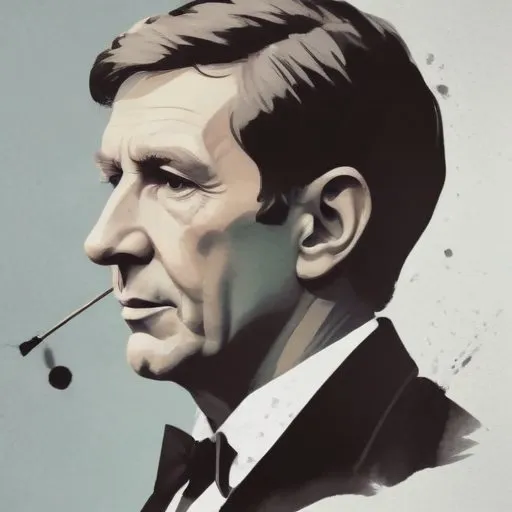
A renowned composer and conductor, known for blending modernist and romantic elements in his works, creating a unique and expressive sound. His operas and symphonies are highly acclaimed for their lyricism and dramatic intensity.
Michael Tippett is renowned for his iconic works that showcased his unique blend of lyricism and experimentation, earning him a place alongside Benjamin Britten as one of the leading British composers of the 20th century. His musical legacy is marked by unforgettable compositions such as the oratorio A Child of Our Time, the orchestral Fantasia Concertante on a Theme of Corelli, and the opera The Midsummer Marriage.
Tippett's talent unfolded gradually, with his earliest compositions either withdrawn or destroyed. He didn't publish any of his works until he was 30 years old, a testament to his perfectionism and dedication to his craft. Until the mid-1950s, his music was characterized by a lyrical and romantic quality, before he ventured into more astringent and experimental territories.
Tippett's life was marked by a series of transformative experiences. In 1939, he underwent Jungian psychoanalysis to come to terms with his homosexuality, an experience that would later influence his music. His brief flirtation with communism in the 1930s was followed by a strong embracing of pacifism after 1940, leading to his imprisonment in 1943 for refusing to carry out war-related duties. These personal struggles and triumphs are reflected in his music, which often explores the interplay between light and shadow.
Tippett's style underwent a significant shift after his first visit to America in 1965, where he was exposed to jazz and blues influences. His subsequent compositions incorporated these new elements, much to the dismay of some critics who felt that his work suffered as a result. However, from around 1976, Tippett's late works began to revisit the lyricism of his youth, marking a full circle in his creative journey.
Despite being honored with numerous accolades during his lifetime, Tippett's legacy has been subject to uneven critical judgment. While his early works continue to be celebrated, his later compositions have been met with more mixed reviews. The centenary of his birth in 2005 was marked by a muted response, and his music has not been performed frequently in the 21st century. Nevertheless, Tippett's contributions to music education and his advocacy for the importance of music in society remain an enduring part of his legacy.
Michael Tippett's life and music continue to inspire generations of composers, musicians, and music lovers alike. His fearless experimentation, unwavering pacifism, and commitment to music education have cemented his place as one of the most important figures in British musical history.
Born in 1913
A renowned musician who masterfully blended classical and opera styles, creating iconic works like "Peter Grimes" and "The Young Person's Guide to the Orchestra".
82 Years Old
A renowned composer and pianist, known for his minimalist style and iconic film scores, including "The Piano" and "Gattaca".
91 Years Old
A renowned composer and academic, known for his innovative and complex musical works that blend modernism with ancient traditions. His compositions often feature intricate rhythms and bold harmonies.
91 Years Old
A renowned composer and conductor, known for blending modernist and avant-garde styles with traditional Scottish folk music, creating a unique and innovative sound.
Born in 1908
A pioneering composer of modern classical music, known for his complex and innovative works that pushed the boundaries of harmony and rhythm.
Born in 1925
A renowned French musician who revolutionized classical music with his avant-garde compositions and innovative conducting style, pushing boundaries and redefining the genre.
80 Years Old
A British composer and educator, he wrote orchestral and chamber music, and was a prominent figure in music education, known for his contributions to the BBC Proms and the Royal College of Music.
