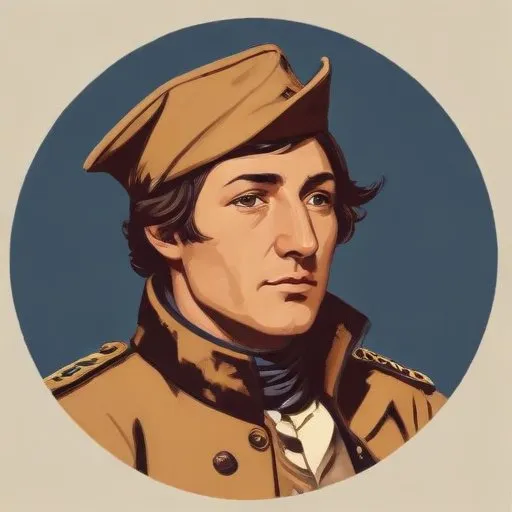
Patrick Gass

Patrick Gass

Patrick Gass was born on June 12th, 1771

Full Name: Patrick Gass
Nationality: American
Profession: Sergeant, Author
Notable Expedition: Lewis and Clark Expedition
Date of Birth: June 12, 1771
Place of Birth: Pennsylvania, USA
Date of Death: April 2, 1870
Age at Death: 98 years old

Sergeant and author who participated in the Lewis and Clark Expedition, documenting their journey and providing valuable insights into the exploration of the American West.

Timeline
1771
Born in Pennsylvania
Patrick Gass was born on June 12th in Pennsylvania. He would go on to become an American sergeant and author, best known for his role in the Lewis and Clark Expedition.
1803
Joined the Lewis and Clark Expedition
Gass joined the Lewis and Clark Expedition as a sergeant, helping to map the western United States and explore the Louisiana Territory.
1807
Published Expedition Journal
Gass published his journal of the Lewis and Clark Expedition, providing a first-hand account of their journey and discoveries.
1850
Settled in Wellsburg, Virginia
After the expedition, Gass settled in Wellsburg, Virginia, where he lived out the rest of his life.
1870
Died at Age 98
Patrick Gass passed away on April 2nd at the age of 98, leaving behind a legacy as one of the last surviving members of the Lewis and Clark Expedition.
Patrick Gass

Patrick Gass Quiz

What was Patrick Gass's role in the Lewis and Clark Expedition?

Score: 0/5
FAQ
What was Patrick Gasss role in the Lewis and Clark Expedition?
Patrick Gass was a sergeant in the Lewis and Clark Expedition, serving as a cartographer and assistant to Meriwether Lewis. He was responsible for creating detailed maps of the expeditions route.
What was the significance of Patrick Gasss journal during the Lewis and Clark Expedition?
Patrick Gasss journal is one of the most detailed and accurate accounts of the Lewis and Clark Expedition, providing valuable insights into the daily life and experiences of the expedition members.
How did Patrick Gasss experiences on the Lewis and Clark Expedition shape his writing?
Patrick Gasss experiences on the Lewis and Clark Expedition deeply influenced his writing, which took on a more introspective and descriptive tone. His journal entries often reflected on the natural beauty of the American West.
What was Patrick Gasss post-expedition life like?
After the Lewis and Clark Expedition, Patrick Gass returned to Pennsylvania, where he lived a quiet life as a farmer and family man. He remained proud of his accomplishments on the expedition and was often called upon to share his stories with the public.
What is Patrick Gasss legacy in American exploration?
Patrick Gasss legacy in American exploration is that of a dedicated and skilled cartographer and diarist, who helped to document and shape our understanding of the American West during the early 19th century.

Related People:

Meriwether Lewis

Born in 1774

Led the Corps of Discovery expedition with William Clark, mapping the western United States and establishing trade with Native American tribes. Known for his bravery, leadership, and contributions to American exploration and expansion.

William Clarke

75 Years Old

A renowned blues harmonica virtuoso, known for his soulful, expressive playing style and influential recordings that helped shape the sound of Chicago blues.

George Rogers Clark

Born in 1752

Led a military campaign to capture the Northwest Territory from the British during the American Revolutionary War, securing a vast region for the young United States.

Thomas Jefferson

Born in 1743

The principal author of the Declaration of Independence and a strong advocate for individual liberties and limited government, shaping America's foundational principles. He oversaw the Louisiana Purchase, doubling the country's territory.

Zebulon Pike

Born in 1779

Led expeditions to explore and map the American West, including the discovery of Pikes Peak, and played a key role in the War of 1812.

John Jacob Astor

Born in 1763

A German-American mogul who built a fur trading empire and invested in real estate, amassing a vast fortune, which he later used to support the arts and education.