


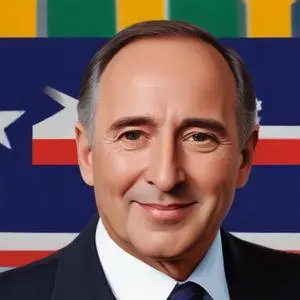
The 24th Prime Minister of Australia, a Labor Party leader who implemented significant economic reforms, including deregulation and privatization, and is known for his bold and charismatic leadership style.
Paul Keating, the 24th Prime Minister of Australia, is renowned for his transformative leadership, economic reforms, and unwavering commitment to social change. His groundbreaking policies and fiery oratory skills have earned him a place in Australian history as one of the most influential and dynamic politicians of all time.
Born on January 18, 1944, in Sydney, Keating's journey into politics began at the tender age of 14, when he joined the Australian Labor Party (ALP). His meteoric rise continued as he became the State President of Young Labor and worked as a research assistant for a trade union. At 25, he was elected to the Australian House of Representatives, representing the division of Blaxland.
As Treasurer of Australia under Prime Minister Bob Hawke from 1983 to 1991, Keating oversaw a series of significant economic reforms, including:
These reforms not only strengthened the Australian economy but also solidified Keating's reputation as a visionary leader and a skilled orator, known for his sardonic wit and persuasive rhetoric.
In 1991, Keating became the Prime Minister of Australia, a position he held until 1996. During his tenure, he continued to drive economic reform, while also championing social change and cultural development. His commitment to the arts, education, and Indigenous reconciliation left an indelible mark on Australian society.
Keating's leadership was not without controversy. His fierce battles with political opponents, particularly Bob Hawke, and his unapologetic style often sparked heated debates. However, his unwavering dedication to his vision and his ability to drive change have cemented his legacy as one of Australia's most influential leaders.
Keating's philosophical contributions to Australian politics are multifaceted. He has championed the causes of social justice, advocating for a more equitable society. His unwavering commitment to Indigenous reconciliation has been instrumental in shaping Australia's approach to its Indigenous population.
Throughout his life, Keating has been driven by an insatiable passion for politics and a deep love for his country. He has been recognized for his meteoric rise, from leaving school at 14 to becoming Prime Minister at 47. His personal relationships, including his marriage to Annita van Iersel, have been a source of strength and inspiration throughout his journey.
Paul Keating's influence on modern Australian society cannot be overstated. His vision for a more inclusive, prosperous, and culturally rich nation has inspired generations of Australians. His commitment to social justice, economic reform, and cultural development has left an indelible mark on the country he loves.
"The poor don't know what is possible, and the rich don't care." - Paul Keating
This quote, among many others, has become synonymous with Keating's commitment to social justice and his unwavering passion for creating a more equitable society.
Paul Keating's legacy is inextricably linked to the tumultuous landscape of Australian politics in the late 20th century. His leadership, marked by controversy and vision, has left a lasting impact on the country. As a champion of social change and economic reform, he has inspired generations of Australians to strive for a better future.
In conclusion, Paul Keating's remarkable journey, marked by economic reforms, visionary leadership, and a commitment to social justice, has cemented his place in Australian history as one of the most influential and dynamic politicians of all time.
96 Years Old
Leader of the Australian Labor Party who served as Prime Minister from 1983 to 1991, known for his charismatic leadership and economic reforms.
64 Years Old
The first female Prime Minister of Australia, serving from 2010 to 2013, known for her progressive policies and leadership during a period of significant economic reform.
68 Years Old
The 26th Prime Minister of Australia, a diplomat, and leader who apologized to the Indigenous Australians for past injustices and played a key role in shaping the country's climate change policies.
68 Years Old
The 28th Prime Minister of Australia, a conservative leader who served from 2013 to 2015, known for his tough stance on immigration and climate change skepticism. He's also a Rhodes Scholar and athlete.
71 Years Old
Australian journalist and politician who served as the 29th Prime Minister of Australia, known for his leadership during a tumultuous period in Australian politics and his advocacy for progressive policies.
73 Years Old
A British singer-songwriter and pianist known for his emotive, poetic lyrics and soaring melodies, crafting introspective and atmospheric indie-pop soundscapes.
69 Years Old
Australian lawyer and politician who served as Treasurer of Australia from 1996 to 2007, implementing significant economic reforms and overseeing a period of strong economic growth.
72 Years Old
The 14th Deputy Prime Minister of Australia, a Labor Party member, and economist who served during the Rudd and Gillard governments, known for his role in navigating Australia through the 2008 global financial crisis. He's also an academic and author, having written several books on economics and politics.
