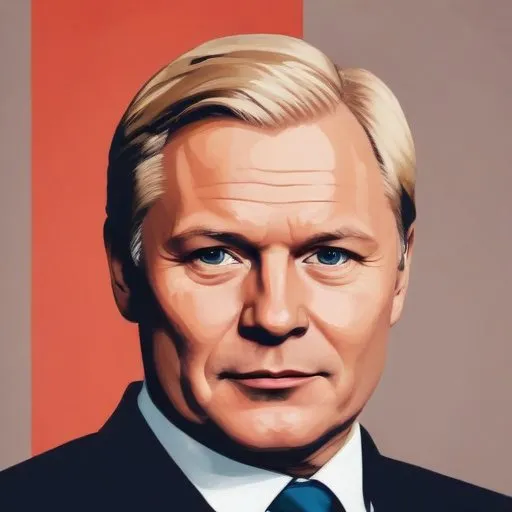
Per Borten: The Architect of Norway's Modernization
Leading the Charge Against EU Membership
Per Borten, the 25th Prime Minister of Norway, is most notably recognized for his pivotal role in modernizing the Agrarian Party, now known as the Centre Party, and his unwavering opposition to Norway's membership in the European Union. During his tenure from 1965 to 1971, Borten prioritized the nation's sovereignty and self-determination, resisting the pressures of European integration.
Agricultural Roots and Early Life
Born on April 3, 1913, in Fl, Melhus, SrTrndelag, Norway, Borten was raised in a rural community that instilled in him the importance of agriculture and community development. He pursued a degree in Agriculture from the Norwegian College of Agriculture, graduating in 1939. This foundation in agriculture would later influence his political career and commitment to rural communities.
Rise to Prominence
Borten's political career began in 1945 as the mayor of his hometown, Fl, a position he held until 1955. In 1949, he was elected to the Norwegian parliament, where he would serve for nearly three decades until his retirement in 1977. During this period, he held various leadership positions, including President of the Odelsting (1961-1965 and 1973-1977) and chairman of the Centre Party (1955-1967).
Prime Ministerial Tenure and Reforms
As Prime Minister, Borten spearheaded a coalition government consisting of four centrist parties. During his tenure, Norway witnessed significant reforms, including:
- The introduction of earnings-related pensions in 1966;
- The establishment of the Housing Bank to provide loans for improving old dwellings in 1969;
- The implementation of the Special Supplement to National Insurance Benefits Law, providing a supplement for those not entitled to supplementary pensions in 1969;
- The introduction of the Law on Compensation Supplement to National Insurance Benefits, compensating for the introduction of a value-added tax system in 1969;
- The passage of the Basic Schooling Law, aimed at improving education in 1969.
Resignation and Legacy
Borten's premiership was cut short in 1971, following allegations that he had divulged confidential information regarding Norway's EU membership negotiations. His resignation marked the end of an era, but his legacy as a champion of Norwegian sovereignty and rural development remains.
Personal Milestones and Quotes
Throughout his life, Borten remained committed to his rural roots and his people. He once said, "The earth has music for those who listen." This quote reflects his deep connection to the land and his people, as well as his ability to listen and respond to their needs.
Idealogy and Controversies
Borten's staunch opposition to EU membership sparked controversy and debate during his premiership. Critics argued that his stance would isolate Norway from the European community, while supporters praised his defense of national sovereignty. Despite these controversies, Borten remained resolute in his convictions, shaping Norway's identity and its relationship with the EU.
Education and Cultural Impact
Borten's agricultural background and commitment to rural development have had a lasting impact on Norway's education system. His emphasis on agricultural education and training has inspired generations of Norwegian farmers and rural communities.
Personal Life and Anecdotes
Little is known about Borten's personal life, but his strong connection to his community and his people is evident in his dedication to public service. His humility and commitment to rural development have made him a respected figure in Norwegian politics.
Tribute and Remembrance
Per Borten passed away on January 20, 2005, leaving behind a legacy that continues to shape Norway's identity and its relationship with the EU. His commitment to rural development, national sovereignty, and his people has earned him a place in Norway's history as a champion of the nation's interests.
FAQ
What was Per Bortens role in Norwegian politics?
Per Borten was a Norwegian politician who served as the 18th Prime Minister of Norway from 1965 to 1971. He was a member of the Centre Party and played a key role in shaping Norways agricultural and economic policies.
What were Per Bortens most notable achievements?
Per Bortens most notable achievements include his role in negotiating Norways accession to the European Free Trade Association (EFTA) and his efforts to strengthen the countrys agricultural sector.
How did Per Bortens career begin?
Per Borten began his political career in the 1940s, serving as a member of the Norwegian Parliament from 1949 to 1965. He later became the leader of the Centre Party and went on to form a government coalition in 1965.
What was Per Bortens stance on European integration?
Per Borten was a proponent of Norways integration into European organizations, but he was also cautious about preserving the countrys sovereignty and independence. He negotiated Norways accession to EFTA, but opposed membership in the European Economic Community (EEC).
What is Per Bortens legacy?
Per Bortens legacy lies in his contributions to Norways economic development and his commitment to agricultural reform. He is remembered as a pragmatic and effective leader who played a key role in shaping Norways post-war politics.