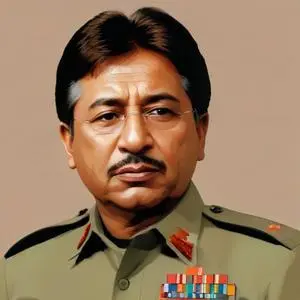
Pervez Musharraf: The Controversial Leader Who Shaped Pakistan's Destiny
A Military Strongman and Politician
Pervez Musharraf is known for his tumultuous reign as the tenth President of Pakistan from 2001 to 2008, a period marked by controversy, economic growth, and a complex dance with global politics. As a four-star general and Chief of Army Staff, Musharraf led a military coup in 1999, overthrowing the democratically elected government of
Nawaz Sharif and paving the way for his own presidency.
Rise to Power
Born on August 11, 1943, in Delhi, British India, Musharraf's early life was marked by a sense of discipline and duty. He joined the Pakistan Army in 1961 and rose through the ranks, earning a reputation as a skilled and courageous officer. In 1998, he was appointed as the Chairman of the Joint Chiefs of Staff Committee and the Chief of Army Staff by Prime Minister Nawaz Sharif. However, their relationship soon soured, and Musharraf's own ambition led him to stage a bloodless coup in October 1999.
The Presidency and Controversies
Musharraf's presidency was marked by controversy from the outset. He held a referendum in 2002, which granted him a five-year term as president, a move widely criticized as undemocratic. The same year, he oversaw a general election that saw his party, the Pakistan Muslim League (Q), emerge victorious. However, the election was marred by allegations of rigging and manipulation.
During his presidency, Musharraf implemented a series of policies aimed at promoting economic liberalization and social liberalism. His "enlightened moderation" program sought to modernize Pakistan's economy and society, but critics argue that it also led to a rise in income inequality and a decline in domestic savings.
Key Milestones and Achievements
- Played a key role in the American-led War on Terror, launching operations against terrorist groups in Pakistan's tribal regions.
- Launched a series of economic reforms, which led to a significant increase in Pakistan's GDP.
- Implemented the Seventeenth Amendment to the Constitution, which granted him sweeping powers as president.
- Survived several assassination attempts, including a dramatic attack on his convoy in 2003.
Philosophical Contributions and Beliefs
Musharraf's political philosophy was rooted in a synthesis of conservatism and socialism, which he termed the "Third Way." He believed that Pakistan needed a strong, centralized government to navigate the complexities of modern politics. While he advocated for social liberalism, his actions often contradicted this rhetoric, leading to criticism from human rights groups and opponents of his regime.
Legacy and Impact
Pervez Musharraf's legacy is complex and multifaceted. On one hand, he oversaw a period of rapid economic growth and modernization in Pakistan. On the other hand, his authoritarian rule and human rights abuses have left a lasting stain on his reputation.
Musharraf's impact on modern Pakistani society cannot be overstated. He played a significant role in shaping the country's political landscape, its economy, and its relationship with the international community. Love him or hate him, Pervez Musharraf remains an important figure in Pakistan's history, a testament to the power of politics and the human desire for leadership.
Personal Life and Relationships
Musharraf's personal life has been marked by a sense of discipline and duty. He married Sehba Musharraf in 1962, and the couple has a son, Bilal Musharraf. Throughout his career, Musharraf has been known for his strict adherence to a daily routine, which includes a rigorous exercise regimen and a commitment to reading and learning.
Later Life and Exile
In 2008, Musharraf resigned as president of Pakistan amidst growing opposition to his rule. He went into self-imposed exile in Dubai and later in London, where he continued to remain active in politics. In 2013, he returned to Pakistan to contest elections, but was barred from running due to pending court cases against him.
Pervez Musharraf's life is a testament to the complexities of power, politics, and human nature. Love him or hate him, he remains an important figure in Pakistan's history, a reminder of the enduring power of politics to shape our lives and our destinies.
FAQ
What was Pervez Musharrafs role in Pakistani politics?
Pervez Musharraf was a Pakistani general and politician who served as the 10th President of Pakistan from 2001 to 2008, following a military coup in 1999.
What were Pervez Musharrafs key policies as President of Pakistan?
Pervez Musharrafs key policies as President of Pakistan included economic liberalization, infrastructure development, and a war on terrorism, following the 9/11 attacks.
How did Pervez Musharrafs presidency impact Pakistans international relations?
Pervez Musharrafs presidency saw a significant shift in Pakistans international relations, with the country becoming a key ally in the US-led War on Terror, and relations with India improving through diplomatic efforts.
What were the main challenges faced by Pervez Musharraf during his presidency?
Pervez Musharraf faced several challenges during his presidency, including Islamist extremism, political instability, and judicial activism, which ultimately led to his resignation in 2008.
What has Pervez Musharraf done since leaving office?
Since leaving office, Pervez Musharraf has lived in self-imposed exile, and has been involved in various political and business ventures, while also facing legal challenges related to his time in power.