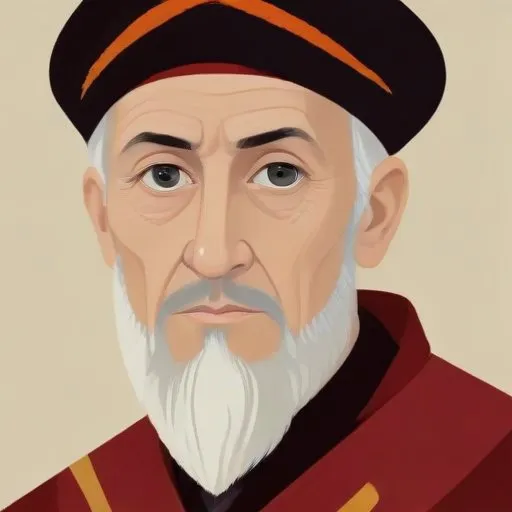
Petar II PetroviNjego: The Visionary Prince-Bishop of Montenegro
The Literary Icon and Unifying Force
Petar II PetroviNjego, commonly referred to as Njego, is renowned as a Prince-Bishop, poet, and philosopher whose works have had a profound impact on Montenegrin and Serbian literature. His magnum opus, the epic poem
Gorski vijenac (The Mountain Wreath), is widely regarded as a masterpiece of Serbian and South Slavic literature, cementing his status as a national hero.
Early Life and Education
Born on November 13, 1813, in the village of Njeguši, near Cetinje, Montenegro, Njego was educated at several Serbian monasteries, which laid the foundation for his future role as a spiritual and political leader. Following the death of his uncle Petar I, Njego assumed the position of Prince-Bishop, becoming the countrys spiritual and political leader.
Political Reforms and Centralization
During his reign, Njego implemented significant reforms aimed at uniting Montenegros tribes and establishing a centralized state. He introduced regular taxation, formed a personal guard, and implemented a series of new laws to replace those composed by his predecessor many years earlier. Although his taxation policies were met with resistance and sparked several revolts, Njego remained committed to modernizing Montenegro.
Struggle for Unity and Liberation
Njego's reign was marked by constant political and military struggle with the Ottoman Empire, as he sought to expand Montenegros territory and gain unconditional recognition from the Sublime Porte. A proponent of uniting and liberating the Serb people, Njego was willing to concede his princely rights in exchange for a union with Serbia and recognition as the religious leader of all Serbs.
Literary Contributions
Njego's literary works, including
Gorski vijenac, are celebrated for their philosophical depth and poetic beauty. His poetry and prose offer valuable insights into the Montenegrin and Serbian experience, exploring themes of national identity, faith, and the human condition.
Legacy and Historical Context
Despite facing numerous challenges during his lifetime, Njego laid the foundations for Yugoslavism and introduced modern political concepts to Montenegro. His vision for a unified and liberated Serbian people continues to inspire generations, earning him a revered place in Montenegrin and Serbian history.
Influence on Modern Society
Njego's contributions to literature, philosophy, and politics have had a lasting impact on modern society. His commitment to unity, liberation, and modernization continues to inspire leaders and citizens alike, making him a timeless figure in the realm of Balkan politics and culture.
Personal Milestones and Key Life Events
- Born on November 13, 1813, in Njeguši, Montenegro
- Assumed the position of Prince-Bishop following the death of his uncle Petar I
- Introduced regular taxation and formed a personal guard
- Implemented new laws to replace those of his predecessor
- Engaged in constant struggle with the Ottoman Empire
- Died on October 31, 1851
Philosophical Contributions and Beliefs
Njego's philosophical views were shaped by his deep commitment to Orthodox Christianity and his desire for national unity. He believed in the importance of education, modernization, and the liberation of the Serbian people, inspiring a new generation of thinkers and leaders.
Impact on Pop Culture
Njego's literary works, particularly
Gorski vijenac, have been adapted into various forms of art, including film, theater, and music. His poetry and prose continue to inspire artists, writers, and musicians, ensuring his legacy extends far beyond the realm of politics and literature.
FAQ
What were the key literary works of Petar II Petrović-Njegoš?
Petar II Petrović-Njegošs key literary works include his epic poem The Mountain Wreath, which tells the story of Montenegros struggle for independence, and his philosophical treatise The Torch of Freedom.
What was Petar II Petrović-Njegoš role in Montenegrin politics?
Petar II Petrović-Njegoš played a key role in Montenegrin politics, serving as the Metropolitan of Montenegro and leading the countrys struggle for independence from the Ottoman Empire.
How did Petar II Petrović-Njegoš influence Montenegrin culture?
Petar II Petrović-Njegoš influenced Montenegrin culture by promoting the preservation of Montenegrin folklore, language, and customs, and by writing works that celebrated Montenegrin identity and independence.
What was Petar II Petrović-Njegoš relationship with the Serbian royal family?
Petar II Petrović-Njegoš maintained a close relationship with the Serbian royal family, serving as a mediator between Montenegro and Serbia and promoting the unity of the two countries.
How did Petar II Petrović-Njegoš balance his literary and political careers?
Petar II Petrović-Njegoš balanced his literary and political careers by using his writing as a way to promote Montenegrin independence and identity, while also serving as a leader in Montenegrin politics.