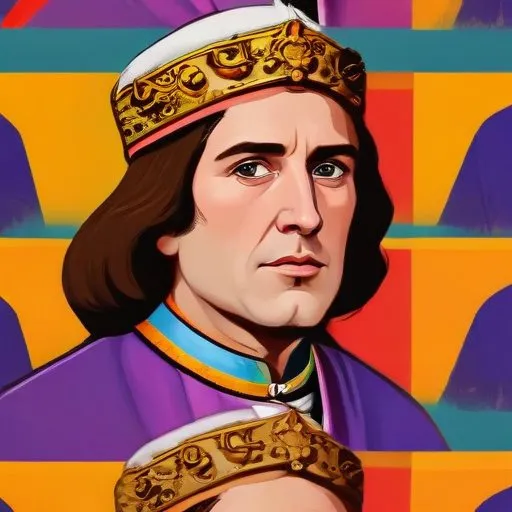
Peter IV: The Ceremonious King of Aragon
A Life of Strength and Legacy
Peter IV, also known as Pere IV d'Aragó in Catalan and Pero IV d'Aragón in Aragonese, was the King of Aragon, Sardinia, Corsica, and Valencia, as well as the Count of Barcelona, from 1336 until his death in 1387. He is renowned for his efforts to strengthen the crown against the Union of Aragon and other noble factions, while also engaging in numerous foreign wars that expanded his kingdom's territories.
Early Life and Accession
Born on September 5, 1319, in Balaguer, Peter was the eldest son of Alfons IV, then Count of Urgell, and his first wife, Teresa d'Entença. He was designated to inherit all of his father's titles, except for the title of Urgell, which went to his younger brother James. Upon succeeding his father, Peter called a corts in Zaragoza for his coronation, where he crowned himself, reaffirming the liberties and privileges of Aragon.
Consolidation of Power and Wars of Expansion
Peter's reign was marked by a series of conflicts aimed at strengthening his kingdom. He deposed
James III of Majorca in 1344 and made himself King of Majorca. He also waged wars in Sardinia, Sicily, the Mezzogiorno, Greece, and the Balearics, expanding his territories and securing crucial trade routes. In 1381, he became the Duke of Athens and Neopatria.
Domestic Reforms and Charters
In addition to his military campaigns, Peter IV implemented significant domestic reforms. He affirmed the Usatges and Constitutions of the Principality of Catalonia and received the homage of his Catalan subjects in Lleida, a move that offended Barcelona, where the ceremony was traditionally performed. He also issued various charters, such as the Privilegio General, which granted privileges to the cities and towns of Aragon.
Personal Life and Legacy
Peter IV died on January 6, 1387, leaving behind a complex and multifaceted legacy. He was succeeded by his son, John I, who would continue his father's efforts to consolidate power and expand the kingdom. Peter's reign was marked by a blend of strength, diplomacy, and strategic savvy, earning him the nickname "the Ceremonious."
Key Facts and Milestones
- Born: September 5, 1319, in Balaguer
- Accession: 1336, following the death of his father, Alfons IV
- Wars: Sardinia, Sicily, Mezzogiorno, Greece, Balearics, and Majorca
- Titles: King of Aragon, Sardinia, Corsica, Valencia, and Majorca; Count of Barcelona; Duke of Athens and Neopatria
- Reforms: Affirmed the Usatges and Constitutions of Catalonia; issued the Privilegio General
- Legacy: Strengthened the crown, expanded territories, and implemented domestic reforms
Quotes and Memorable Sayings
"I shall not be swayed by the whims of the nobility, for I am the king, and I shall defend the crown."
Historical Context and Legacy
Peter IV's reign marked a significant turning point in the history of Aragon, as he navigated the complex web of alliances and rivalries between the nobility, the church, and other European powers. His efforts to strengthen the crown and expand his territories laid the groundwork for the rise of Aragon as a major European power in the centuries that followed.
FAQ
What was Peter IVs role in the Crown of Aragon?
Peter IV was King of Aragon from 1336 to 1387, and played a significant role in the expansion and consolidation of the Crown of Aragon.
What were Peter IVs military campaigns?
Peter IV led several successful military campaigns, including the conquest of Sardinia and Corsica, and the suppression of rebellions in Valencia and Aragon.
How did Peter IV strengthen the Crown of Aragon?
Peter IV strengthened the Crown of Aragon by centralizing power, reforming the administration, and promoting trade and commerce.
What was Peter IVs relationship with the papacy?
Peter IV had a complex relationship with the papacy, including conflicts over territories and jurisdiction, but also cooperating on issues such as the Crusades.
What is Peter IVs legacy in Aragonese history?
Peter IV is remembered as a strong and effective king who expanded and consolidated the Crown of Aragon, and laid the foundations for its growth as a major power in the Mediterranean.